
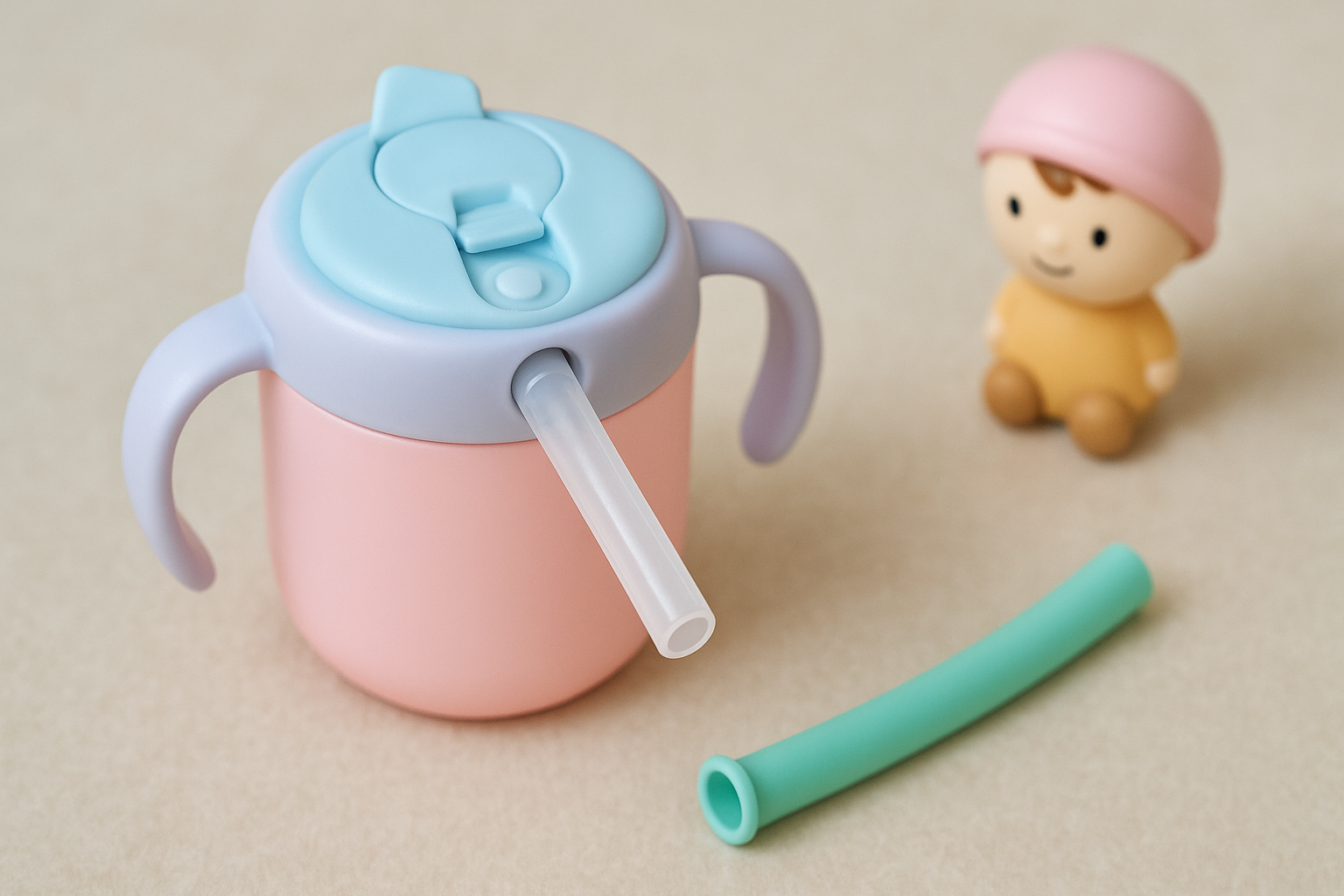
Cawan straw adalah antara barang yang paling kerap digunakan dalam rutin harian kanak-kanak kecil. Ia dibawa ke dalam beg taska, beg sekolah, kereta keluarga, perjalanan membeli-belah, lawatan ke taman permainan, dan rutin sebelum tidur. Oleh sebab itu, satu kegagalan cawan — terutamanya kebocoran — serta-merta menjadi punca masalah bagi ibu bapa.
Tiada penjaga yang mahu berurusan dengan pakaian basah, beg sekolah yang melekit, komponen straw yang berkulat, atau minuman yang terbazir. Namun kebocoran kekal menjadi salah satu isu yang paling kerap dilaporkan, walaupun dengan cawan berkualiti tinggi.
Kenyataannya adalah lebih mudah:
Cawan straw ialah sistem mekanikal, dan kebocoran biasanya adalah isyarat bahawa satu atau lebih daripada komponennya tidak seimbang.
Dengan memahami mekanik ini, ibu bapa dapat mencegah kebocoran, memanjangkan jangka hayat produk, dan memilih cawan yang berprestasi lebih baik. Di bawah adalah penjelasan yang diperluaskan sepenuhnya mengapa kebocoran berlaku, apa yang ibu bapa boleh lakukan secara realistik, dan bagaimana reka bentuk produk membentuk hasilnya.
1. Punca Senyap: Cincin Pengedap Kehilangan Kecekapan Dari Masa Ke Masa
Setiap cawan kalis bocor bergantung pada cincin pengedap silikon yang sederhana.
Cincin ini bertanggungjawab untuk mewujudkan penghalang kedap udara antara penutup dan badan cawan. Apabila ia berfungsi dengan baik, cawan kekal tertutup dalam semua senario penggunaan biasa. Apabila tidak, kebocoran tidak dapat dielakkan.
Mengapa cincin pengedap gagal
Silikon merosot secara semula jadi daripada haba, pencucian, geseran, dan tekanan. Sepanjang penggunaan berbulan-bulan, ia mungkin:
• Regangan sedikit
• Hilang keanjalan
• Membentuk herotan kecil
• Kering
• Mengalami koyakan mikro
Ramai ibu bapa tidak menyedari perubahan ini kerana cincin masih "kelihatan normal," walaupun prestasi pengedapnya telah menurun.
Bagaimana ini mempengaruhi penggunaan dunia sebenar
Cincin yang lemah menyebabkan kebocoran bibir perlahan dan resapan bahagian bawah. Inilah sebabnya mengapa sesetengah ibu bapa mendapati tompok basah dalam beg atau kelembapan di sekeliling penutup hanya selepas penyimpanan yang lama.
Bagaimana untuk menstabilkan ini
• Pastikan cincin diletakkan di dalam trek bulat yang sempurna — walaupun sedikit salah jajaran boleh memecahkan pengedap.
• Gantikan cincin setiap 3–6 bulan, bergantung pada kekerapan penggunaan.
• Pilih cawan dengan cincin silikon gred makanan yang lebih tebal yang mengekalkan bentuk lebih lama.
Cincin pengedap yang stabil mengurangkan peristiwa kebocoran keseluruhan secara dramatik untuk kebanyakan keluarga.
2. Ketidakseimbangan Tekanan: Punca Kebocoran Yang Paling Disalahfahami
Tekanan adalah daya tidak kelihatan yang menjelaskan 70–80% kebocoran yang tidak dijangka — terutamanya fenomena "cawan meludahkan air dengan sendiri" yang terkenal.
Cawan straw adalah ruang tertutup. Apabila suhu luaran berubah, udara di dalamnya mengembang atau menguncup. Apabila udara mengembang, ia menolak cecair ke atas. Straw menjadi titik keluar yang paling mudah, menyebabkan:
• Titisan tiba-tiba
• Meludahkan air
• Cecair membuak keluar
• Kekacauan semasa perjalanan
Senario biasa yang mencetuskan ketidakseimbangan tekanan
• Cawan diisi dengan minuman sejuk, kemudian diletakkan di dalam kereta panas
• Kanak-kanak meninggalkan cawan di bawah cahaya matahari langsung
• Ibu bapa menutup penutup serta-merta selepas mengisi dengan cecair suam
• Perubahan tekanan kabin pesawat
Mengapa ini tidak dapat dielakkan
Udara sentiasa mengikut fizik. Malah cawan premium dengan pengedap yang kuat boleh terjejas.
Cara praktikal untuk mengurangkan kebocoran tekanan
• Biarkan penutup sedikit terbuka selama beberapa saat sebelum menutup untuk melepaskan tekanan awal.
• Elakkan perbezaan suhu yang melampau.
• Jangan simpan cawan di dalam kereta pada hari yang panas.
• Gunakan cawan yang direka dengan bolong udara yang dikalibrasi atau injap penyamaan tekanan.
Ini adalah salah satu penambahbaikan yang paling berkesan yang boleh dilakukan oleh keluarga tanpa menggantikan cawan.
3. Salah Jajaran Straw, Haus, dan Koyak: Saluran Kebocoran Tersembunyi
Straw melalui banyak perkara — menggigit, menarik, meregangkan, pensterilan air mendidih, dan pencucian berulang. Lama kelamaan, ia kehilangan integriti struktur.
Tiga cara straw menyebabkan kebocoran
-
Salah jajaran:
Selepas membersihkan, straw mungkin tidak ditolak sepenuhnya ke dalam penyambungnya. Walaupun jurang 1–2 mm boleh membuka laluan untuk cecair keluar ke atas. -
Kelemahan bahan:
Silikon menjadi keruh atau melembut, menjadikannya lebih mudah untuk injap tidak berfungsi. -
Kerosakan gigitan:
Kanak-kanak kecil menggigit straw secara naluriah, membentuk kerosakan mikro yang menggalakkan titisan.
Tanda-tanda yang sering diabaikan oleh ibu bapa
• Kanak-kanak mengeluh "sukar untuk minum"
• Buih naik walaupun tiada siapa yang minum
• Cawan bocor hanya kadang-kadang, bergantung pada sudut
Mengekalkan prestasi straw yang boleh dipercayai
• Gantikan straw setiap 2–4 bulan untuk kanak-kanak kecil yang kerap menggunakannya.
• Pilih straw yang diperbuat daripada silikon yang lebih tebal atau bahan yang diperkuat.
• Pastikan penyambung atas dan bawah dipasang sepenuhnya selepas dicuci.
Perubahan tabiat kecil ini sering menyelesaikan "kebocoran misteri" yang muncul secara tidak teratur.
4. Mampatan Luaran: Mengapa Beg Galas dan Stroller Menyebabkan Kebocoran
Malah cawan straw yang direka terbaik pun tidak dapat menahan tekanan luaran.
Apabila diletakkan di dalam beg sekolah, beg lampin, atau poket stroller, cawan mungkin terhimpit oleh:
• Buku
• Kotak makan tengah hari
• Mainan
• Jaket
• Barang-barang adik-beradik
• Tali yang ketat
Cawan kemudian bertindak seperti pam tekanan — cecair ditolak ke atas, dan jika cawan condong ke bawah (biasa dalam beg galas), straw bertindak sebagai saluran keluar langsung.
Apa maksudnya untuk ibu bapa
Cawan yang tidak pernah bocor di rumah mungkin bocor sebaik sahaja ia diletakkan di dalam beg. Ini tidak menunjukkan kualiti produk yang rendah. Ia hanyalah hasil daripada fizik dan tekanan.
Bagaimana untuk mengelakkan kebocoran mampatan
• Letakkan cawan tegak sedapat mungkin.
• Elakkan ruang yang terlalu penuh.
• Untuk kanak-kanak usia sekolah, pilih cawan dengan penutup berkunci atau mekanisme kunci perjalanan.
Ini amat penting untuk kanak-kanak berumur 4–10 tahun yang membawa lebih banyak barang setiap hari.
5. Jenis Minuman Penting — Dan Sesetengah Minuman Tidak Mesra Cawan
Cawan straw direka untuk air dan minuman ringan.
Apa-apa yang lebih pekat atau lebih reaktif mengganggu aliran dalaman dan meningkatkan tekanan.
Kategori minuman bermasalah
• Minuman berkarbonat – melepaskan gas dan mencipta lonjakan tekanan
• Susu – sisa yang terkumpul boleh menyumbat injap
• Smoothie – tekstur yang lebih pekat menyukarkan laluan sedutan
• Jus dengan pulpa – menyumbat injap dan meningkatkan aliran balik
Hasil daripada jenis minuman yang salah
• Kebocoran tiba-tiba dari straw
• Injap tersumbat memaksa cecair keluar dari bibir
• Kebocoran aliran balik apabila kanak-kanak menyedut terlalu kuat
Cadangan operasi
• Gunakan cawan straw hanya untuk air melainkan pengeluar menyatakan sebaliknya.
• Elakkan minuman berkarbonat sepenuhnya — tiada cawan straw yang boleh mengendalikannya dengan selamat.
• Bersihkan minuman yang banyak sisa dengan serta-merta untuk mencegah penyumbatan injap.
Apa Yang Ibu Bapa Boleh Lakukan: Buku Panduan Pencegahan Kebocoran Praktikal
Daripada bertindak balas terhadap kebocoran, keluarga boleh mengamalkan sistem penyelenggaraan yang mencegah kebanyakan masalah.
Tabiat mingguan
• Periksa sama ada cincin pengedap diletakkan dengan betul.
• Periksa straw untuk kesan gigitan atau tempat lembut.
• Pastikan penyambung dan injap dipasang dengan ketat.
Tabiat bulanan
• Gantikan straw dan cincin pengedap yang haus.
• Cuci bersih semua komponen, termasuk alur tersembunyi.
• Putar cawan untuk mengelakkan penggunaan unit tunggal secara berlebihan.
Tabiat harian
• Simpan cawan tegak.
• Biarkan tekanan dilepaskan sebelum menutup penutup.
• Elakkan meninggalkan cawan di dalam kereta panas.
Dengan tabiat yang konsisten, walaupun cawan peringkat pertengahan berfungsi seperti model premium.
Cara Memilih Cawan Yang Benar-benar Tahan Bocor (Apabila Membeli Yang Baru)
Ibu bapa sering menganggap "kalis bocor" bergantung pada nasib atau reputasi jenama.
Pada hakikatnya, ia adalah hasil kejuruteraan berdasarkan beberapa ciri yang boleh diukur.
Apa yang mentakrifkan cawan berprestasi tinggi
• Injap penyamaan tekanan moden
• Komponen pengedap silikon tebal gred makanan
• Straw yang diperkuat atau tahan gigitan
• Struktur penutup dengan sistem penguncian aktif
• Bentuk cawan yang mengekalkan kestabilan
• Bahagian yang mudah dibuka yang membolehkan pembersihan menyeluruh
Panduan berdasarkan usia
• 1–3 tahun:
Pilih straw yang tahan lama, tahan gigitan dengan injap lebar.
• 3–6 tahun:
Pilih reka bentuk mesra perjalanan dengan penutup yang kuat dan ciri anti-tumpah.
• 6+ tahun:
Fokus pada mudah alih, kapasiti, dan ketahanan mampatan beg sekolah.
Memahami kriteria mekanikal ini membantu ibu bapa membuat keputusan pembelian yang lebih cepat dan yakin.
Kesimpulan: Kebocoran Bukan Rawak — Ia Mengikut Corak Yang Boleh Diramal
Kebocoran cawan straw bukanlah risiko yang misteri dan tidak terkawal.
Ia adalah hasil gabungan tekanan, penjajaran, penuaan bahan, mampatan luaran, dan pilihan minuman. Sebaik sahaja ibu bapa memahami pengaruh ini, mencegah kebocoran menjadi mudah dan lestari.
Cawan yang dipilih dengan baik ditambah dengan tabiat pengendalian yang konsisten dapat menghapuskan kebanyakan insiden kebocoran — mengurangkan geseran harian dan memberikan keluarga pengalaman yang lebih boleh diramal dan bersih.