
Pengenalan: Pemerhatian Biasa, Sering Disalah Tafsir
Ramai orang memerhatikan fenomena yang sama selepas menggunakan botol bertebat untuk seketika: minuman sejuk nampaknya kekal sejuk lebih lama daripada minuman panas kekal panas. Pemerhatian ini sering menimbulkan keraguan tentang prestasi botol. Adakah penebat gagal? Adakah botol direka lebih baik untuk minuman sejuk berbanding yang panas?
Pada hakikatnya, perbezaan ini lebih banyak berkaitan dengan fizik daripada kualiti produk. Malah botol bertebat vakum yang paling canggih masih dikawal oleh undang-undang terma yang sama yang membentuk bagaimana haba bergerak dalam dunia fizikal.
Memahami mengapa minuman sejuk bertahan lebih lama daripada minuman panas membantu pengguna menetapkan jangkaan yang realistik, memilih botol yang sesuai untuk keperluan mereka, dan menggunakan bekas minuman bertebat dengan lebih berkesan dalam kehidupan seharian.
Bagaimana Botol Bertebat Berfungsi Sebenarnya
Peranan Penebat Vakum
Kebanyakan botol bertebat berkualiti tinggi bergantung pada penebat vakum dinding berganda. Reka bentuk ini meletakkan lapisan vakum di antara dinding dalam dan luar, secara dramatik mengurangkan pemindahan haba melalui tiga mekanisme utama:
- Pengaliran, pemindahan haba secara langsung melalui bahan
- Perolakan, pergerakan haba melalui pergerakan cecair
- Sinaran, pemindahan haba melalui gelombang elektromagnet
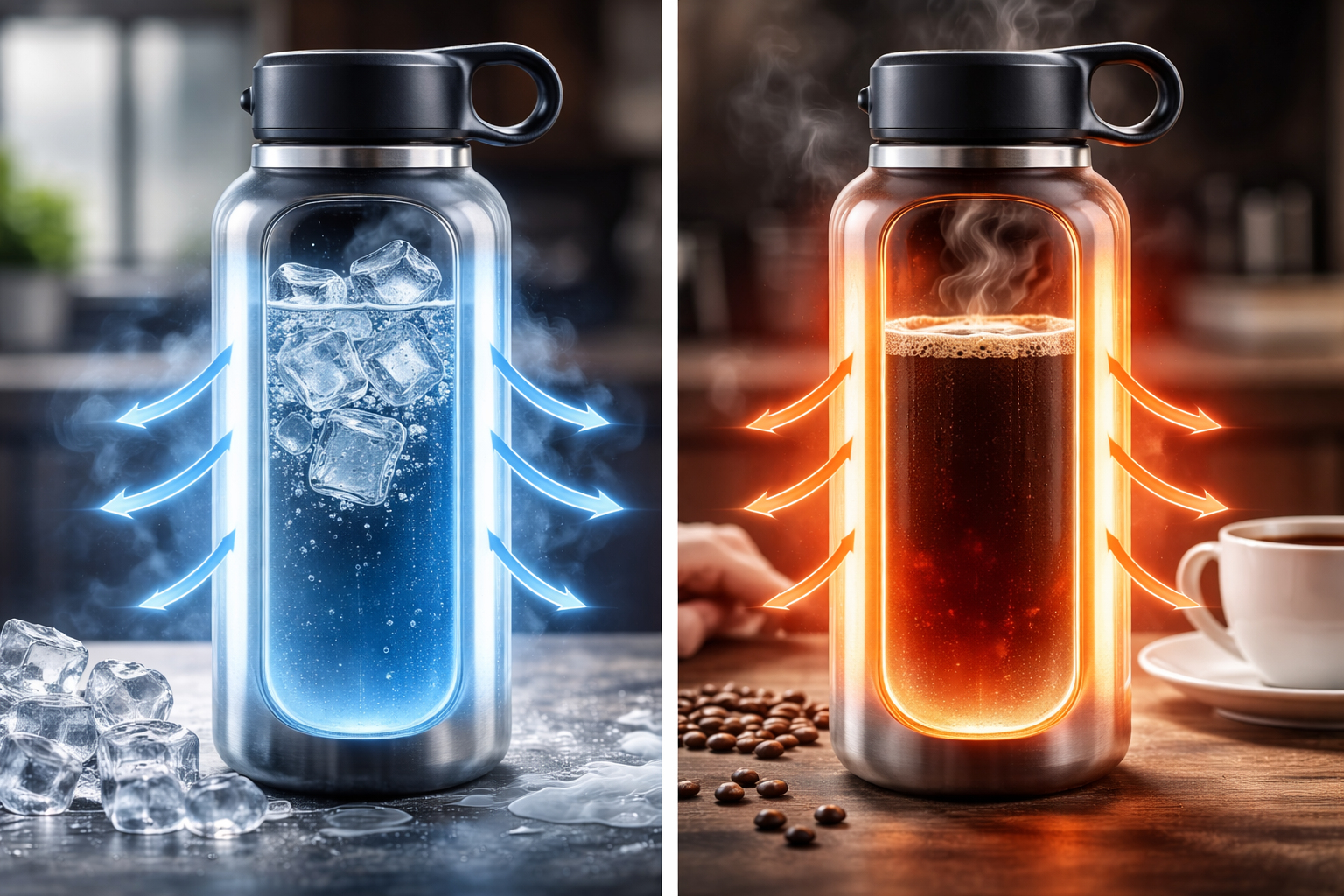
Lapisan vakum menghapuskan perolakan dan mengurangkan pengaliran dengan ketara, meninggalkan sinaran sebagai laluan haba utama yang tinggal. Inilah sebabnya mengapa botol bertebat memperlahankan perubahan suhu dan bukan menghentikannya sepenuhnya.
Arah Aliran Haba Adalah Penting
Konsep kritikal yang sering diabaikan adalah bahawa haba sentiasa mengalir dari kawasan yang lebih panas ke kawasan yang lebih sejuk. Penebat tidak membalikkan proses ini; ia hanya memperlahankannya.
Arah ini memainkan peranan utama dalam bagaimana minuman panas dan sejuk berkelakuan berbeza di dalam botol yang sama.
Perbezaan Suhu: Pendorong Tersembunyi Kehilangan Haba
Minuman Panas Bermula dengan Kelemahan yang Lebih Besar
Minuman panas biasanya bermula pada suhu jauh melebihi persekitaran sekeliling. Minuman panas yang baru dituangkan mungkin 70–90°C, manakala udara ambien berada lebih dekat kepada 20–30°C.
Perbezaan suhu yang besar ini mencipta daya penggerak yang kuat untuk kehilangan haba. Semakin besar jurang suhu, semakin cepat haba bergerak, walaupun melalui bahan yang bertebat dengan baik.
Akibatnya, minuman panas kehilangan haba paling cepat pada jam pertama selepas dituangkan.
Minuman Sejuk Mempunyai Kecerunan yang Lebih Kecil
Minuman sejuk, sebaliknya, sering bermula lebih dekat dengan suhu ambien. Malah minuman sejuk berais biasanya antara 0–5°C, mencipta perbezaan suhu yang lebih kecil berbanding persekitarannya.
Oleh kerana kecerunan lebih kecil, haba masuk ke dalam botol dengan lebih perlahan. Ini sahaja menerangkan sebahagian besar mengapa minuman sejuk kelihatan "bertahan lebih lama."
Fizik di Sebalik Kehilangan Haba yang Lebih Cepat dalam Cecair Panas
Perolakan di Dalam Botol
Cecair panas secara semula jadi mencipta arus perolakan dalaman. Cecair yang lebih panas naik, cecair yang lebih sejuk tenggelam, membentuk peredaran di dalam botol.
Pergerakan dalaman ini sentiasa membawa cecair yang lebih panas bersentuhan dengan dinding botol, meningkatkan kadar haba mencapai penghalang penebat.
Cecair sejuk jauh lebih stabil. Tanpa perolakan dalaman yang kuat, pemindahan haba berlaku dengan lebih perlahan dan sekata.
Kesan Penyejatan Berhampiran Penutup
Walaupun dalam botol yang tertutup rapat, kawasan penutup tetap menjadi titik lemah untuk pengekalan haba. Minuman panas menghasilkan tekanan wap dan penyejatan mikroskopik berhampiran bukaan.
Setiap perubahan fasa kecil dari cecair ke wap menghilangkan tenaga haba, secara halus mempercepatkan kehilangan suhu. Minuman sejuk tidak mengalami kesan ini pada tahap yang sama.
Tindak Balas Bahan terhadap Haba vs. Sejuk
Keluli Tahan Karat dan Pengembangan Terma
Kebanyakan botol bertebat menggunakan keluli tahan karat untuk ketahanan dan keselamatan makanan. Walaupun keluli tahan karat berfungsi dengan baik merentasi julat suhu yang luas, haba masih menyebabkan pengembangan terma sedikit.
Pada suhu yang lebih tinggi, pengembangan mikroskopik boleh sedikit meningkatkan kekonduksian terma pada titik sentuhan, membolehkan haba keluar dengan lebih cekap daripada dalam keadaan sejuk.
Seal, Tudung, dan Kepekaan Haba
Gasket dan seal direka untuk berfungsi merentasi julat suhu, tetapi haba memperkenalkan lebih banyak tekanan daripada sejuk. Pendedahan berulang kepada cecair panas boleh sedikit mengurangkan kecekapan pengedapan dari masa ke masa, terutamanya di sekitar penutup.
Minuman sejuk memberikan tekanan mekanikal yang kurang pada komponen pengedap, membantu mengekalkan prestasi penebat yang konsisten.
Mengapa Minuman Sejuk Terasa “Lebih Sejuk” Lebih Lama
Persepsi Manusia vs. Perubahan Suhu Sebenar
Persepsi suhu manusia tidak linear. Minuman sejuk yang memanas dari 2°C ke 6°C mungkin masih terasa sangat sejuk, manakala minuman panas yang menyejuk dari 70°C ke 60°C sudah terasa kurang panas.
Kesan psikologi ini mengukuhkan tanggapan bahawa minuman sejuk mengekalkan suhunya lebih lama, walaupun perubahan suhu sebenar adalah serupa.
Ais sebagai Penampan Terma
Ais memainkan peranan unik yang minuman panas tidak dapat meniru. Apabila ais cair, ia menyerap sejumlah besar haba tanpa mengubah suhu.
Perubahan fasa ini bertindak sebagai penampan terma, mengekalkan minuman sejuk dalam julat suhu yang sempit untuk tempoh yang lebih lama. Selagi ais kekal, kenaikan suhu ditangguhkan dengan ketara.
Faktor Persekitaran Yang Memihak kepada Minuman Sejuk
Suhu Ambien dalam Penggunaan Harian
Kebanyakan orang menggunakan botol bertebat dalam persekitaran yang lebih dekat dengan suhu bilik atau lebih panas. Keadaan ini secara semula jadi memihak kepada minuman sejuk, yang memperoleh haba secara perlahan, dan bukan minuman panas, yang kehilangan haba secara pantas.
Dalam iklim panas atau suasana luar, perbezaan ini menjadi lebih ketara.
Kekerapan Pembukaan Botol
Membuka botol memasukkan udara ambien, mengganggu penebat. Minuman panas lebih sensitif terhadap gangguan ini kerana perbezaan suhu adalah lebih besar.
Minuman sejuk dapat menahan pembukaan singkat dengan lebih baik, terutamanya apabila ais ada, menjadikannya lebih tahan lasak dalam penggunaan dunia sebenar.
Metrik Prestasi: Pengekalan Panas vs Sejuk Dijelaskan
Mengapa Jenama Sering Mengaku Pengekalan Sejuk Lebih Lama
Banyak jenama mengiklankan masa pengekalan sejuk yang lebih lama daripada masa pengekalan panas. Ini bukan muslihat pemasaran—ia mencerminkan tingkah laku fizikal yang boleh diukur.
Minuman sejuk mengalami pertukaran haba yang lebih perlahan, dinamik dalaman yang kurang, dan mendapat manfaat daripada penampan bantuan ais.
Lengkung Pengekalan Biasa Mengikut Masa
Minuman panas biasanya mengikut lengkung kehilangan haba awal yang pantas diikuti oleh penurunan yang lebih perlahan.
Minuman sejuk mengikut corak yang bertentangan: peningkatan suhu yang perlahan dan stabil yang kekal dalam julat yang boleh digunakan untuk tempoh yang lebih lama.

Pengajaran Praktikal untuk Kegunaan Harian
Cara Memaksimumkan Pengekalan Minuman Panas
Memanaskan botol dengan air suam mengurangkan kehilangan haba awal. Mengisi botol sepenuhnya meminimumkan ruang udara, dan menghadkan bukaan penutup mengekalkan haba.
Pelarasan kecil meningkatkan prestasi dunia sebenar dengan ketara.
Cara Memanjangkan Prestasi Minuman Sejuk Lebih Lanjut
Menggunakan ais, menjauhkan botol daripada cahaya matahari langsung, dan memilih reka bentuk mulut sempit membantu mengekalkan suhu sejuk untuk tempoh yang lebih lama.
Prestasi sejuk lebih mudah dioptimumkan kerana fizik sudah memihaknya.
Kesimpulan: Ia adalah Fizik, Bukan Kegagalan Produk
Minuman sejuk yang bertahan lebih lama daripada minuman panas bukanlah kecacatan pada botol bertebat. Ia adalah hasil yang boleh diramal dari kecerunan suhu, tingkah laku bahan, dan persepsi manusia.
Memahami perbezaan ini membolehkan pengguna menilai prestasi botol secara realistik dan menggunakan bekas minuman bertebat dengan lebih berkesan.
Botol bertebat adalah alat yang direka untuk memperlahankan perubahan suhu—bukan menghilangkannya. Apabila jangkaan sejajar dengan fizik, prestasi terasa konsisten, boleh dipercayai, dan disengajakan.