
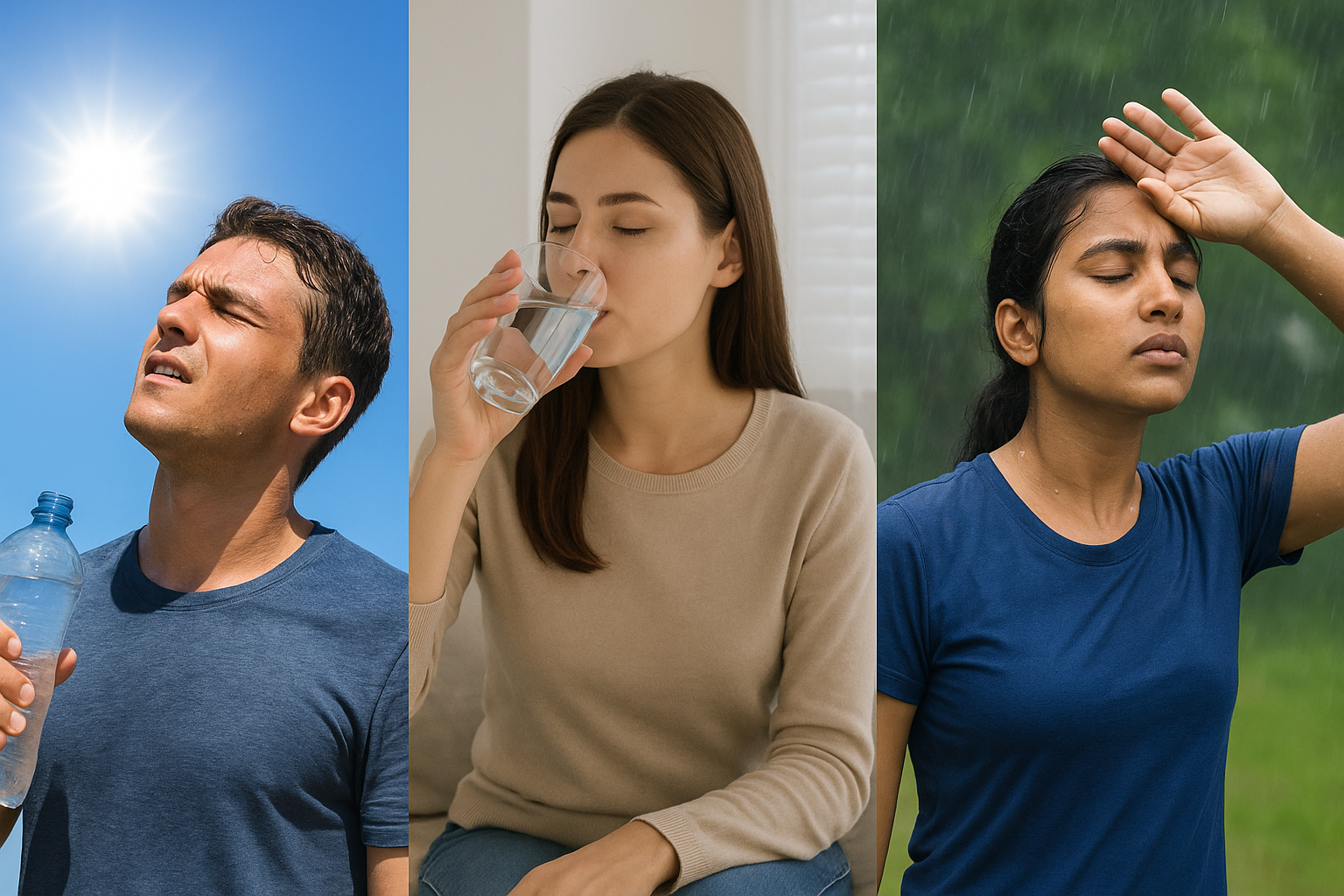
Penduduk bandar bergerak merentasi pelbagai iklim mikro setiap hari. Seketika anda berjalan di bawah terik matahari musim panas yang memantul dari konkrit, seketika kemudian anda membeku di bawah salur udara penghawa dingin pejabat, dan tidak lama kemudian anda meredah koridor kereta api bawah tanah yang lembap dan sesak di mana udara hampir tidak bergerak.
Perubahan persekitaran ini bukan sahaja mempengaruhi keselesaan—ia mengubah cara badan anda kehilangan air, mengawal suhu, dan menyerap cecair. Ini bermakna penghidratan tidak boleh bersifat seragam. Pendekatan yang lebih bijak adalah menyesuaikan bagaimana, bila, dan apa yang anda minum mengikut iklim di sekeliling anda pada setiap saat.
Artikel ini merungkai bagaimana tubuh manusia menguruskan air merentasi haba tinggi, bilik berhawa dingin kering, dan kelembapan melekit—dan menawarkan strategi penghidratan praktikal untuk kehidupan bandar sebenar.
1. Bagaimana Tubuh Manusia Mengawal Air dan Haba
Untuk memahami strategi penghidratan, adalah penting untuk mengetahui tuil biologi yang sedang bekerja.
Badan bergantung pada tiga mekanisme utama:
Penyejatan peluh.
Berpeluh hanya menyejukkan badan apabila peluh menyejat. Jika ia tidak dapat menyejat—seperti dalam persekitaran lembap—ia akan menitis dengan sedikit kesan penyejukan.
Keseimbangan elektrolit.
Peluh membawa natrium, kalium, dan klorida. Kehilangan terlalu banyak tanpa menggantikannya akan mengurangkan fungsi saraf, koordinasi otot, dan kecekapan penahanan cecair.
Pengagihan semula air.
Dalam keadaan panas, badan mengalihkan darah ke arah kulit. Dalam keadaan sejuk, ia mengurangkan peredaran ke bahagian hujung badan. Kedua-dua tingkah laku ini mengubah keperluan penghidratan.
Persekitaran yang berbeza memberi tekanan kepada mekanisme ini dengan cara yang berbeza, mewujudkan keperluan penghidratan yang berbeza.
2. Penghidratan dalam Haba Bandar yang Tinggi: Menguruskan Kehilangan Air dan Elektrolit yang Pantas
Apabila bandar panas, terutamanya dengan turapan yang memantulkan haba dan aliran angin yang terhad, badan memasuki mod kelangsungan hidup. Suhu teras meningkat dengan cepat, kelenjar peluh aktif dengan kuat, dan kehilangan elektrolit meningkat.
Apa yang dialami oleh badan anda
• Pengeluaran peluh dalam jumlah besar
• Penipisan elektrolit pantas—terutamanya natrium
• Kadar denyutan jantung meningkat disebabkan peningkatan aliran darah kulit
• Tindak balas dahaga yang kuat
• Peningkatan risiko keletihan haba atau dehidrasi
Strategi penghidratan optimum
Minum sedikit tetapi kerap, bukan dalam kuantiti yang banyak sekali gus.
Pengambilan yang banyak secara tiba-tiba boleh mencairkan natrium darah, meningkatkan risiko natrium rendah.
Air sejuk lebih diutamakan.
Air sejuk (10–15°C) mengurangkan suhu teras dan melambatkan tekanan kardiovaskular.
Sertakan elektrolit semasa pendedahan berpanjangan.
Terutamanya apabila berpeluh dengan banyak selama lebih daripada 45–60 minit.
Pra-penghidratan adalah berharga.
Dalam keadaan panas melampau, minum sebelum pendedahan mengurangkan tekanan dan melambatkan dehidrasi.
Kesilapan biasa
• Hanya minum air kosong untuk pendedahan luaran berjam-jam
• Minum minuman bergula yang memburukkan dehidrasi
• Mengabaikan tanda-tanda awal tekanan haba (kepala pening, keletihan yang teruk)
Apabila bandar menjadi panas, penghidratan menjadi sebahagian daripada pengurusan haba—bukan sekadar pengurusan dahaga.
3. Penghidratan dalam Persekitaran Dalaman Berhawa Dingin: Dehidrasi yang Tidak Kelihatan
Penghawa dingin menghilangkan kelembapan dari udara. Ini bermakna udara kering walaupun kulit anda terasa sejuk. Dalam udara kering, air menyejat lebih cepat melalui pernafasan dan kulit tanpa mencetuskan sensasi peluh.
Ini menyebabkan apa yang ramai doktor panggil “dehidrasi tersembunyi.”
Apa yang dialami oleh badan anda
• Kehilangan air yang meningkat melalui pernafasan
• Peluh berkurangan, jadi dehidrasi lebih sukar dikesan
• Kadar metabolik lebih rendah semasa duduk
• Mekanisme dahaga yang ditekan
• Keletihan ringan sering disalah anggap sebagai “kemerosotan tengah hari”
Strategi penghidratan optimum
Hirup secara konsisten—setiap 30–45 minit.
Kerana isyarat dahaga lebih lemah dalam udara sejuk dan kering.
Pilih air suam atau suhu bilik.
Ia sepadan dengan keadaan aktiviti badan yang lebih rendah dan mengurangkan ketidakselesaan perut.
Minuman rendah gula seperti teh atau air yang diperkaya elektrolit berfungsi dengan baik.
Elektrolit ringan membantu mengekalkan keseimbangan cecair tanpa menambah kalori yang tidak perlu.
Kesilapan biasa
• Hanya minum apabila dahaga
• Bergantung sepenuhnya pada kopi, yang meningkatkan kehilangan air
• Tidak bergerak atau menghidratkan diri untuk jangka masa yang panjang
Pejabat mungkin terasa sejuk dan selesa, tetapi dari sudut pandangan penghidratan, ia boleh menyebabkan dehidrasi yang mengejutkan.
4. Penghidratan dalam Persekitaran Lembap: Berurusan dengan Penyejatan Peluh yang Tidak Cekap
Kelembapan yang tinggi mengubah segala-galanya. Peluh kekal di kulit dan bukannya menyejat, menyebabkan badan anda bekerja lebih keras untuk menyejukkan diri. Hasilnya adalah peluh berterusan tanpa penyejukan yang berkesan.
Apa yang dialami oleh badan anda
• Peluh menitis dan bukannya menyejat
• Badan mengekalkan haba, meningkatkan suhu teras
• Kadar denyutan jantung meningkat untuk mengimbangi penyejukan yang lemah
• Kehilangan elektrolit menjadi ketara
• Keletihan atau pening berlaku dengan cepat
Strategi penghidratan optimum
Minum secara teratur, walaupun sebelum merasa dahaga.
Kelembapan tinggi mengurangkan kecekapan penyejukan, jadi penghidratan mesti mendahului pengumpulan haba.
Air suhu bilik berfungsi paling baik.
Air sejuk menyegarkan tetapi boleh melambatkan tindak balas penghidratan berterusan badan dalam keadaan yang sangat lembap.
Sertakan elektrolit, terutamanya semasa pendedahan luar yang berpanjangan.
Kelembapan mempercepatkan kehilangan natrium disebabkan peluh berterusan.
Gunakan pra-penghidratan untuk aktiviti luar.
Memasuki persekitaran lembap dalam keadaan sudah terhidrasi mengurangkan tekanan kardiovaskular.
Kesilapan biasa
• Mempercayai peluh sama dengan penyejukan
• Hanya minum air sejuk tanpa elektrolit
• Tidak menyesuaikan pengambilan cecair apabila kelembapan meningkat mendadak sebelum hujan
Kelembapan adalah menipu: anda mungkin minum banyak, berpeluh banyak, namun masih mengalami kepanasan. Penghidratan di sini adalah tentang menyokong batasan penyejukan badan.
5. Perbandingan Antara Persekitaran: Bagaimana Keperluan Penghidratan Berubah
| Persekitaran | Kelajuan Kehilangan Air | Kehilangan Elektrolit | Suhu Air Terbaik | Kekerapan Penghidratan | Risiko Utama |
|---|---|---|---|---|---|
| Haba Bandar Tinggi | Sangat pantas | Sangat tinggi | Sejuk | Hirupan kecil yang kerap | Keletihan haba |
| Dalam Bangunan Berhawa Dingin | Sederhana (melalui pernafasan) | Rendah-sederhana | Suam/suhu bilik | Hirupan berterusan | Dehidrasi tersembunyi |
| Iklim Lembap | Sangat pantas | Tinggi | Suhu bilik | Secara teratur & proaktif | Kepanasan tanpa disedari |
Satu hari di bandar mungkin melibatkan ketiga-tiganya. Pendekatan penghidratan yang paling bijak adalah dinamik, bukan tetap.
6. Bagaimana Suhu Air Mempengaruhi Kecekapan Penghidratan
Suhu yang berbeza mempengaruhi kelajuan badan menyerap cecair dan mengendalikan haba.
Air sejuk (10–15°C)
Ideal dalam keadaan panas tinggi. Membantu menyejukkan badan dengan cepat dan meningkatkan keinginan untuk minum.
Air suhu bilik
Terbaik untuk penghidratan berterusan, terutamanya dalam persekitaran lembap di mana badan sudah berjuang untuk menguruskan haba.
Air suam
Berfungsi dengan baik dalam persekitaran dalaman aktiviti rendah kerana ia menyokong peredaran dan keselesaan pencernaan.
Memilih suhu air mengikut persekitaran menjadikan penghidratan lebih bertujuan daripada sekadar kebiasaan.
7. Strategi Penghidratan untuk Gaya Hidup Berbeza
Pengguna komuter luar
• Bawa air semasa musim panas
• Pra-hidrat sebelum pendedahan
• Lebih suka air sejuk + elektrolit ringan
Pekerja pejabat
• Simpan botol di meja
• Hirup sedikit sepanjang hari
• Seimbangkan pengambilan kopi dengan air tambahan
Peminat kecergasan
• Haba tinggi = air sejuk + elektrolit
• Kelembapan tinggi = penghidratan berterusan dengan mineral
• Gim dalaman = air suhu bilik
Kanak-kanak & warga emas
• Memerlukan penghidratan proaktif
• Isyarat dahaga yang lebih lemah
• Mendapat manfaat daripada peringatan lembut dan botol yang mudah diakses
Rutinitas peribadi sama pentingnya dengan perubahan persekitaran.
8. Panduan Penghidratan Harian untuk Kehidupan Bandar
Bayangkan penghidratan sebagai irama operasi dan bukannya tindakan terpencil.
Pagi (fasa pengaktifan)
Minum segelas air sederhana untuk memulakan semula peredaran selepas dehidrasi semalaman.
Perjalanan (fasa risiko)
Haba tinggi atau kelembapan semasa perjalanan pagi memerlukan beberapa hirupan setiap 10–20 minit.
Hari bekerja (fasa penyelenggaraan)
Tetapkan irama dalaman: 3–4 hirupan setiap setengah jam, terutamanya dalam persekitaran berhawa dingin.
Petang (fasa keletihan)
Dehidrasi ringan sering menyerupai keletihan. Penghidratan semula di sini mencegah kemerosotan.
Malam (fasa pemulihan)
Hidrat secara beransur-ansur; elakkan minum berlebihan sejurus sebelum tidur.
Penghidratan menjadi sistem dan bukannya reaksi.
9. Kesimpulan: Penghidratan Adalah Pengurusan Alam Sekitar
Penghidratan yang betul bukan sekadar "minum lapan gelas sehari." Ia adalah strategi persekitaran. Tubuh berinteraksi dengan haba, kekeringan, dan kelembapan dengan cara yang berbeza, dan setiap satu menuntut tindak balas yang disesuaikan.
Kehidupan bandar mendedahkan kita kepada iklim mikro yang mencabar peraturan suhu dan keseimbangan air. Apabila penghidratan sepadan dengan persekitaran, badan beroperasi dengan lebih cekap, keletihan berkurangan, kognisi bertambah baik, dan kesejahteraan jangka panjang diperkukuh.
Penghidratan bukan sekadar kebiasaan—ia adalah pengurusan badan yang adaptif.