
Pilihan bahan dalam bekas minuman dahulunya mudah—plastik jika anda mahukan yang ringan, keluli tahan karat jika anda mahukan ketahanan, kaca jika anda mahukan ketulenan. Hari ini, dengan tumpuan yang lebih tinggi pada piawaian keselamatan, ketelusan kesihatan, penggunaan lestari, dan keputusan gaya hidup berasaskan senario, pemilihan bahan botol air yang betul telah berkembang menjadi tugas yang lebih kompleks dan lebih penting.
Pengguna tidak lagi bertanya, “Botol mana yang kelihatan cantik?” Soalan telah beralih ke arah prestasi:
• Adakah bahan ini selamat untuk kegunaan harian?
• Bolehkah ia mengendalikan minuman panas atau turun naik suhu?
• Adakah ia akan bertahan dalam keadaan luar?
• Adakah ia mempengaruhi rasa?
• Adakah ia selaras dengan tabiat kelestarian jangka panjang?
Artikel ini menyediakan rangka kerja yang komprehensif dan berasaskan bukti untuk memilih antara tiga bahan bekas minuman utama: Tritan, Keluli Tahan Karat, dan Kaca. Ia memecahkan prestasi, kes penggunaan dunia sebenar, dan senario berpusatkan manusia supaya pembaca dapat membuat pilihan yang yakin dan rasional—yang selaras dengan rutin mereka dan bukan slogan pemasaran.
1. Mengapa Pilihan Bahan Lebih Penting Berbanding Dahulu
Tabiat hidrasi tertanam dalam kehidupan seharian. Botol air digunakan beberapa kali sehari, dikendalikan dalam persekitaran yang berbeza, dicuci dengan kerap, dan terdedah kepada suhu yang berbeza-beza. Oleh kerana sentuhan frekuensi tinggi itu, bahan secara langsung mempengaruhi:
• keselamatan kesihatan
• rasa dan kejernihan minuman
• ketahanan dan jangka hayat
• berat dan mudah alih
• keupayaan terma
• impak kelestarian jangka panjang
Pendek kata: bahan botol membentuk pengalaman minum lebih daripada reka bentuk, warna, atau penjenamaan yang pernah ada.
Tritan, keluli tahan karat, dan kaca telah muncul sebagai tiga pilihan dominan kerana setiap satunya menyelesaikan masalah hidrasi yang berbeza. Tiada satu pun yang lebih baik secara universal—ia lebih baik secara kontekstual bergantung pada orang dan persekitaran.
Memahami tingkah laku mekanikal dan kimianya adalah titik permulaan untuk membuat keputusan yang rasional.
2. Memahami Tiga Bahan
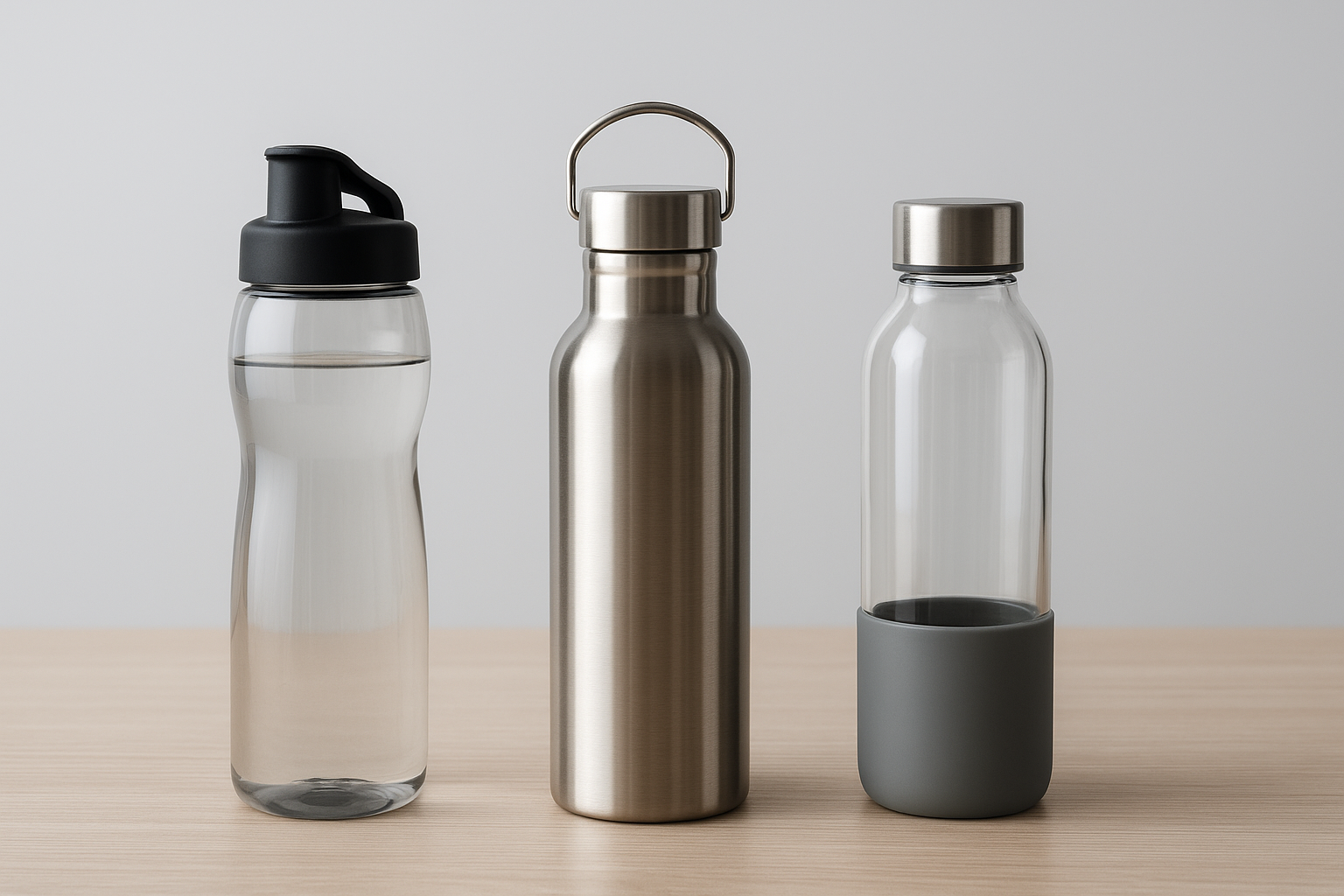
2.1 Tritan: Kopoliester Moden Bebas BPA
Tritan adalah plastik generasi akan datang yang diperkenalkan untuk mengatasi kekurangan polikarbonat tradisional. Ia adalah:
• bebas BPA dan bebas BPS sepenuhnya
• sangat tahan hentaman
• ringan
• telus seperti kaca
• selamat untuk kegunaan harian
Secara kimia, Tritan adalah kopoliester—direka untuk kejelasan tinggi dan ketahanan struktur. Ia digunakan secara meluas dalam:
• botol sukan
• botol penggoncang
• botol kanak-kanak
• bekas hidrasi harian yang lebih ringan
• situasi di mana ketahanan lebih penting daripada prestasi terma
Kelebihan terbesar Tritan adalah hampir tidak boleh pecah tanpa menjejaskan kejelasan.
2.2 Keluli Tahan Karat: Piawaian Industri untuk Ketahanan dan Penebat
Botol keluli tahan karat—terutamanya yang diperbuat daripada keluli gred makanan 304 atau 316—mendominasi segmen premium bekas minuman kerana:
• penebat haba
• ketangguhan
• ketahanan kakisan
• jangka hayat yang panjang
Apabila digabungkan dengan penebat vakum, keluli tahan karat menjadi kuasa kawalan suhu:
• Ia memastikan minuman sejuk kekal sejuk selama 12–24 jam.
• Ia memastikan minuman panas kekal panas selama 6–12 jam.
Ini menjadikan keluli tahan karat sesuai untuk profesional, pengembara, atlet luar, dan sesiapa sahaja yang mahukan suhu yang konsisten sepanjang hari bekerja penuh.
Kelemahannya adalah berat dan kelegapan.
2.3 Kaca: Bahan Peminat Rasa Tulen
Kaca adalah bahan bekas minuman tertua manusia, dan ia kekal tiada tandingan dalam satu kategori: ketulenan.
Kaca adalah:
• lengai secara kimia
• bebas daripada sebarang potensi larut lesap
• tahan terhadap bau
• mudah dibersihkan
• telus
Orang yang sensitif terhadap rasa sering memilih kaca kerana air kekal benar-benar neutral—tiada rasa logam, tiada sedikit pun plastik, tiada sisa.
Hadnya adalah ketahanan dan mudah alih. Walaupun dengan lengan silikon, kaca menghadapi masalah dalam persekitaran bergerak tinggi.
3. Penilaian Prestasi: Kekuatan dan Kelemahan
Untuk memilih botol yang betul, anda memerlukan pemahaman yang jujur tentang apa yang setiap bahan cemerlang—dan apa yang pasti ia kompromi.
3.1 Botol Air Tritan
Kekuatan
Ringan
Tritan jauh lebih ringan daripada keluli tahan karat dan lebih ringan daripada kaca berdinding dua yang tebal.
Rintangan hentaman tinggi
Ia tidak pecah apabila dijatuhkan, menjadikannya sesuai untuk kanak-kanak, sukan, atau perjalanan.
Ketelusan
Pengguna serta-merta melihat paras air dan kebersihan.
Selamat dan bebas BPA
Direka untuk menghilangkan kebimbangan gangguan endokrin plastik lama.
Penyelenggaraan mudah
Selamat untuk mesin basuh pinggan mangkuk, tahan calar (pada tahap tertentu), dan serasi dengan kitaran pengisian semula harian.
Kelemahan
Had toleransi haba
Ia mula berubah bentuk berhampiran takat didih (100°C). Tidak sesuai untuk teh panas, kopi panas, atau pensterilan mendidih.
Tiada penebat
Air sejuk cepat menjadi panas. Air panas cepat menjadi sejuk.
Boleh calar dari masa ke masa
Lecuran permukaan adalah kosmetik tetapi ketara, terutamanya bagi orang yang inginkan kejernihan sempurna.
3.2 Botol Air Keluli Tahan Karat
Kekuatan
Penebat haba
Keluli kedap vakum adalah satu-satunya bahan arus perdana yang boleh mengekalkan suhu dengan pasti selama berjam-jam.
Ketahanan tinggi
Ia tahan terhadap jatuh, penggunaan luar, pendakian panjang, dan perjalanan harian lebih baik daripada bahan lain.
Tahan kakisan dan tahan lama
Keluli 304/316 menahan karat, pengumpulan bakteria, dan minuman berasid.
Pemindahan rasa minimum
Secara amnya neutral, walaupun sesetengah orang mengesan sedikit rasa logam.
Kelemahan
Berat
Lebih berat daripada Tritan atau kaca kerana pembinaan dinding dua.
Tidak telus
Pengguna tidak dapat melihat paras air, kebersihan, atau sisa di dalamnya.
Potensi rasa logam untuk pengguna sensitif
Tidak berbahaya, tetapi ketara bagi mereka yang mempunyai kepekaan rasa tinggi.
3.3 Botol Air Kaca
Kekuatan
Rasa tulen
Air kekal sama—tiada pemindahan rasa, tiada pengekalan bau.
Sifar interaksi kimia
Kaca adalah lengai, bermakna ia tidak menyerap, mengeluarkan, atau bertindak balas dengan minuman.
Mudah dibersihkan dengan teliti
Sisa tidak boleh melekat pada permukaannya seperti yang kadang-kadang berlaku pada plastik.
Kelemahan
Kerapuhan
Malah kaca borosilikat atau kaca terbaja boleh retak atau pecah.
Lebih berat
Tidak sesuai untuk berjalan jauh, beg galas, atau pergerakan aktif.
Tiada penebat
Suhu berubah dengan cepat dan botol mungkin terasa panas atau sejuk apabila disentuh.
4. Jadual Perbandingan: Tritan vs Keluli Tahan Karat vs Kaca
Jadual ini menyatukan ciri-ciri prestasi untuk perbandingan cepat dan objektif:
| Ciri | Tritan | Keluli Tahan Karat | Kaca |
|---|---|---|---|
| Keselamatan | Tinggi (BPA/BPS-percuma) | Tinggi (keluli gred makanan) | Tertinggi (lengai secara kimia) |
| Rintangan Haba | Sederhana (≤100°C) | Tinggi (ideal untuk air panas) | Sederhana (elakkan kejutan terma) |
| Penebat | Tiada | Cemerlang | Tiada |
| Rintangan Hentaman | Sangat kuat | Kuat | Lemah |
| Berat | Ringan | Sederhana–berat | Berat |
| Ketahanan | Sederhana–tinggi | Sangat tinggi | Sederhana |
| Keneutralan Rasa | Tinggi | Sederhana–tinggi | Tertinggi |
| Ketelusan | Ya | Tidak | Ya |
| Kesukaran Pembersihan | Rendah | Sederhana | Rendah |
| Keserasian Kanak-kanak | Cemerlang | Sederhana | Rendah |
| Kesesuaian Luaran | Baik | Cemerlang | Lemah |
| Penggunaan Pejabat/Rumah | Baik | Cemerlang | Cemerlang |
| Julat Harga | Rendah–sederhana | Sederhana–tinggi | Rendah–sederhana |
5. Rangka Kerja Keputusan Berasaskan Senario: Pilih Berdasarkan Corak Kehidupan Anda
Pengguna sering memilih mengikut bahan terlebih dahulu. Walau bagaimanapun, kaedah yang lebih strategik adalah dengan memilih mengikut senario, kemudian mengenal pasti bahan yang paling sesuai menyokong persekitaran itu.
Persekitaran yang berbeza memberi ganjaran kepada kekuatan yang berbeza.
5.1 Untuk Pejabat dan Rumah: Kaca Memberi Pengalaman Terbaik
Mengapa kaca berfungsi paling baik di dalam rumah:
• Anda tidak bergerak pantas atau berisiko terjatuh.
• Anda boleh menikmati rasa tulen semasa tempoh duduk yang lama.
• Anda mungkin mempunyai akses kepada permukaan selamat (meja, rak).
• Anda tidak berhadapan dengan cuaca ekstrem atau impak.
Kaca sesuai untuk:
• meja kerja
• hidrasi di sisi katil
• kawasan dapur dan ruang makan
• peminum teh dan individu yang sensitif rasa
Di mana kaca menjadi menyusahkan:
• perjalanan ulang-alik
• kereta api yang sesak
• berbasikal
• mendaki
• kegunaan kanak-kanak
Kerapuhannya menetapkan batasan persekitaran yang jelas.
5.2 Untuk Perjalanan, Ulang-alik, dan Hari yang Panjang: Keluli Tahan Karat Adalah yang Paling Boleh Dipercayai
Keluli tahan karat menyelesaikan masalah yang bahan lain tidak dapat:
• pengekalan suhu jangka panjang
• persekitaran yang tidak dapat diramal
• terjatuh kuat
• pendedahan cuaca
• keletihan perjalanan
Ia menyokong:
• profesional yang keluar rumah awal dan pulang lewat
• pelajar di kampus sepanjang hari
• pendaki dan penunggang basikal
• pemandu dan pengembara jalan raya
• peminat kecergasan yang memerlukan air sejuk sepanjang senaman
Berat dan kelegapannya adalah pertukaran kecil berbanding prestasi dan ketahanan.
5.3 Untuk Kanak-kanak, Keperluan Ringan, dan Kegunaan Santai Harian: Tritan Adalah yang Paling Praktikal
Tritan menduduki kedudukan tengah yang luas—lebih tahan lasak dan selamat daripada plastik standard, lebih mudah alih daripada keluli, kurang rapuh daripada kaca.
Ia adalah bahan utama untuk:
• kanak-kanak (tahan jatuh, ringan, lutsinar)
• pengguna sukan dan gim
• beg galas, beg sekolah, dan beg tangan
• pengembara bandar
• orang yang sering mengisi semula sepanjang hari
• pengguna yang perlu memantau hidrasi secara visual
Kelemahan utamanya ialah batasan haba. Tritan tidak dibina untuk air mendidih atau penebat haba.
6. Pertimbangan Lanjutan: Bahan Manakah yang Sesuai dengan Gaya Hidup Jangka Panjang Anda?
Pilihan bahan melangkaui fungsi segera. Corak penggunaan berfrekuensi tinggi selama berbulan-bulan atau bertahun-tahun secara senyap mendedahkan faktor yang lebih mendalam:
6.1 Kelestarian dan Impak Alam Sekitar
Setiap bahan mempunyai jejak yang berbeza:
Tritan
• boleh dikitar semula
• tahan lama tetapi tidak kekal
• sangat baik untuk mengurangkan plastik sekali guna
Keluli Tahan Karat
• sangat tahan lasak
• boleh bertahan 5–10+ tahun, mengurangkan sisa kitaran hayat
• intensif tenaga untuk dihasilkan tetapi cekap ekologi dari masa ke masa
Kaca
• boleh dikitar semula tanpa had
• pelepasan yang lebih rendah dalam kitaran kitar semula
• lebih cenderung pecah, memerlukan penggantian
6.2 Faktor Suhu dan Iklim
Bahan tertentu secara semula jadi sejajar dengan suhu bermusim dan serantau:
• Tritan berprestasi baik dalam iklim sederhana.
• Keluli tahan karat cemerlang dalam musim panas yang panas dan musim sejuk yang sejuk.
• Kaca stabil di dalam rumah sepanjang semua musim.
Orang di iklim tropika atau sangat sejuk biasanya lebih suka keluli tahan karat untuk pengekalan suhu yang boleh diramal.
6.3 Kekerapan Penggunaan dan Tabiat Pembersihan
Rutin pembersihan yang berbeza sesuai dengan gaya hidup yang berbeza:
• Jika anda mencuci botol anda sekali sehari → mana-mana bahan boleh digunakan.
• Jika anda minum minuman berperisa (kopi, jus, elektrolit) → kaca atau keluli berprestasi lebih baik.
• Jika anda lebih suka pengesahan visual kebersihan → Tritan atau kaca.
• Jika anda terlupa botol anda dalam beg selama berjam-jam → keluli tahan karat mengawal bau dengan terbaik.
6.4 Sensitiviti Rasa
Manusia sangat berbeza dalam sensitiviti rasa:
• Jika rasa logam yang sedikit mengganggu anda → kaca adalah pilihan yang paling bersih.
• Jika anda tidak suka bau plastik → keluli tahan karat atau kaca.
• Jika anda mahukan rasa neutral tetapi ringan → Tritan adalah pilihan tengah yang seimbang.
7. Cadangan Akhir: Pilih Bahan yang Sesuai dengan Kehidupan Sebenar Anda
Tiada bahan botol air yang "terbaik"—hanya yang terbaik untuk gaya hidup tertentu.
Rangka kerja rasional adalah:
Kaca = rasa terbaik + paling selamat di dalam rumah
Keluli Tahan Karat = ketahanan terbaik + penebat terbaik + pilihan luar/ulang-alik terbaik
Tritan = paling ringan + terbaik untuk kanak-kanak + terbaik untuk hidrasi harian yang pantas
Tabiat hidrasi anda berkembang dari semasa ke semasa. Orang yang bermula dengan botol Tritan ringan sering meningkatkan kepada keluli tahan karat apabila mereka memerlukan kawalan suhu yang lebih baik. Ada juga yang mengekalkan botol kaca di rumah sambil menggunakan botol keluli tahan karat untuk kerja.
Strategi yang bijak bukanlah memilih satu bahan selama-lamanya tetapi membina ekosistem botol yang sepadan dengan cara anda hidup, bergerak, dan menghidrasi.
Hidrasi adalah tingkah laku yang berfrekuensi tinggi—dalam jangka panjang, bahan yang betul adalah yang mengurangkan geseran, meningkatkan kemudahan, dan menyokong rutin anda dengan mudah.