
Why Our Favorite Everyday Places Often Become Our Second Home
Introduction: The Best Places in Our Lives Aren't Always the Ones We Travel Far to Find
When we think about meaningful places, our minds often drift to famous cities, breathtaking landscapes, or unforgettable vacations.
But if we pause for a moment, many of our happiest memories come from somewhere much closer.
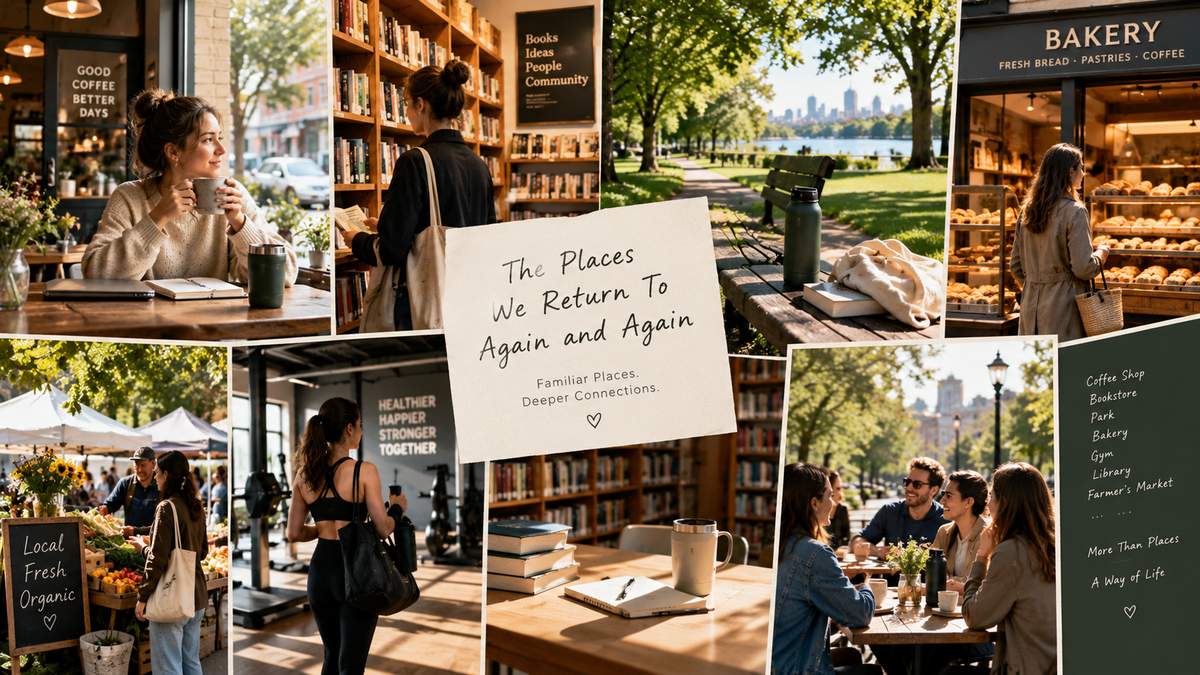
The neighborhood café where the barista already knows your usual order.
The independent bookstore where you always spend longer than planned.
The park bench where you enjoy your morning coffee.
The bakery that fills the street with the comforting smell of fresh bread every weekend.
The farmers' market where familiar faces greet one another every Saturday morning.
These places rarely appear in travel guides.
They don't need famous landmarks or spectacular views.
Yet we return to them again and again.
Not because they are extraordinary.
But because they quietly become part of our everyday lives.
Over time, they stop feeling like destinations.
They begin to feel like home.
Why Familiar Places Matter More Than We Realize
Modern life often encourages us to search for something new.
A new restaurant.
A new destination.
A new experience.
A new adventure.
While discovering new places is exciting, there is a different kind of happiness that comes from returning to familiar ones.
Walking into a café where someone smiles before asking your order.
Following the same tree-lined path through your favorite park.
Browsing the shelves of a bookstore where every corner feels familiar.
These experiences create a sense of comfort that novelty cannot always provide.
Routine is often misunderstood as something repetitive.
In reality, it gives our lives rhythm.
And rhythm creates belonging.
The Rise of the "Third Place"
Sociologists often describe the idea of a "third place."
The first place is home.
The second is work.
The third is somewhere in between.
It's where people gather, relax, and simply exist without expectations.
For many people, that third place is a neighborhood coffee shop.
For others, it's the local library, a quiet park, a community garden, a bakery, or a weekend farmers' market.
These places don't ask us to achieve anything.
We don't need to be productive.
We don't need to impress anyone.
We simply arrive.
And somehow, we always leave feeling a little better.
Perhaps that is why third places have become increasingly important in modern life.
They remind us that belonging isn't always something we build inside our homes.
Sometimes we find it just around the corner.
Coffee Shops Become More Than Coffee Shops
A great neighborhood café offers much more than excellent coffee.
People return because of how the space makes them feel.
The familiar greeting from the barista.
The favorite seat beside the window.
The quiet background music.
The warm aroma of freshly brewed coffee.
The steady rhythm of people coming and going.
Some cafés become remote offices.
Others become reading rooms.
Some host creative brainstorming sessions.
Others simply provide a peaceful place to think.
The coffee may bring people through the door.
But it's the atmosphere that brings them back.
Bookstores Invite Us to Slow Down
Independent bookstores have become quiet sanctuaries in a fast-moving world.
Unlike online shopping, they encourage discovery rather than efficiency.
You may enter intending to buy one book.
An hour later, you're still browsing.
You notice titles you weren't searching for.
You read a few pages while sitting in a comfortable chair.
You chat with someone who recommends their favorite author.
Bookstores remind us that slowing down often leads to unexpected discoveries.
Sometimes the most valuable thing we leave with isn't the book we planned to buy.
It's the feeling of having spent an afternoon somewhere that encourages curiosity.
Parks Become Everyday Escapes
Not every weekend requires a carefully planned trip.
Sometimes the best escape is only a short walk away.
A quiet park becomes the setting for morning exercise.
An afternoon picnic.
Reading beneath old trees.
Walking with friends.
Watching children play.
Listening to birds after rainfall.
These simple moments reconnect us with nature without requiring us to travel far.
They remind us that peace doesn't always exist somewhere else.
Sometimes it already exists within our own neighborhood.
Small Businesses Create Strong Communities
Every neighborhood has places that quietly bring people together.
The family-owned bakery.
The local flower shop.
The independent coffee roaster.
The corner bookstore.
The farmers' market filled with seasonal produce.
When we visit regularly, something begins to change.
The owner remembers our name.
The baker asks how our week has been.
The florist recommends flowers that have just arrived.
These conversations may only last a few minutes.
Yet over time, they create something meaningful.
Community isn't built through one unforgettable moment.
It's built through hundreds of ordinary interactions.
Returning Creates Emotional Connections
We rarely fall in love with a place on our first visit.
We grow attached through repetition.
Morning after morning.
Weekend after weekend.
Season after season.
We watch trees change color.
We celebrate birthdays in the same café.
We read another book beneath the same tree.
We meet old friends at the same corner table.
Eventually, those places become connected to our personal stories.
Simply walking through the door brings back memories.
Not because the building changed.
Because we did.
The Everyday Essentials That Travel With Us
The places we love often share something in common.
They become part of our personal rituals.
And every ritual includes a few familiar companions.
A reusable tumbler filled with morning coffee.
A favorite notebook carried to the bookstore.
A water bottle packed for a walk through the park.
A camera ready to capture ordinary moments.
A backpack holding everything needed for an unhurried afternoon.
These everyday essentials don't define the experience.
They quietly support it.
Over time, they become just as familiar as the places themselves.
Building a Life Close to Home
Across Europe and North America, more people are choosing neighborhoods that support everyday living.
Walkable streets.
Independent cafés.
Public libraries.
Parks.
Local markets.
Community events.
Rather than spending hours driving across the city, people increasingly value places they can reach on foot.
This shift isn't simply about convenience.
It's about quality of life.
A neighborhood filled with welcoming places encourages spontaneous conversations, healthier routines, and stronger connections.
The places we visit every week often shape our happiness far more than the places we visit once a year.
The MODOFO GLOBAL Philosophy
At MODOFO GLOBAL, we believe the most meaningful destinations aren't always the ones marked on a map.
Sometimes they're the coffee shop where your mornings begin.
The bookstore where new ideas quietly take shape.
The park where you pause after a busy day.
The local market that inspires weekend meals.
The neighborhood where familiar faces become part of your routine.
Our everyday essentials are designed to move naturally through these moments.
From coffee walks and reading afternoons to weekend markets and quiet conversations, thoughtfully designed products become trusted companions rather than distractions.
Because great products aren't meant to replace experiences.
They're meant to travel alongside them.
Conclusion: Home Can Exist in More Than One Place
Home isn't always defined by four walls.
Sometimes it's a familiar table in your favorite café.
A quiet corner of the library.
A walking trail you've explored hundreds of times.
A bakery where the smell of fresh bread instantly feels comforting.
A neighborhood market where people greet one another by name.
These places ask for very little.
Only that we return.
And perhaps that's why they become so meaningful.
They give us consistency in an unpredictable world.
They remind us to slow down.
They help us feel connected—not only to a place, but also to the people and routines that make everyday life richer.
In the end, the places we return to again and again are rarely the most extraordinary.
They're simply the ones where we feel most like ourselves.
Life isn't measured only by the places we travel to once. It's also shaped by the places that quietly welcome us back, again and again.