
Everyday Luxury Around the World: Small Habits That Create Happiness
How Different Cultures Find Joy in Everyday Moments
Luxury has traditionally been associated with things that are expensive, exclusive, and difficult to access: a designer handbag, a luxury car, a five-star hotel, or a long-awaited international vacation.
But the way people think about a good life is changing.
For many modern consumers, luxury is becoming less about what they own and more about how they experience everyday life.
A quiet cup of tea in the morning.
A perfectly prepared espresso at a neighborhood café.
Fresh flowers on the dining table.
A walk by the ocean before work.
A warm drink shared with friends.
A few uninterrupted minutes with a favorite book.
None of these experiences necessarily costs much.
Yet they can make an ordinary day feel noticeably better.
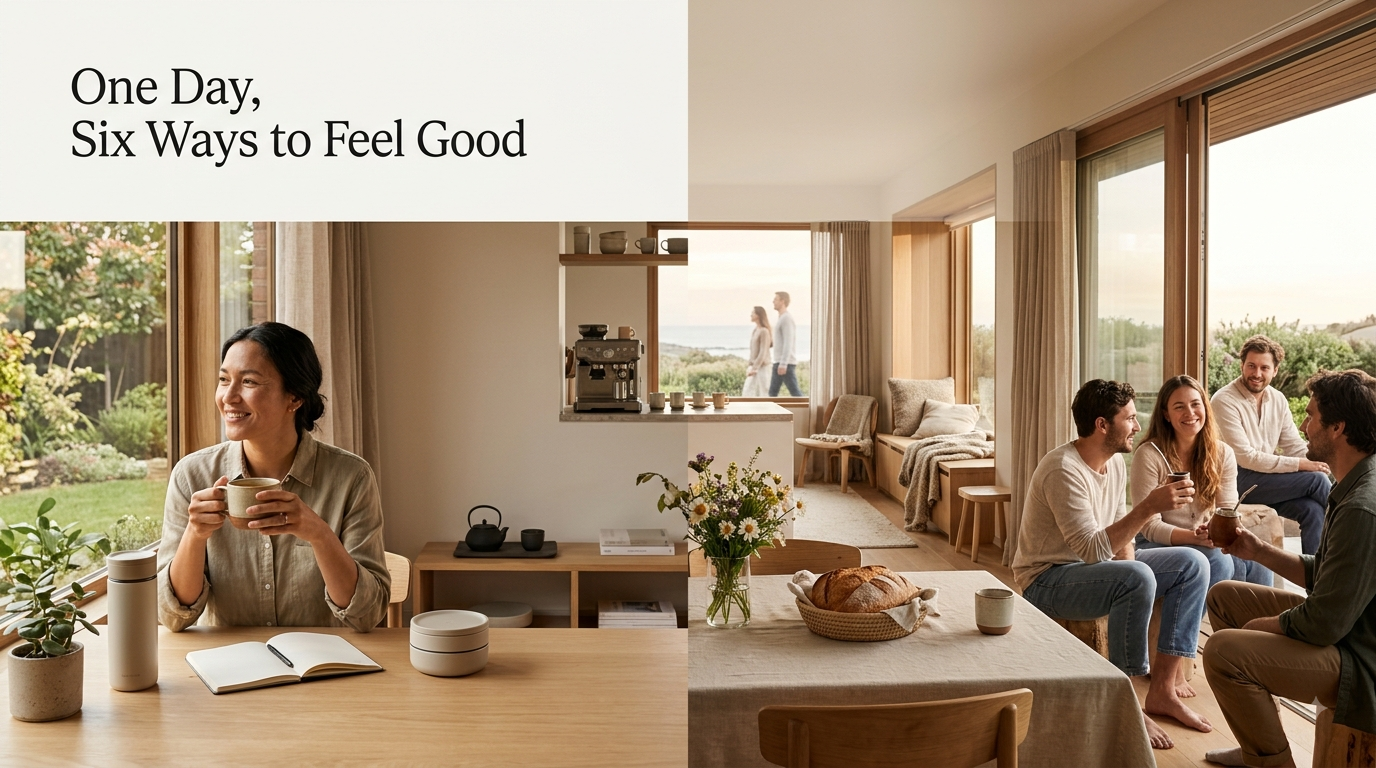
Across different cultures, people have developed their own ways of turning simple routines into meaningful experiences. Japan finds beauty in simplicity and seasonality. Italy transforms coffee into a social ritual. France pays attention to the details of everyday living. Scandinavian cultures value comfort and balance. In South America, shared drinks and conversation create powerful social connections. In Australia, nature is often integrated directly into everyday life.
The details are different, but the underlying idea is surprisingly universal:
Luxury does not always mean having more. Sometimes, it means experiencing ordinary things more intentionally.
And perhaps that is one of the most interesting definitions of quality living today.
Why Small Habits Matter More Than Big Purchases
Modern life is full of major milestones.
We plan vacations months in advance.
We save for a new car.
We celebrate birthdays, anniversaries, and holidays.
We look forward to weekends and long breaks.
These moments are important, but they are relatively rare.
Most of life happens somewhere else.
It happens on ordinary Monday mornings.
During the commute.
Over breakfast.
Between meetings.
While preparing dinner.
During an evening walk.
Before going to sleep.
This is why small daily experiences can have such an important role in our perception of quality of life.
A large purchase may create excitement, but a small positive ritual can be repeated hundreds of times.
A favorite coffee cup can become part of a morning routine. A walk can become a way to reset after work. A few minutes of tea can create a transition between a busy afternoon and a quieter evening.
These experiences are not dramatic.
Their value comes from repetition.
The Power of Repeated Positive Experiences
There is a useful distinction between rare pleasures and repeated pleasures.
A luxury vacation might create wonderful memories, but a simple morning ritual can influence the experience of everyday life again and again.
This is where habits become more than routines.
They become small anchors.
A ten-minute coffee break can signal the beginning of the day.
A favorite playlist can make a commute more enjoyable.
An evening walk can create separation between work and home.
A cup of tea can become a moment to slow down.
The individual experience may be small.
The accumulated effect can be significant.
This is also why modern luxury is increasingly connected with ideas such as intentional living, slow living, mindfulness, and quality over quantity.
People are not necessarily looking for more things.
They are looking for better moments with the things they already use.
Japan: Finding Luxury in Simplicity
Japan offers one of the clearest examples of how simplicity can become a form of luxury.
From the aesthetics of traditional tea culture to minimalist interiors and seasonal food, Japanese culture often places considerable value on attention, balance, and restraint.
The concept of wabi-sabi, broadly associated with finding beauty in imperfection, impermanence, and simplicity, offers a useful perspective.
Something does not need to be flawless to be beautiful.
A handmade ceramic cup can have irregularities.
A wooden table can show its natural grain.
A garden can change with the seasons.
A quiet room can feel more valuable than a crowded one.
The luxury is not necessarily in the object.
It is in the attention given to the experience.
The Luxury of Quiet
In a world filled with notifications, advertisements, and constant digital stimulation, quiet itself can feel valuable.
A few minutes without a screen.
Tea prepared slowly.
A clean room.
Morning sunlight entering through a window.
These are simple experiences, but they create a sense of space.
This is one reason minimalism continues to resonate with modern consumers.
Minimalism is not simply about owning fewer things.
At its best, it is about making room for the things that matter.
The same philosophy can apply to everyday objects.
Instead of owning dozens of disposable cups, bottles, and containers, a person may choose one well-designed item that becomes part of their daily routine.
The object becomes familiar.
The experience becomes personal.
And simplicity becomes its own form of luxury.
Italy: When Coffee Becomes a Daily Celebration
Few cultures demonstrate the social value of an everyday beverage as clearly as Italy.
For many Italians, espresso is not simply a source of caffeine.
It is part of the rhythm of the day.
A coffee may happen in the morning, after lunch, during a break, or while meeting someone in town.
The experience can be brief.
Sometimes it takes only a few minutes.
But those few minutes matter.
A person may stand at a café counter, exchange a few words with the barista, talk with a friend, or simply watch the street.
The coffee creates a pause.
And that pause has value.
Luxury Is Having Time to Notice
Modern productivity culture often encourages people to optimize every minute.
But there is another way to think about time.
Not every minute needs to produce something.
Some minutes simply need to be experienced.
Italian coffee culture illustrates this beautifully.
The espresso itself may be small.
The ritual surrounding it is much larger.
It creates an opportunity to stop, connect, observe, and enjoy.
That is a useful lesson for modern life:
An experience does not need to be long to be meaningful.
Sometimes, luxury is simply having enough awareness to enjoy five minutes of your day.
France: Beauty in Everyday Living
French lifestyle culture often places emphasis on the everyday details that make ordinary life feel considered.
Breakfast can become a small ritual.
A table can be arranged with care.
Fresh bread, coffee, fruit, flowers, ceramics, and natural light can transform an ordinary meal into something more memorable.
None of these elements needs to be extravagant.
The difference comes from attention.
The Luxury of Attention to Detail
There is an important distinction between expensive and considered.
A beautifully arranged table does not need expensive dinnerware.
A comfortable breakfast does not require a luxury hotel.
A home does not need to look like a design showroom to feel inviting.
Often, the smallest details have the greatest influence:
The cup you reach for every morning.
The way sunlight enters the kitchen.
The flowers on the table.
The music playing during dinner.
The food being shared with someone you care about.
This philosophy turns ordinary environments into personal experiences.
Luxury becomes less about status and more about aesthetic awareness.
Scandinavia: Comfort as Happiness
Scandinavian lifestyle concepts such as hygge and lagom have become popular around the world because they respond to a very modern question:
What does a comfortable life actually look like?
The answer is rarely complicated.
Natural light.
Warm drinks.
Soft textures.
Wood.
Simple food.
A comfortable chair.
Friends and family.
Time spent at home.
These elements create an environment that feels welcoming rather than impressive.
The Luxury of Comfort
For a long time, luxury interiors were often designed to communicate status.
Large spaces.
Expensive materials.
Statement furniture.
But contemporary lifestyle design increasingly emphasizes another quality:
How does the space make you feel?
A smaller room with good light can feel better than a larger room without warmth.
A simple chair can be more valuable than an expensive one if it is the place where you love to read.
A favorite mug can become more meaningful than a cabinet full of decorative objects.
This is the essence of comfort-oriented living.
Luxury is not always about impressing other people. Sometimes, it is about making yourself feel at home.
South America: Shared Moments Matter Most
Across many parts of South America, food and beverages play an important role in social life.
Coffee is shared.
Meals bring families together.
Friends gather outdoors.
And traditions such as mate demonstrate how a simple drink can become a powerful social ritual.
Mate is not simply about drinking something.
It can represent conversation, friendship, hospitality, and connection.
The container itself is only part of the experience.
The people around it matter more.
The Luxury of Togetherness
Modern lifestyles can become increasingly individual.
People work remotely.
Communicate through screens.
Eat while looking at phones.
And sometimes spend entire days without meaningful face-to-face interaction.
Shared rituals create an alternative.
A meal.
A coffee.
A walk.
A drink passed between friends.
A conversation that lasts longer than expected.
These moments remind us that quality of life is not only about personal comfort.
It is also about connection.
In this sense, South American lifestyle culture offers an important perspective:
One of the most valuable things we can share is time.
Australia: When Nature Becomes Everyday Luxury
Australia offers another interpretation of everyday luxury.
Here, outdoor living can become part of ordinary life rather than something reserved for holidays.
Morning walks.
Beach visits.
Surfing.
Outdoor coffee.
Weekend markets.
Picnics.
Running along the coast.
The natural environment becomes an extension of everyday life.
The Luxury of Open Space
For people living in dense cities, access to nature can feel increasingly valuable.
A few minutes under the sun can change the mood of a morning.
A walk beside the water can create a mental reset.
A weekend outdoors can provide a break from screens and indoor environments.
This does not necessarily require a major trip.
It can be as simple as choosing to walk instead of drive, drinking coffee outside, or spending an hour in a local park.
Nature becomes less of a destination and more of a habit.
And that is what makes it powerful.
Why Everyday Rituals Create Lasting Happiness
Across these cultures, one pattern keeps appearing.
The activity itself is usually simple.
What changes is the meaning attached to it.
Tea becomes a moment of calm.
Coffee becomes social connection.
Breakfast becomes appreciation.
A warm room becomes comfort.
A shared drink becomes friendship.
A walk becomes a mental reset.
The ritual transforms an ordinary activity into something intentional.
From Routine to Ritual
A routine is something we do repeatedly.
A ritual is something we experience with intention.
The difference may seem subtle, but it changes how we perceive everyday life.
Consider drinking water.
It is one of the most basic things people do every day.
But imagine turning it into a small ritual:
A favorite bottle.
Cold, fresh water.
A few minutes away from the desk.
A walk outside.
No notifications.
The action is still simply drinking water.
The experience is different.
This is one reason everyday objects can matter more than we sometimes realize.
They become part of repeated experiences.
The Everyday Objects That Quietly Improve Life
Not every object needs to be extraordinary.
But the objects we use every day deserve thoughtful consideration.
A coffee cup.
A tea bottle.
A notebook.
A backpack.
A pair of headphones.
A water bottle.
A favorite jacket.
A comfortable pair of shoes.
These objects accompany us through ordinary life.
They become part of our routines.
And because they are used repeatedly, even small improvements can have a cumulative effect.
Buy Less, Choose Better
This connects with a broader shift in modern consumer behavior.
Instead of constantly buying new things, some consumers are becoming more selective.
They ask:
Will I use this regularly?
Does it make my everyday life better?
Is it comfortable?
Is it durable?
Does it fit my lifestyle?
Does it feel good to use?
These questions move the conversation away from simple consumption and toward intentional ownership.
The best everyday object may not be the most expensive one.
It may simply be the one that fits your life so naturally that you enjoy using it every day.
Why Modern Luxury Is Becoming More Personal
Luxury used to be relatively easy to recognize.
Certain brands.
Certain destinations.
Certain products.
Certain lifestyles.
Today, the definition is becoming more personal.
For one person, luxury may mean drinking tea alone before everyone else wakes up.
For another, it may mean running beside the ocean every morning.
Someone else may value a quiet reading corner.
Another person may find happiness in preparing dinner for their family.
There is no universal formula.
And perhaps that is the most important change.
Luxury Is No Longer Only About Status
Modern luxury increasingly reflects personal values.
Someone who values sustainability may consider a durable reusable product more luxurious than a disposable alternative.
Someone who values travel may prioritize a lightweight, reliable everyday essential.
Someone who values health and fitness may invest in better hydration habits.
Someone who values family may care more about a comfortable kitchen than an expensive watch.
Someone who values calm may see an uninterrupted morning as the ultimate luxury.
The definition is individual.
Luxury is becoming less about what other people recognize and more about what you personally appreciate.
The MODOFO GLOBAL Philosophy: Everyday Matters
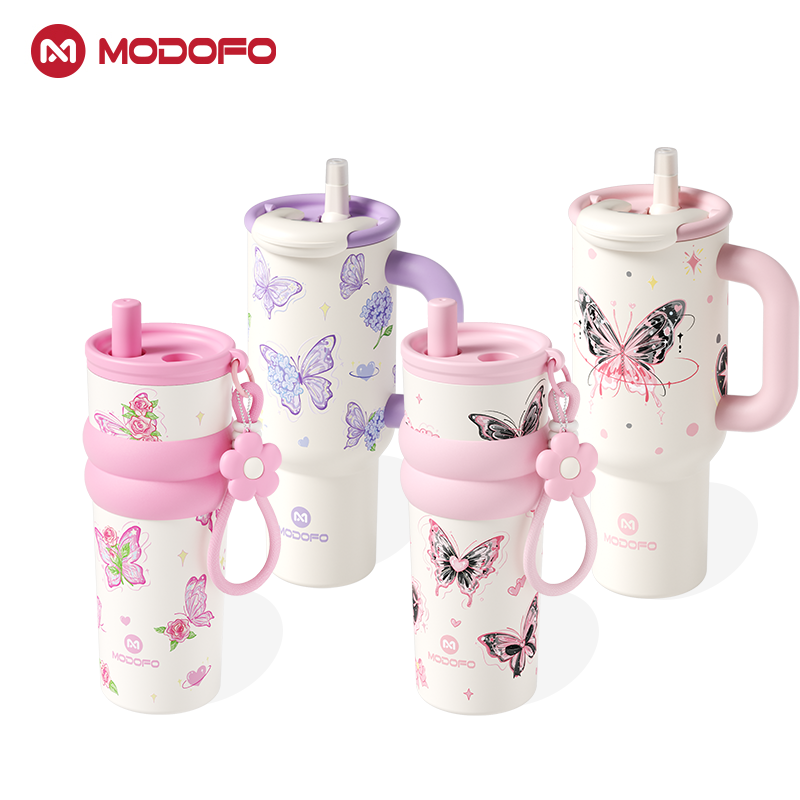
At MODOFO GLOBAL, we believe everyday objects have a role that goes beyond functionality.
A bottle is not simply a container.
A tumbler is not simply a way to carry a drink.
These objects can become part of mornings, commutes, workouts, travel, workdays, family moments, coffee breaks, and quiet evenings.
That is why the idea of Everyday Luxury matters.
Not luxury in the traditional sense.
Not excess.
Not status.
But the idea that ordinary moments deserve better experiences.
A morning can begin with good coffee.
A long journey can be made easier with reliable hydration.
A walk can become more enjoyable with the right companion.
Tea can become a pause.
A family outing can become a memory.
Travel can become more comfortable.
The object itself is only one part of the story.
The experience around it is what matters.
This is the philosophy behind MODOFO GLOBAL:
Make everyday moments feel a little better.
Because the things we use every day quietly shape the way we experience everyday life.
What Everyday Luxury Can Look Like
You do not need to completely change your lifestyle to create more meaningful moments.
Start small.
Wake up ten minutes earlier and drink your coffee without checking your phone.
Take your tea outside.
Walk through your neighborhood instead of driving for a short trip.
Keep fresh flowers at home.
Prepare a simple breakfast you genuinely enjoy.
Take a reusable bottle on your morning walk.
Spend an evening cooking with your family.
Listen to music during your commute.
Watch the sunset.
Sit with a friend for coffee without rushing.
Read a few pages before bed.
None of these activities is extraordinary.
That is exactly the point.
A better life is rarely built from extraordinary moments alone.
It is built from ordinary moments that become meaningful through repetition.
Happiness Is Built One Small Habit at a Time
Perhaps the modern definition of luxury is not about escaping everyday life.
It is about making everyday life better.
Japan shows us the value of simplicity.
Italy reminds us to slow down and enjoy small pleasures.
France demonstrates the importance of attention to detail.
Scandinavia shows that comfort can be deeply valuable.
South America reminds us that shared moments matter.
Australia demonstrates how nature can become part of everyday life.
Different cultures.
Different traditions.
Different definitions of a good day.
But underneath them is a common human idea:
We do not need every moment to be extraordinary. We simply need more moments that feel worth experiencing.
The most meaningful luxury may be the morning that begins peacefully.
The coffee that tastes exactly right.
The walk that clears your mind.
The conversation that lasts an hour longer than planned.
The bottle that accompanies you everywhere.
The meal shared around a table.
The quiet moment before the day begins again.
These moments may never appear in a luxury advertisement.
But they are often the moments people remember.
Because ultimately, quality of life is not created once a year.
It is created day after day.
One morning.
One cup.
One conversation.
One walk.
One small habit at a time.
Luxury isn't always something you buy.
Sometimes, it's something you create every single day.