
How Clean Spaces, Quiet Habits, and Intentional Living Can Improve Everyday Well-Being
Modern life often feels louder than ever.
Notifications constantly appear on our screens. Cities feel increasingly crowded. Work and personal life blend together. Many people spend entire days moving between tasks, messages, responsibilities, and information without truly stopping to recover mentally.
Because of this, people are beginning to pay more attention to something surprisingly simple:
their living environment.
A growing number of people are discovering that the atmosphere of a home can directly influence emotional comfort, stress levels, focus, and even daily energy.
This is one reason why organized living spaces, minimal home design, and slower daily routines have become increasingly popular in recent years.
The idea is not about perfection.
It is not about making homes look like magazines or luxury showrooms.
Instead, it is about creating an environment that allows the mind and body to relax more naturally.
Sometimes small changes inside a home can quietly change how a person feels every day.
Why Modern Life Often Feels Mentally Cluttered
Many people assume stress only comes from work.
But mental fatigue often comes from constant stimulation.
Modern environments continuously demand attention:
- phones
- advertisements
- social media
- crowded spaces
- unfinished tasks
- visual clutter
- noise
- endless information
Even when people return home, their minds may still feel overloaded.
A cluttered environment can unintentionally continue this mental pressure.
Piles of items, crowded rooms, disorganized desks, and excessive visual stimulation may create a subtle feeling of tension that people do not always consciously notice.
The brain continues processing the environment even when a person is trying to rest.
This is why some homes feel calming while others feel mentally exhausting.
The atmosphere of a space affects emotional recovery more than many people realize.
Why Clean and Organized Spaces Feel Emotionally Comforting
A clean and organized environment often creates a feeling of relief.
This is not necessarily because the space becomes “perfect.”
Instead, organized spaces tend to reduce mental friction.
When rooms feel visually calmer:
- thoughts often feel calmer
- movement becomes easier
- the mind experiences fewer distractions
- daily routines feel smoother
Many people describe this feeling after cleaning or organizing their home:
“I finally feel like I can breathe again.”
That emotional response is important.
A home environment influences how safe, relaxed, and emotionally settled people feel.
Natural lighting, airflow, open space, and reduced clutter can all contribute to a greater sense of emotional comfort.
Even small improvements sometimes create noticeable psychological effects.
The Hidden Stress of Visual Clutter
Visual clutter does not only affect aesthetics.
It can also affect attention and mental energy.
When too many objects compete for attention, the brain continuously processes information in the background.
This may contribute to feelings of:
- restlessness
- distraction
- overstimulation
- difficulty focusing
- emotional fatigue
In modern urban life, many people are already overwhelmed before they even arrive home.
A calmer environment may help reduce this constant sensory pressure.
This is one reason why minimal or organized living spaces often feel mentally lighter.
The goal is not emptiness.
The goal is reducing unnecessary mental noise.
Why Tidying Your Home Can Feel Surprisingly Therapeutic
Interestingly, cleaning and organizing can sometimes become calming activities themselves.
Simple repetitive actions often help the mind slow down:
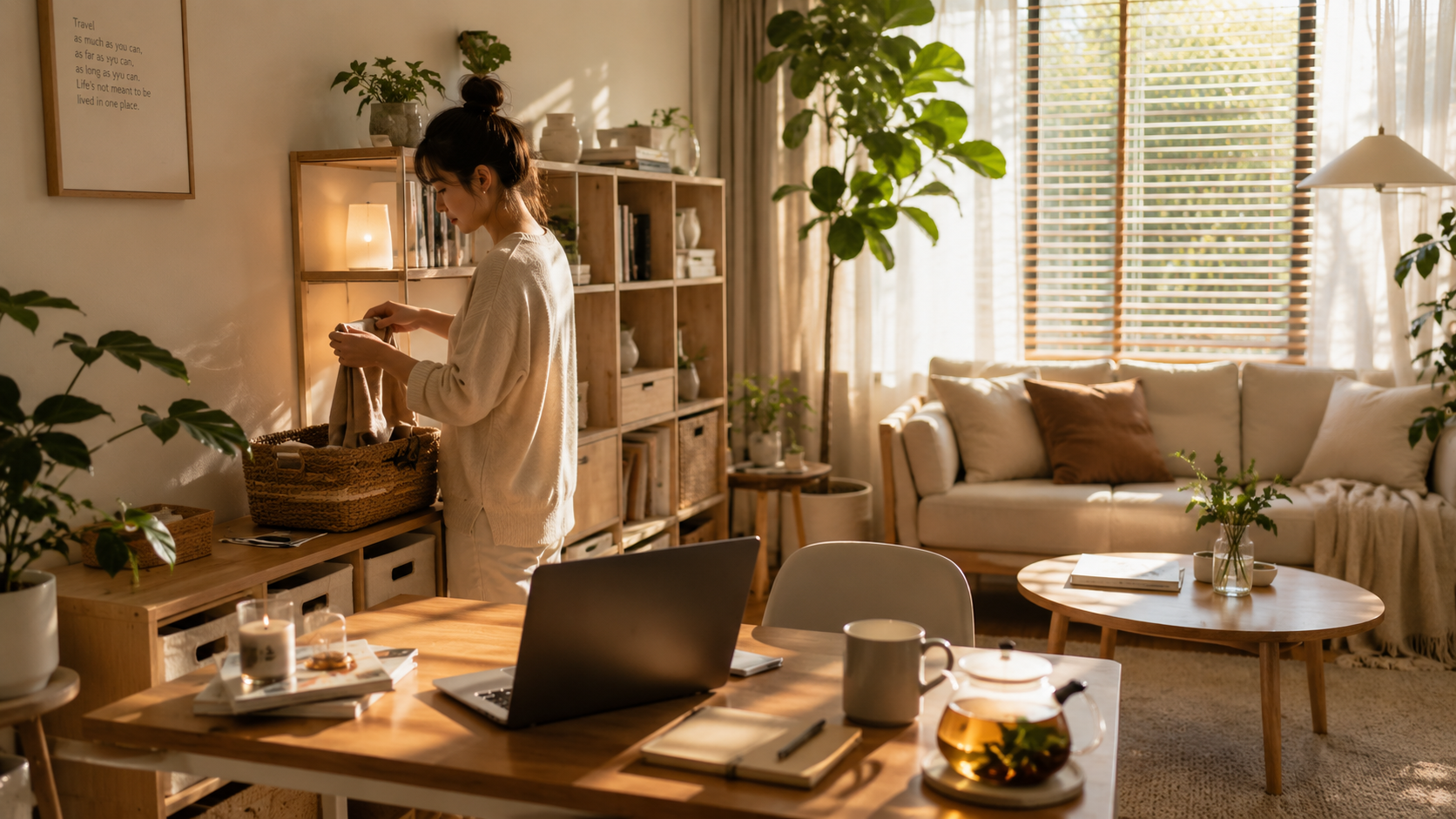
- folding clothes
- wiping surfaces
- organizing shelves
- rearranging furniture
- sorting objects
These tasks create small moments of focus.
Attention shifts away from overthinking and returns to physical movement and the present moment.
Many people notice that after cleaning a room, they also feel emotionally clearer.
This may happen because organizing external spaces sometimes helps organize internal thoughts.
In stressful periods, people often suddenly feel the urge to clean or reorganize their environment.
This reaction is surprisingly common.
Cleaning provides something modern life often lacks:
visible progress and a sense of control.
When many things feel uncertain, improving a physical environment creates immediate and understandable results.
Why “Breathing Space” at Home Matters
One major reason minimal living has become more popular is the desire for breathing space.
Modern homes are increasingly designed around:
- openness
- simplicity
- functionality
- natural light
- calm textures
- reduced clutter
These trends are not only visual preferences.
They reflect emotional needs.
People are becoming more aware that crowded environments can quietly increase stress.
A home that feels too full may create:
- visual pressure
- emotional heaviness
- reduced focus
- physical discomfort
Meanwhile, open spaces often feel mentally lighter.
This does not mean people must own fewer things simply to follow trends.
Instead, many people are beginning to prioritize objects that genuinely improve daily life instead of accumulating unnecessary items.
Why Focused Work Can Actually Feel Relaxing
One interesting idea many people are rediscovering is that focused work itself can become calming.
Modern exhaustion is often caused less by work itself and more by constant interruption.
Messages, notifications, multitasking, and endless switching between tasks create mental fragmentation.
In contrast, deep focus often feels peaceful.
When people become fully engaged in one activity:
- mental noise decreases
- time feels slower
- concentration improves
- emotional tension may reduce
This is why many people enjoy activities like:
- writing
- cooking
- drawing
- gardening
- organizing
- reading
- crafting
- focused desk work
These moments create immersion.
An organized environment often supports this type of focus more naturally.
Clean desks, quiet corners, soft lighting, and fewer distractions make concentration easier.
As remote work and home-based lifestyles continue growing, people are beginning to value calm workspaces more than ever.
Small Daily Rituals That Make Home Feel More Comfortable
Comfort often comes from small repeated habits rather than dramatic changes.
Simple routines can gradually make home environments feel calmer and more supportive.
Examples include:
- opening windows in the morning
- allowing fresh air inside
- watering plants
- organizing a desk before work
- preparing tea or coffee slowly
- dimming lights in the evening
- cleaning small areas regularly
- setting aside quiet time without screens
These rituals create rhythm.
They help separate stressful outside environments from personal recovery spaces.
Even preparing a warm drink can become part of this emotional transition.
Tea, coffee, and quiet evening routines often symbolize slowing down.
In many cultures, small beverage rituals are deeply connected to comfort, conversation, and rest.
This is why thoughtfully designed everyday objects — such as teapots, tumblers, mugs, and insulated drinkware — often become part of modern home living aesthetics.
The object itself matters less than the feeling it helps create.
Why Modern People Are Choosing Slower Living
In recent years, many people have started moving away from lifestyles centered entirely around speed and productivity.
There is growing interest in:
- slow living
- mindful routines
- home comfort
- emotional recovery
- intentional spaces
- quiet hobbies
- simplified environments
This shift may reflect a deeper realization:
constant stimulation does not always create happiness.
People increasingly want spaces where they can recover mentally instead of continuously performing or reacting.
Homes are becoming more than places to sleep.
They are becoming emotional recovery environments.
A Comfortable Home Does Not Need to Be Perfect
One important thing to remember is that comfort does not require perfection.
A comfortable home does not need to look professionally designed.
It does not need expensive furniture or flawless organization.
Real homes contain life.
There may still be books on tables, blankets on sofas, unfinished projects, and daily routines happening naturally.
The goal is not perfection.
The goal is creating a space where the body and mind can gradually relax.
Even small improvements may help:
- reducing unnecessary clutter
- improving lighting
- creating quiet corners
- organizing frequently used items
- allowing better airflow
- building calming routines
Comfort often comes from emotional atmosphere rather than appearance alone.
Why Home Environment Affects Long-Term Well-Being
People spend a significant portion of life indoors.
Over time, home environments quietly influence:
- stress levels
- sleep quality
- concentration
- emotional stability
- recovery habits
- lifestyle rhythm
This influence is subtle but cumulative.
A calming environment may not instantly solve stress or fatigue.
But over months and years, supportive spaces can positively shape how people experience daily life.
Small habits repeated consistently often matter more than dramatic lifestyle changes.
Final Thoughts
Modern life often encourages constant movement, constant productivity, and constant stimulation.
But many people are beginning to realize that emotional comfort sometimes comes from slowing down rather than doing more.
An organized home environment is not about chasing perfection.
It is about creating space — physically and mentally — for recovery.
Cleaning a room, organizing a desk, preparing tea, focusing quietly on work, or simply sitting in a calm environment may seem small.
Yet these small moments gradually shape how life feels.
Sometimes people do not need a completely different life.
Sometimes they simply need a home environment that allows them to breathe more easily again.
References & Perspective Notice
This article is intended for general lifestyle, home living, and wellness discussion purposes only.
The content includes broad observations and publicly discussed ideas related to:
- environmental psychology
- home organization and emotional well-being
- attention and visual clutter research
- focus and productivity studies
- minimalist living trends
- stress and recovery habits
- lifestyle and indoor environment discussions
Some sections may include generalized interpretations and personal perspective-based discussion intended for informational reading and reflective lifestyle exploration.
This article does not constitute medical, psychological, or professional therapeutic advice.
Readers experiencing significant mental health concerns, chronic stress, anxiety, burnout, or emotional difficulties should seek guidance from qualified healthcare or mental health professionals.