
Finding the Balance Between Cooling, Humidity, Recovery, and Everyday Comfort
In many parts of Southeast Asia, air conditioning has become part of daily life.
Whether at home, in offices, shopping malls, cafés, public transportation, or even convenience stores, cool indoor air is now deeply connected to modern urban living.
This is understandable.
Hot and humid weather can feel exhausting.
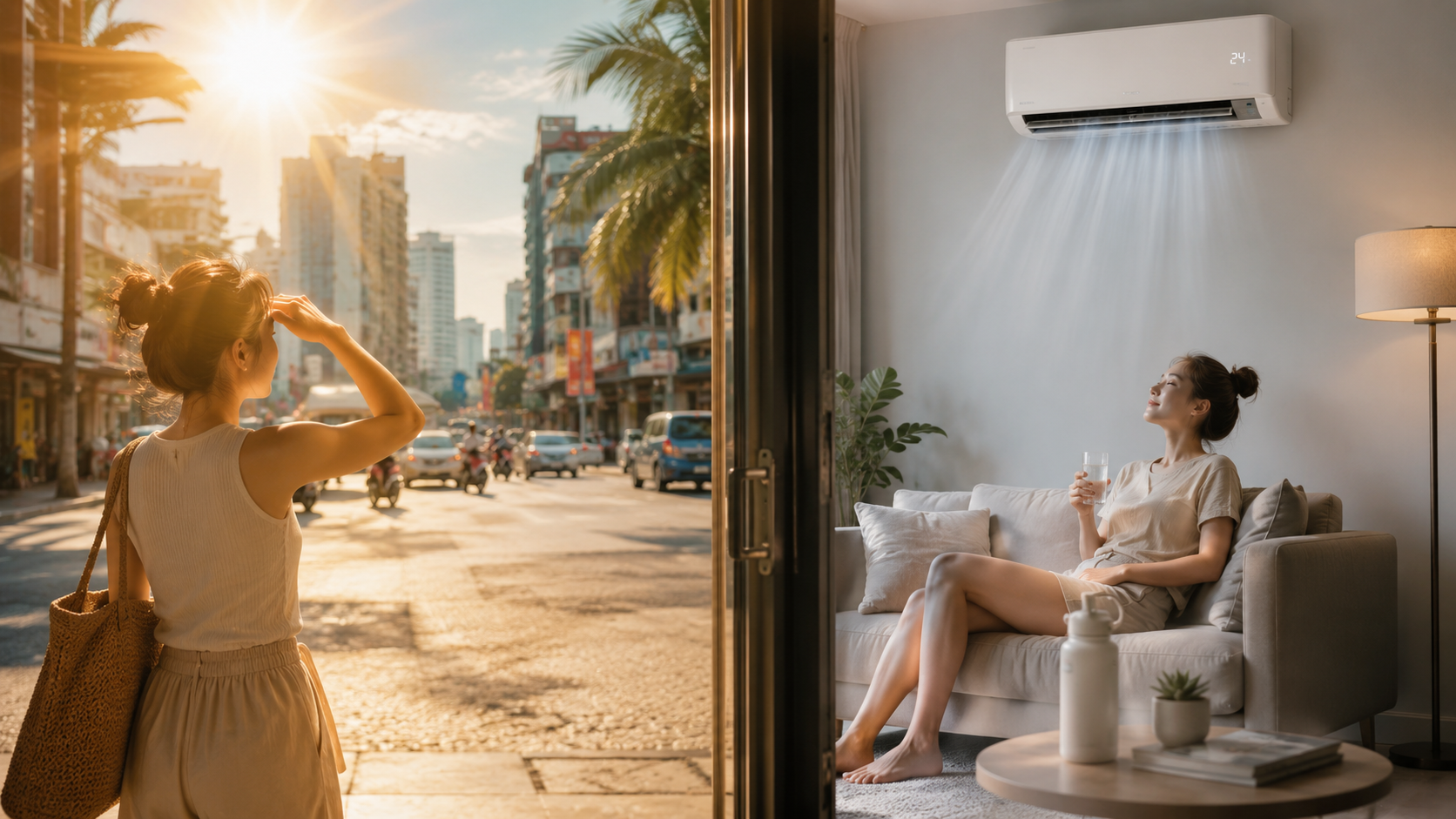
After spending time outdoors under strong sunlight, heavy humidity, and trapped city heat, stepping into a cool indoor environment often feels like immediate relief.
But over time, many people begin noticing another problem:
- feeling tired after staying in air-conditioned spaces too long
- dry throat and skin
- headaches
- body stiffness
- sudden fatigue after commuting
- discomfort from moving between hot outdoors and cold indoors
- difficulty sleeping naturally
The issue is not necessarily air conditioning itself.
The real issue is imbalance.
In tropical climates, comfort is not simply about making environments colder.
It is about helping the body adapt more naturally between heat, humidity, airflow, hydration, and recovery.
This article explores how air conditioning affects the body in hot Southeast Asian climates, why temperature transitions feel exhausting, and how people can create more balanced indoor comfort habits without relying on extreme cooling.
Why Southeast Asian Heat Feels So Exhausting
Not all heat feels the same.
One reason Southeast Asian climates often feel particularly tiring is humidity.
In dry climates, sweat evaporates relatively quickly, helping the body release heat efficiently.
But in humid environments, sweat evaporation slows down significantly.
The body continues producing sweat, yet cooling becomes less effective.
This creates the familiar feeling of:
- sticky skin
- damp clothing
- heavy air
- sluggish movement
- constant discomfort
Even when temperatures are not extremely high, high humidity can make the body feel overwhelmed.
The body remains in a prolonged state of heat regulation.
This continuous effort quietly drains energy throughout the day.
Urban Heat Makes Nights Feel Worse
In many tropical cities, nighttime no longer provides the cooling relief people expect.
Modern cities absorb and trap heat through:
- roads
- concrete buildings
- glass towers
- vehicles
- infrastructure
This is commonly described as the Urban Heat Island effect.
Heat stored during the day is slowly released at night, causing cities to remain warm long after sunset.
Combined with humidity and reduced airflow between buildings, many urban residents experience nights that still feel heavy and uncomfortable.
As a result, air conditioning often becomes necessary not just for comfort, but for sleep itself.
Why People Often Set Air Conditioners Too Cold
After spending time outdoors in intense heat, many people immediately lower indoor temperatures dramatically.
Psychologically, this feels satisfying at first.
The body craves rapid cooling.
But short-term relief does not always equal long-term comfort.
Extremely cold indoor environments may eventually create their own discomforts:
- muscle tightness
- cold hands and feet
- dry airways
- headaches
- fatigue
- temperature sensitivity
This is especially common in offices, malls, and transportation systems where cooling settings are designed for large shared spaces rather than individual comfort.
Over time, people become trapped in a cycle of environmental extremes:
hot outdoors → very cold indoors → hot outdoors again.
The body constantly adapts and readjusts.
This repeated transition quietly creates stress.
The Hidden Fatigue of Moving Between Hot and Cold Environments
One of the most overlooked causes of modern urban fatigue is environmental switching.
A person living in a tropical city may experience all of these in one day:
- hot outdoor walking
- freezing public transportation
- cold office air conditioning
- warm elevators
- humid streets
- heavily cooled shopping malls
The body continuously shifts between different temperatures and humidity levels.
Each transition requires physiological adjustment.
Blood vessels expand and contract.
Heart rate changes.
Sweat production changes.
Breathing changes.
The nervous system remains active even when the person feels physically still.
Over time, this repeated adaptation may contribute to:
- tiredness
- irritability
- headaches
- mental exhaustion
- poor sleep quality
Many people assume they are simply “busy.”
But part of the exhaustion may actually come from constant environmental stress.
Why Extremely Cold Air Conditioning Often Feels Worse Over Time
People often describe this experience:
“The room felt amazing at first, but uncomfortable after a while.”
This happens because comfort is not determined by temperature alone.
Human comfort also depends on:
- humidity
- airflow
- temperature stability
- body adaptation
- air freshness
- moisture levels
Very cold environments sometimes suppress the body’s natural balance instead of supporting it.
Overcooled spaces may create:
- dry skin
- dry throat
- nasal irritation
- muscle stiffness
- cold-related tension
In some cases, people sleep poorly because the room becomes too cold overnight.
The body wakes repeatedly to regulate temperature again.
Why Airflow Matters More Than People Realize
One common misconception is that stronger cooling always creates more comfort.
In reality, airflow often matters just as much as temperature.
A room with moderate temperature and healthy air circulation may feel significantly more comfortable than a colder room with stale air.
This is because moving air helps:
- sweat evaporate
- moisture disperse
- skin cool naturally
- humidity feel lighter
Fans and natural ventilation can sometimes improve comfort more effectively than excessively low temperatures.
This is especially important in tropical environments where humidity accumulates easily indoors.
Why “Stuffiness” Often Feels Worse Than Heat
Many people tolerate warmth reasonably well when air moves naturally.
But stagnant air creates a feeling of heaviness.
This explains why some spaces feel uncomfortable even when air conditioning is technically running.
Without airflow:
- humidity builds up
- indoor heat lingers
- air feels trapped
- the body feels fatigued faster
Good ventilation often creates a greater sense of comfort than simply lowering the thermostat further.
How Air Conditioning Affects Sleep
Air conditioning can improve sleep dramatically in hot climates.
But improper use may also reduce sleep quality.
Many people experience:
- waking up in the middle of the night
- dry throat
- congestion
- cold discomfort
- uneven body temperature
This often happens because nighttime cooling becomes too aggressive.
The body naturally lowers its core temperature before deep sleep.
But excessive cooling may disrupt this balance instead of supporting it.
A comfortable sleep environment is usually:
- stable
- breathable
- slightly cool rather than freezing
- supported by gentle airflow
In tropical climates, balanced cooling often works better than extreme cold.
Hydration Becomes More Important in Air-Conditioned Environments
One surprising effect of air-conditioned environments is hidden dehydration.
People tend to drink less water indoors because they sweat less visibly.
But the body still loses moisture gradually through:
- breathing
- dry indoor air
- low humidity environments
- daily activity
Many office workers become mildly dehydrated without realizing it.
Common signs may include:
- fatigue
- dry lips
- headaches
- low concentration
- sluggishness
Consistent hydration becomes especially important in climates where people repeatedly transition between humid heat and cooled indoor spaces.
Why Small Drinking Habits Matter
Hydration habits are often influenced by convenience.
People drink more consistently when water is:
- nearby
- easy to access
- pleasantly cool
- integrated into daily routines
This is why insulated bottles, desk tumblers, and bedside water bottles have become increasingly common in modern lifestyle environments.
The goal is not excessive water consumption.
The goal is maintaining steady hydration throughout the day.
Small habits often create larger long-term comfort improvements than people expect.
Simple Ways to Make Air-Conditioned Spaces More Comfortable
Comfort in tropical climates usually comes from balance rather than extremes.
Here are several practical lifestyle adjustments that may help.
1. Avoid Extremely Low Temperatures
Moderate cooling often feels more sustainable over long periods.
2. Improve Air Circulation
Fans and ventilation help reduce trapped humidity and stale air.
3. Avoid Direct Cold Air Exposure
Constant cold airflow directly on the body may increase discomfort and muscle tension.
4. Stay Hydrated Consistently
Drink water regularly instead of waiting until thirst becomes strong.
5. Reduce Sudden Temperature Differences
Gradual transitions often feel easier on the body than dramatic changes.
6. Use Breathable Clothing Indoors
Light fabrics may help the body regulate temperature more naturally.
7. Clean Air Conditioning Systems Regularly
Dust buildup and poor airflow may reduce indoor comfort and air quality.
Why Modern Cities Depend on Air Conditioning More Than Ever
Modern urban environments increasingly rely on artificial cooling.
This dependence is influenced by:
- denser construction
- glass-heavy architecture
- limited airflow
- hotter urban temperatures
- growing populations
Ironically, some modern city designs trap more heat, creating stronger dependence on air conditioning systems.
As cities continue warming, discussions about indoor comfort, airflow, energy use, and human wellness may become even more important in the future.
Comfort Is Becoming a Lifestyle Decision
In recent years, more people have started paying attention to how environments affect everyday well-being.
Comfort today is no longer viewed only as luxury.
It is increasingly connected to:
- sleep quality
- mental recovery
- hydration
- indoor atmosphere
- stress reduction
- lifestyle balance
People are beginning to realize that recovery is environmental as much as personal.
Sometimes the goal is not to create the coldest room possible.
It is to create a space where the body no longer feels forced to constantly fight its surroundings.
Final Thoughts
Air conditioning has become an essential part of life in many hot and humid Southeast Asian environments.
It improves comfort, supports sleep, and makes modern urban living more manageable.
But excessive cooling, poor airflow, sudden temperature switching, and dehydration may quietly create new forms of fatigue.
True comfort is rarely about extremes.
In tropical climates, the most comfortable environments are often the ones that balance:
- temperature
- humidity
- airflow
- hydration
- environmental stability
The body recovers best when it feels supported rather than shocked by constant environmental changes.
Sometimes healthier comfort comes not from making spaces dramatically colder, but from making them feel more naturally livable.
References & Perspective Notice
This article is intended for general lifestyle, environmental comfort, and wellness discussion purposes only.
The content references publicly discussed concepts and educational topics related to:
- thermal comfort and humidity
- indoor environmental quality
- Urban Heat Island effects
- airflow and ventilation research
- hydration and fatigue discussions
- sleep environment observations
- climate adaptation and modern urban living
The article may include generalized interpretations, environmental observations, and personal perspective-based discussion intended for informational reading.
This content does not constitute medical advice, diagnosis, or treatment recommendations.
Readers experiencing persistent fatigue, breathing problems, severe sleep disturbances, heat-related illness symptoms, or other ongoing health concerns should consult qualified healthcare professionals or relevant specialists for personalized guidance.