
How Modern Consumers Are Redefining Better Living Through Meaningful Choices
Introduction: The Shift From Having More to Living Better
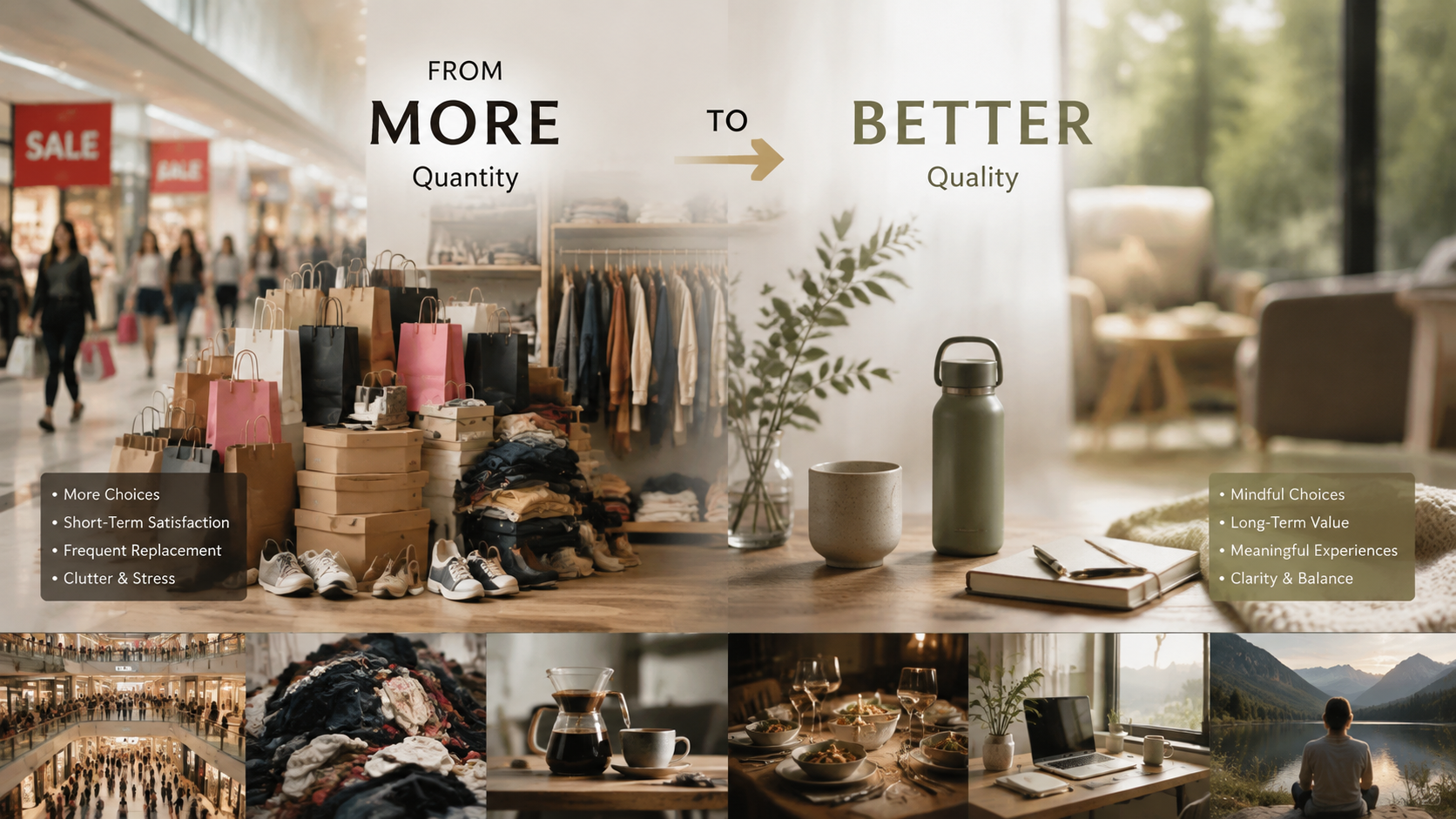
For many years, success was often associated with having more.
A bigger home.
More possessions.
More choices.
More products.
In a world driven by convenience and constant consumption, owning more was often seen as a sign of progress. New purchases represented achievement, and having access to endless options seemed like a better way to live.
However, lifestyles are beginning to change.
Across the world, more people are starting to question whether having more things truly creates a better life.
Do more choices always bring more happiness?
Does buying more always improve daily experiences?
Does replacing things frequently actually create long-term value?
Increasingly, the answer appears to be no.
Modern consumers are becoming more intentional about what they bring into their lives. They are choosing products, experiences, and habits that provide real value rather than simply following trends.
This shift has created a new lifestyle mindset:
Quality over quantity.
Choosing quality does not mean rejecting consumption or pursuing an expensive lifestyle.
Instead, it represents a more thoughtful approach:
- Buying fewer but better items
- Appreciating everyday experiences
- Choosing long-term value over short-term excitement
- Creating a lifestyle that reflects personal values
A comfortable home.
A meaningful morning routine.
A well-designed everyday object.
A memorable travel experience.
These small details often influence our quality of life more than occasional moments of luxury.
Because life is not only shaped by major events.
It is shaped by the thousands of small experiences we repeat every day.
Understanding the Quality Over Quantity Mindset
What Does Choosing Quality Really Mean?
The idea of quality is often misunderstood.
Many people associate quality with higher prices or luxury brands.
But true quality is not simply about cost.
Quality represents a combination of:
- Better experience
- Better design
- Long-term usefulness
- Emotional connection
- Personal meaning
A high-quality choice is something that continues to provide value over time.
It is something people enjoy using.
Something that fits naturally into their lifestyle.
Something that becomes part of their everyday routine.
For example, consider the objects people interact with every day.
A chair is not only a place to sit.
It affects comfort during work and relaxation.
A coffee cup is not only a container.
It can become part of a morning ritual.
A notebook is not only paper.
It can hold ideas, memories, and personal goals.
The value of these objects comes from the experiences they create.
From Fast Consumption to Intentional Choices
The Limitations of a Quantity-Focused Lifestyle
Modern society has made consumption easier than ever.
With online shopping, global marketplaces, and constant product recommendations, people can access almost anything instantly.
This convenience has created a culture where buying more often feels normal.
New trends appear quickly.
Products are replaced faster.
People constantly search for the next upgrade.
A quantity-focused lifestyle often follows this pattern:
Buy.
Use.
Replace.
Repeat.
While this can provide short-term excitement, it does not always create lasting satisfaction.
Many people eventually discover that owning more things does not necessarily make life simpler.
Instead, excessive choices can create:
- Decision fatigue
- Physical clutter
- Financial pressure
- Emotional exhaustion
The Growing Appeal of Choosing Better
The quality-over-quantity mindset offers a different approach.
Instead of asking:
“What else can I buy?”
People are beginning to ask:
“What truly improves my life?”
This change shifts attention from ownership to experience.
A meaningful purchase is not defined by how impressive it looks.
It is defined by how well it fits into everyday life.
A quality-focused lifestyle encourages people to:
Choose Carefully
Rather than making quick decisions based on trends, people consider whether something truly matches their needs.
Use Longer
Products that provide lasting value are appreciated more over time.
Appreciate More
When people own fewer meaningful items, they often develop stronger connections with what they already have.
Why Modern Life Is Driving This Change
1. Information Overload Is Changing Consumer Behavior
Today, people are surrounded by endless information.
Every day, they see:
- Product recommendations
- Social media trends
- Advertisements
- New releases
The number of available choices continues to increase.
However, more choices do not always create better decisions.
The modern challenge is no longer finding products.
It is finding the right products.
People are increasingly looking for:
- Trusted choices
- Personal relevance
- Long-term value
Instead of collecting more options, they want confidence in the choices they make.
2. Fast Consumption Creates Emotional Fatigue
Fast consumption has influenced many areas of life.
Fashion.
Technology.
Home products.
Lifestyle items.
The speed of replacement has increased dramatically.
Something new appears today, and something newer appears tomorrow.
This constant cycle can create a feeling of dissatisfaction.
People may own many things but still feel that something is missing.
The problem is not a lack of possessions.
It is a lack of meaningful connection.
Quality-focused living provides another perspective:
Instead of constantly searching for something new, people begin appreciating what already adds value to their lives.
3. People Are Valuing Time More Than Possessions
One of the biggest lifestyle changes today is the increasing value of time.
Modern consumers are realizing that time is one of the most limited resources.
They are asking:
How can I make daily life easier?
How can I create more meaningful moments?
How can I spend less time managing things and more time enjoying life?
This explains why many people are investing in:
- Comfortable environments
- Convenient daily tools
- Personal routines
- Experiences rather than possessions
The goal is not simply to own more.
The goal is to live better.
Global Lifestyle Movements Supporting Quality Living
Different Cultures, Similar Values
Although cultures around the world have different traditions, many share a similar philosophy:
A good life is created through meaningful experiences.
From Japanese simplicity to Scandinavian comfort, different societies have developed their own approaches to appreciating everyday life.
Japan: The Beauty of Simplicity
Japan provides one of the clearest examples of quality-focused living.
Many aspects of Japanese culture emphasize:
- Craftsmanship
- Attention to detail
- Simplicity
- Long-term appreciation
Rather than focusing on excess, Japanese aesthetics often celebrate thoughtful design.
Wabi-Sabi: Finding Beauty in Imperfection
The concept of Wabi-Sabi reflects appreciation for:
- Simplicity
- Natural changes
- Authentic experiences
Instead of seeking perfect and disposable objects, this philosophy values things that develop character over time.
An object becomes more meaningful because it carries history.
This idea connects strongly with modern quality-focused living.
A product does not need to be new forever to remain valuable.
Sometimes, the marks of time make it more meaningful.
Scandinavia: Comfort, Balance, and Everyday Happiness
Northern European lifestyles often emphasize balance and emotional wellbeing.
Concepts such as Hygge have become globally recognized because they represent a desire for comfort and connection.
Hygge is not about expensive decoration.
It is about creating moments of warmth:
- A comfortable home
- A quiet evening
- A shared meal
- A relaxing drink
The focus is not on having more.
It is on enjoying what matters.
Europe: Appreciating Everyday Experiences
Across many European cultures, daily experiences are often treated as meaningful moments.
A coffee break.
A family meal.
A conversation with friends.
A walk through a local neighborhood.
These activities are not simply tasks.
They are part of a lifestyle.
For example, café culture in many European cities shows how ordinary moments can become valuable.
A simple cup of coffee can represent:
- Connection
- Relaxation
- Personal time
The experience matters as much as the product itself.
Part 2 — Building a More Meaningful and Intentional Way of Living
South Korea: Lifestyle as Personal Expression
In recent years, South Korea has become an influential example of how modern consumers connect lifestyle choices with personal identity.
For many younger generations, lifestyle is no longer only about convenience or function.
It has become a form of self-expression.
The places people visit.
The products they choose.
The environments they create.
All reflect personal values and preferences.
This can be seen through the popularity of:
- Café culture
- Interior design trends
- Personal accessories
- Wellness routines
- Lifestyle products
A carefully designed workspace.
A favorite coffee shop.
A thoughtfully selected everyday item.
These choices are not only practical.
They represent a person's lifestyle philosophy.
The modern consumer is increasingly asking:
“Does this match the way I want to live?”
rather than:
“Is this simply the newest trend?”
This reflects a broader global movement toward intentional living.
Quality Over Quantity in Everyday Life
Small Choices Create Better Experiences
A quality lifestyle is not created through one major decision.
It is built through thousands of small choices.
The things people use every day.
The routines they create.
The environments they spend time in.
These small details gradually shape the overall feeling of life.
1. Choosing Better Daily Essentials
People interact with many objects throughout the day.
Some are used for only a few minutes.
Others become part of daily routines.
The items we use frequently have a greater influence on our experience than we often realize.
Consider the difference between:
Something that simply works.
And something that feels enjoyable to use.
The second option creates an emotional connection.
It makes ordinary activities feel more intentional.
This principle applies to many aspects of life:
- Clothing that provides comfort
- Tools that improve efficiency
- Furniture that supports wellbeing
- Everyday objects that create convenience
Quality does not mean unnecessary luxury.
It means choosing things that genuinely improve daily experiences.
2. Creating a More Meaningful Home
The concept of home is also changing.
For many people, a home is no longer just a place to live.
It has become:
- A place to recharge
- A creative environment
- A personal sanctuary
- A reflection of identity
Modern homeowners and renters are increasingly focused on creating spaces that feel personal.
Instead of filling rooms with more objects, many people prefer:
- Better organization
- Comfortable materials
- Natural elements
- Functional designs
The goal is not to create a perfect-looking space.
The goal is to create a space that supports better living.
A comfortable corner for reading.
A peaceful area for morning coffee.
A workspace that encourages focus.
These small improvements can transform everyday routines.
3. Spending More on Experiences, Less on Excess
Another major shift in modern consumption is the movement from ownership toward experiences.
Many people today value:
- Travel
- Learning
- Cultural experiences
- Personal growth
more than simply collecting possessions.
This does not mean people no longer appreciate products.
Instead, they choose products that support experiences.
A travel bag supports exploration.
A camera captures memories.
A comfortable outfit improves confidence.
Everyday items become tools that help people enjoy life.
The value is not only in owning something.
The value is in what that thing enables.
4. Building Personal Rituals
One of the strongest connections between quality living and happiness is the creation of personal rituals.
A ritual transforms an ordinary activity into a meaningful moment.
Examples include:
Morning Rituals
Preparing coffee before starting the day.
Taking a few quiet minutes before work.
Planning personal goals.
Evening Rituals
Reading a book.
Enjoying tea.
Reflecting on the day.
Weekend Rituals
Exploring nature.
Cooking with family.
Spending time away from digital distractions.
These moments may seem small.
But they create consistency and emotional balance in everyday life.
Quality Lifestyle and Sustainable Thinking
Why Choosing Better Can Also Mean Choosing Responsibly
The quality-over-quantity mindset is closely connected with sustainability.
As environmental awareness grows, many consumers are reconsidering traditional patterns of consumption.
The question is changing from:
“How can I buy more?”
to:
“How can I make better choices?”
From Fast Consumption to Long-Term Value
A disposable mindset focuses on:
- Low initial cost
- Short-term convenience
- Frequent replacement
A quality mindset focuses on:
- Durability
- Long-term usefulness
- Responsible materials
- Better experiences
This creates a more balanced approach:
Buy less.
Choose carefully.
Use longer.
Appreciate more.
Sustainable Living Is Not About Sacrifice
A common misunderstanding is that sustainable choices require giving up comfort.
However, modern sustainable lifestyles increasingly focus on improvement.
Better materials.
Better design.
Better long-term value.
A product that lasts longer often provides:
- More satisfaction
- Better performance
- Less waste
Sustainability and quality are becoming connected ideas.
Why Meaningful Objects Become Part of Our Stories
The Emotional Value Behind Everyday Things
Some objects become meaningful not because they are expensive.
They become meaningful because they are connected with experiences.
A suitcase may represent years of travel.
A notebook may contain personal ideas and memories.
A favorite piece of clothing may remind someone of an important moment.
Over time, objects can become part of personal stories.
They carry emotional value beyond their original purpose.
This is one reason people are moving toward quality choices.
They are not simply looking for things.
They are looking for things that belong in their lives.
The Future Lifestyle: Intentional Living
Designing a Life That Matches Your Values
The future of modern living is likely to become more personal.
Instead of following a universal definition of success, people are creating lifestyles based on individual values.
For some people, quality living means:
A peaceful home.
For others:
More time with family.
For others:
Travel, creativity, or personal growth.
There is no single definition of a better life.
The important part is making choices intentionally.
How to Build a Quality-Focused Lifestyle
1. Identify What Truly Matters
Not everything deserves equal attention.
A quality lifestyle begins by understanding:
What improves your daily experience?
What brings lasting value?
What supports your goals?
2. Focus on Meaningful Experiences
Possessions are temporary.
Experiences often create longer-lasting memories.
Invest time in:
- Relationships
- Learning
- Exploration
- Personal interests
3. Create Simple Daily Rituals
Small routines can create a sense of stability.
A peaceful morning.
A relaxing evening.
A personal moment during a busy day.
4. Choose Long-Term Value
Before choosing something new, consider:
Will this improve my life?
Will I continue using it?
Does it match my lifestyle?
Thoughtful decisions create a more intentional relationship with consumption.
Conclusion: Better Living Is About Better Choices
The world has spent decades encouraging people to pursue more.
More products.
More updates.
More possessions.
But a new lifestyle perspective is emerging.
Many people are discovering that happiness does not come from unlimited choices.
It comes from meaningful choices.
Quality over quantity is not about owning less for the sake of owning less.
It is about creating space for what truly matters.
It is about choosing:
- Better experiences
- Better habits
- Better environments
- Better connections
A meaningful life is built through everyday moments.
A peaceful morning.
A comfortable home.
A personal ritual.
A thoughtful choice.
The future of lifestyle is not about having everything.
It is about having what truly improves your life.
Because the best upgrades are often not the biggest ones.
They are the small decisions that make every day feel a little better.
Quality is not measured by how much we own.
It is measured by how much value those choices bring into our lives.