
Dalam kehidupan seharian, botol air adalah antara produk pengguna yang paling kerap dikendalikan. Meja pejabat, beg galas, pemegang cawan kereta, lantai gim, kaunter dapur—hanya sedikit objek yang bergerak merentasi begitu banyak persekitaran dalam satu hari. Namun di sebalik interaksi berterusan ini, kebanyakan keputusan pembelian masih berkisar pada kapasiti, bahan, atau harga, manakala kebolehgunaan sering dianggap sebagai perkara sampingan.
Dari perspektif strategi produk, ini adalah salah faham tentang bagaimana pengguna sebenarnya berkelakuan. Kajian dalam ergonomik produk pengguna secara konsisten menunjukkan bahawa item berfrekuensi tinggi dinilai kurang berdasarkan spesifikasi dan lebih berdasarkan geseran—atau ketiadaannya—semasa penggunaan berulang. Sebuah botol yang sedikit lebih ringan, lebih mudah dibuka, atau lebih selesa untuk diminum mungkin mengatasi alternatif yang lebih unggul secara teknikal semata-mata kerana ia berintegrasi dengan lebih lancar ke dalam rutin harian.
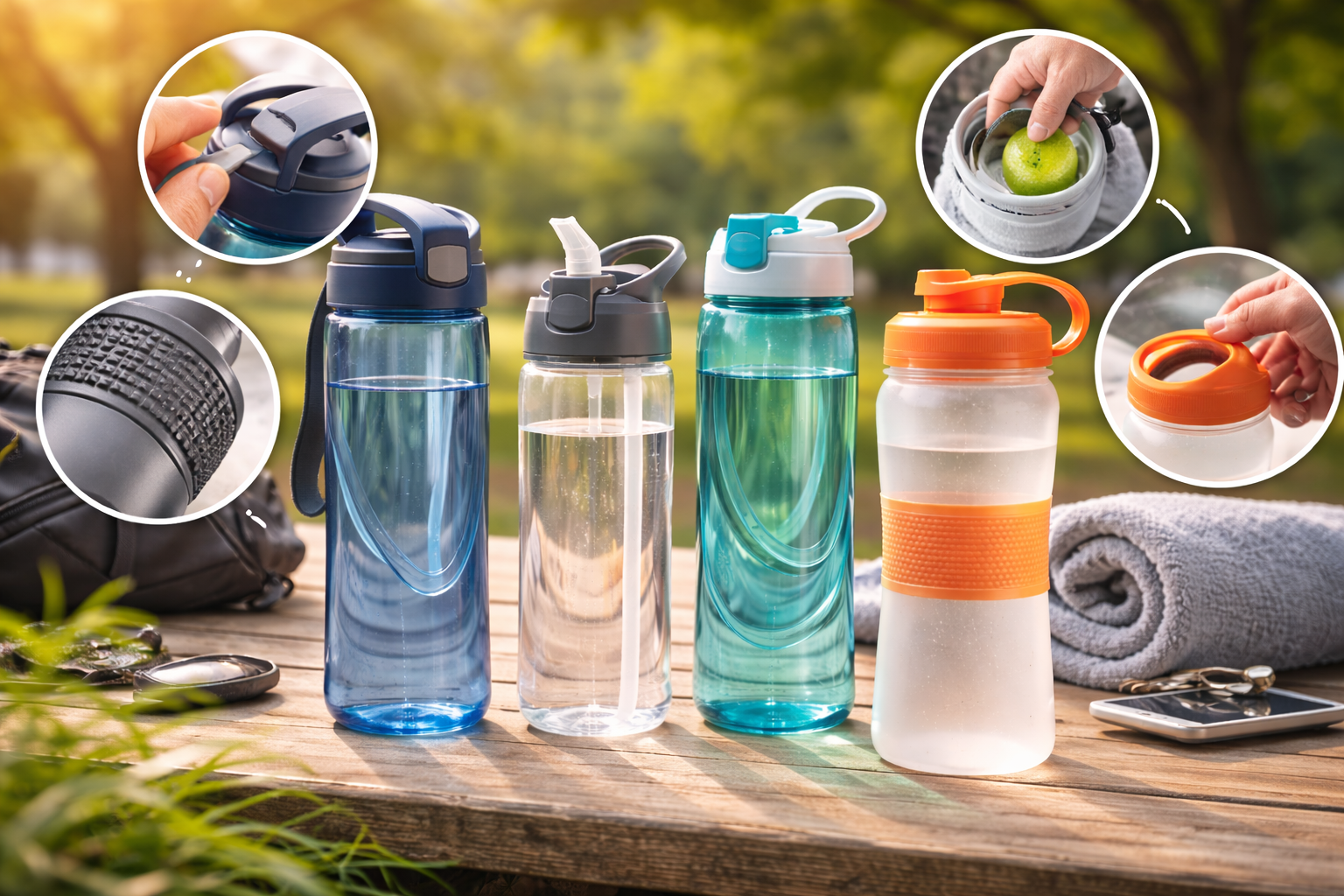
Artikel ini meneliti bagaimana ciri reka bentuk kecil yang sering diabaikan—dari mekanisme penutup hingga tekstur genggaman—secara langsung mempengaruhi kebolehgunaan, keselesaan, dan penerimaan jangka panjang. Secara individu, ciri-ciri ini kelihatan kecil. Secara kolektif, ia menentukan sama ada botol menjadi sebahagian daripada kehidupan seharian seseorang atau berakhir tidak digunakan di belakang kabinet.
Reka Bentuk Tudung & Pembukaan: Penggunaan Satu Tangan Mengubah Segalanya
Pembukaan Satu Tangan lwn Pembukaan Dua Tangan
Salah satu faktor kebolehgunaan yang paling menentukan dalam reka bentuk botol ialah sama ada ia boleh dikendalikan dengan sebelah tangan. Kajian pemerhatian tingkah laku komuter menunjukkan bahawa lebih 60% daripada kejadian hidrasi harian berlaku semasa tangan kedua pengguna sibuk—memegang telefon, stereng, peralatan gim, atau tali beg.
Penutup flip-top, mekanisme butang tekan, dan penutup bantuan pegas mengurangkan dengan ketara usaha kognitif dan fizikal yang diperlukan untuk minum. Sebaliknya, penutup skru—walaupun mudah secara mekanikal—menimbulkan geseran apabila pembukaan dan penutupan yang kerap diperlukan. Lama kelamaan, geseran ini terkumpul, secara halus mengurangkan kekerapan penggunaan.
Dari sudut kejuruteraan, cabaran terletak pada pengimbangan kemudahan pembukaan dengan pencegahan pengaktifan tidak sengaja. Penutup satu tangan yang direka dengan baik biasanya memerlukan vektor daya yang sengaja atau gerakan dwi-tindakan (tekan-dan-angkat, gelongsor-dan-lepas) yang meminimumkan kebocoran tanpa menjejaskan kebolehcapaian.
Diameter Pembukaan dan Keselesaan Minum
Diameter pembukaan botol secara langsung mempengaruhi kelajuan minum, keselesaan, dan risiko tumpahan. Data ujian pengguna daripada pengeluar produk hidrasi menunjukkan corak yang jelas:
-
Pembukaan bawah 18 mm memihak kepada minum perlahan yang terkawal tetapi melambatkan hidrasi.
-
Pembukaan antara 20–24 mm mengimbangi kadar aliran dan pencegahan tumpahan.
-
Pembukaan atas 30 mm membenarkan minum pantas tetapi meningkatkan risiko percikan semasa pergerakan.
Untuk kegunaan harian, terutamanya semasa berjalan atau aktiviti ringan, diameter pembukaan sederhana secara konsisten mendapat markah tertinggi dalam tinjauan kepuasan pengguna. Matlamatnya adalah aliran yang boleh diramal, bukan jumlah maksimum setiap teguk.
Struktur Pencegahan Kebocoran
Rintangan kebocoran bukan semata-mata soal daya ketat. Ia adalah masalah reka bentuk peringkat sistem yang melibatkan geometri pengedap, keanjalan bahan, dan kawalan toleransi.
Gasket silikon dengan keratan rentas rata sering merosot lebih cepat di bawah tekanan berulang, manakala pengedap bulat atau berbilang bibir mengekalkan keanjalan lebih lama. Ujian tekanan makmal menunjukkan bahawa reka bentuk gasket berbilang bibir dapat mengekalkan prestasi pengedap untuk 30–40% lebih banyak kitaran buka-tutup berbanding pengedap permukaan tunggal.
Dalam senario penggunaan harian—beg galas, penempatan sisi, perubahan suhu—perbezaan kecil ini menjadi sangat ketara.
Berat & Imbangan: Faktor Keselesaan Tidak Kelihatan
Berat Kosong lwn Berat Penuh
Persepsi berat adalah tidak linear. Pengguna lebih sensitif terhadap peningkatan berat apabila botol melebihi ambang tertentu. Penyelidikan dalam ergonomik produk pegang tangan menunjukkan bahawa objek melebihi 600 gram berat penuh mula terasa "berat" semasa membawa dalam tempoh yang lama, walaupun perbezaannya hanya 50–80 gram.
Bahan ringan mengurangkan beban ini, tetapi reka bentuk struktur juga memainkan peranan. Dinding yang lebih nipis, rusuk yang dioptimumkan, dan pengukuhan dalaman membolehkan botol mengekalkan ketegaran tanpa jisim yang tidak perlu.
Yang penting, botol yang lebih ringan lebih kerap digunakan. Data penggunaan dalaman daripada jenama aksesori kecergasan menunjukkan bahawa pengguna membawa botol dengan berat kurang daripada 500 gram berat penuh kira-kira 18% lebih kerap daripada alternatif yang lebih berat.
Pusat Graviti dan Kestabilan
Imbangan sama pentingnya dengan berat. Botol dengan pusat graviti yang tinggi lebih mudah tumbang, meningkatkan risiko tumpahan dan kekecewaan pengguna. Ini amat relevan di meja pejabat dan dalaman kereta.
Penyelesaian reka bentuk termasuk tapak yang dilebarkan sedikit, pengedaran berat dalaman, atau pemasangan penutup profil rendah. Peningkatan 5–8 mm dalam diameter tapak sahaja boleh meningkatkan kestabilan berdiri lebih daripada 20%, menurut ujian kecondongan mekanikal.
Keletihan Sepanjang Masa
Keletihan jarang disedari serta-merta, tetapi ia terkumpul. Botol dengan imbangan yang buruk atau berat yang berlebihan meningkatkan pengaktifan otot di lengan bawah dan tangan. Sepanjang puluhan interaksi harian, ini membawa kepada pengelakan secara tidak sedar.
Produk yang "hilang" semasa penggunaan—memerlukan daya genggaman minimum dan pelarasan pergelangan tangan—secara konsisten dinilai lebih tinggi dalam kajian kepuasan jangka panjang.
Reka Bentuk Genggaman: Apabila Botol Berhenti Tergelincir
Tekstur Permukaan dan Salutan
Kegagalan genggaman adalah salah satu punca paling biasa jatuh. Permukaan plastik licin menjadi masalah terutamanya dalam keadaan lembap atau berpeluh.
Kemasan bertekstur mikro, salutan bergetah, atau timbul corak meningkatkan pekali geseran secara dramatik. Pengujian di bawah keadaan tangan basah menunjukkan bahawa permukaan bertekstur dapat meningkatkan kestabilan genggaman sebanyak 40–60% berbanding kemasan licin.
Kuncinya adalah keseimbangan. Tekstur yang terlalu agresif mengumpul kotoran dan merosot secara visual, manakala tekstur halus memberikan genggaman tanpa menjejaskan estetika.
Kontur Ergonomik
Tangan manusia tidak berbentuk silinder, namun banyak botol berbentuk demikian. Kontur ergonomik—tirusan lembut, saluran jari, atau profil asimetri—mengurangkan keperluan daya genggaman.
Kajian reka bentuk menunjukkan bahawa pembentukan ergonomik dapat mengurangkan daya genggaman yang diperlukan sehingga 15%, yang secara langsung diterjemahkan kepada keselesaan semasa penggunaan berpanjangan.
Keselesaan Genggaman dalam Senario Kehidupan Sebenar
Kualiti genggaman sebenar terserlah dalam keadaan terjejas: keletihan selepas bersenam, cuaca sejuk, atau gangguan. Botol yang mengekalkan genggaman dalam keadaan ini dianggap "mudah digunakan," walaupun pengguna tidak dapat menyatakan mengapa.
Rasa Mulut & Pengalaman Minum
Reka Bentuk Bibir dan Ketebalan Tepi
Antara muka antara mulut dan botol adalah kritikal. Tepi yang nipis dan tajam terasa kasar, manakala bingkai yang terlalu tebal mengganggu pergerakan minum semula jadi.
Ketebalan bibir yang optimum biasanya antara 2.5–4 mm. Dalam julat ini, pengguna melaporkan keselesaan yang lebih tinggi dan pengedapan yang lebih baik pada bibir, mengurangkan titisan.
Data penggunaan jangka panjang menunjukkan bahawa rasa mulut secara signifikan mempengaruhi keterikatan emosi terhadap botol, mempengaruhi kitaran penggantian.
Penyedut lwn Minum Terus
Reka bentuk berasaskan penyedut mengurangkan kecondongan kepala dan sangat berkesan untuk kanak-kanak, pemandu, dan atlet. Walau bagaimanapun, ia menimbulkan kerumitan dalam pembersihan dan ketahanan.
Reka bentuk minum terus lebih ringkas dan lebih teguh, tetapi memerlukan geometri pembukaan yang tepat untuk mengelakkan percikan. Tiada penyelesaian universal—hanya penyelarasan kes penggunaan.
Pembersihan & Penyelenggaraan: Kemudahan Penjagaan Adalah Kemudahan Penggunaan
Mulut Lebar untuk Pembersihan
Botol yang tidak mudah dibersihkan cepat ditinggalkan. Tinjauan menunjukkan bahawa lebih 70% pengguna berhenti menggunakan botol secara tetap jika pembersihan terasa menyusahkan.
Reka bentuk mulut lebar yang membenarkan akses tangan mengatasi bukaan sempit dalam pengekalan jangka panjang, walaupun ia sedikit menjejaskan kelajuan minum.
Keserasian Mesin Pencuci Pinggan
Keselamatan mesin pencuci pinggan adalah jaminan psikologi sama seperti ciri fungsian. Malah pengguna yang mencuci tangan kebanyakan masa lebih suka mengetahui pilihan itu wujud.
Produk yang direka secara eksplisit untuk pendedahan mesin pencuci pinggan menunjukkan pengekalan bau yang lebih rendah dan ketahanan bahan yang lebih baik.
Rintangan Bau dan Kotoran
Pembentukan bau adalah aduan utama dengan botol plastik. Permukaan dalaman yang licin, kurang jahitan, dan polimer tahan noda mengurangkan pengekalan mikrob dan perubahan warna.
Reka bentuk dan bahan mesti berfungsi bersama; tiada rawatan permukaan sahaja boleh mengimbangi geometri dalaman yang buruk.
Ciri Portabiliti Yang Sebenarnya Membantu
Pemegang dan Gelung Pembawa
Pemegang hanya berguna jika ia mengagihkan beban dengan selesa. Gelung nipis menumpukan tekanan dan menyebabkan ketidakselesaan, manakala pemegang yang lebih lebar dan fleksibel meningkatkan portabiliti.
Pemegang yang direka dengan baik meningkatkan pematuhan membawa, terutamanya semasa perjalanan singkat di mana beg tidak digunakan.
Sesuai dengan Beg dan Pemegang Cawan
Piawaian adalah penting. Botol yang direka berdasarkan diameter pemegang cawan biasa (kira-kira 65–75 mm) berintegrasi dengan lancar ke dalam kenderaan dan beg galas.
Keserasian mengurangkan geseran dan meningkatkan kebarangkalian penggunaan harian.
Kesederhanaan Visual dan Psikologi Harian
Minimalisme lwn Reka Bentuk Hiasan
Keletihan visual adalah nyata. Reka bentuk yang sangat hiasan mungkin menarik minat awal tetapi kehilangan daya tarikan dari masa ke masa.
Reka bentuk minimalis lebih tahan lama, menyatu dalam pelbagai persekitaran tanpa bertembung secara visual.
Pilihan Warna dan Kebolehlihatan
Warna mempengaruhi persepsi kebersihan. Warna cerah mendedahkan noda lebih awal, menggalakkan pembersihan, manakala warna gelap menyembunyikan kehausan tetapi mungkin menyembunyikan masalah kebersihan.
Palet yang seimbang meningkatkan kepuasan jangka panjang.
Bagaimana Ciri-ciri Kecil Ini Mempengaruhi Penggunaan Jangka Panjang
Apabila digabungkan, ciri-ciri kecil ini menentukan sama ada botol menjadi kebiasaan. Data daripada kajian pengekalan pengguna menunjukkan bahawa produk yang dianggap "mudah" menikmati jangka hayat penggunaan yang lebih lama, walaupun pada harga yang lebih tinggi.
Kemudahan penggunaan secara langsung berkorelasi dengan tingkah laku pembelian berulang dan kepercayaan jenama.
Kesimpulan: Reka Bentuk Botol yang Baik Kebanyakannya Tidak Kelihatan
Reka bentuk botol terbaik jarang mengumumkan diri mereka. Mereka tidak menuntut perhatian atau arahan. Mereka hanya berfungsi—secara konsisten, senyap, dan selesa.
Ciri reka bentuk kecil membentuk tingkah laku harian lebih daripada sebarang spesifikasi utama. Akhirnya, kebolehgunaan bukanlah ciri; ia adalah ketiadaan geseran. Dan dalam produk harian, ketiadaan itu adalah bentuk nilai tertinggi.