
Simple Ways to Create a More Balanced and Meaningful Lifestyle
In many modern cities, life moves at an incredible pace.
From the moment we wake up, we are surrounded by notifications, deadlines, responsibilities, and endless streams of information. Work follows us through our phones. Social media competes for our attention. Even moments of rest are often filled with digital distractions.
Yet despite all this activity, many people share the same feeling:
"I am constantly busy, but I don't always feel fulfilled."
As cities grow larger and lifestyles become increasingly connected, more people are beginning to search for something different—not necessarily a slower life, but a more intentional one.
A quality lifestyle is not about escaping responsibility or avoiding ambition. It is about learning how to create balance, protect your energy, and enjoy the small moments that make everyday life meaningful.
Why Modern Life Feels Faster Than Ever
Many of the conveniences that improve our lives also accelerate them.
Technology allows us to communicate instantly, access information within seconds, and complete tasks faster than previous generations ever could.
However, convenience has created new expectations.
We are expected to:
- Respond quickly
- Stay connected
- Remain productive
- Keep up with trends
- Consume constant information
As a result, many people rarely experience true downtime.
Even during breaks, our minds continue processing messages, emails, videos, and notifications.
This constant stimulation can leave us feeling mentally exhausted even when we have not done physically demanding work.
The Pressure to Always Be Productive
Modern culture often celebrates productivity.
Being busy is frequently treated as a sign of success.
Many people feel guilty when they are not working, learning, improving, or accomplishing something.
While ambition can be healthy, constantly chasing productivity may eventually lead to:
- Burnout
- Stress
- Reduced creativity
- Mental fatigue
- Lower life satisfaction
The irony is that people often become less productive when they never allow themselves to recover.
The Fear of Missing Out
Social media has created a unique challenge.
At any moment, we can see:
- Someone traveling
- Someone launching a business
- Someone reaching a fitness goal
- Someone buying a new home
This creates the impression that everyone else is constantly achieving more.
In reality, people are often comparing their ordinary daily lives to carefully selected highlights from others.
Learning to appreciate your own pace is one of the most valuable skills in modern life.
Slowing Down Does Not Mean Doing Less
One common misunderstanding about slow living is that it means becoming less ambitious.
In reality, slowing down often means becoming more intentional.
It means focusing on what matters most instead of trying to do everything at once.
For example:
- Reading a book without checking your phone
- Enjoying a meal without distractions
- Taking a walk without listening to work-related content
- Having a meaningful conversation without multitasking
These moments may seem simple, but they help restore attention and create a stronger sense of presence.
Sometimes doing fewer things with greater focus creates more satisfaction than doing many things at the same time.
The Importance of Creating Daily Breathing Space
Many people schedule work.
Few people schedule recovery.
Yet recovery is equally important.
Creating small moments of space throughout the day can help reduce mental fatigue and improve overall well-being.
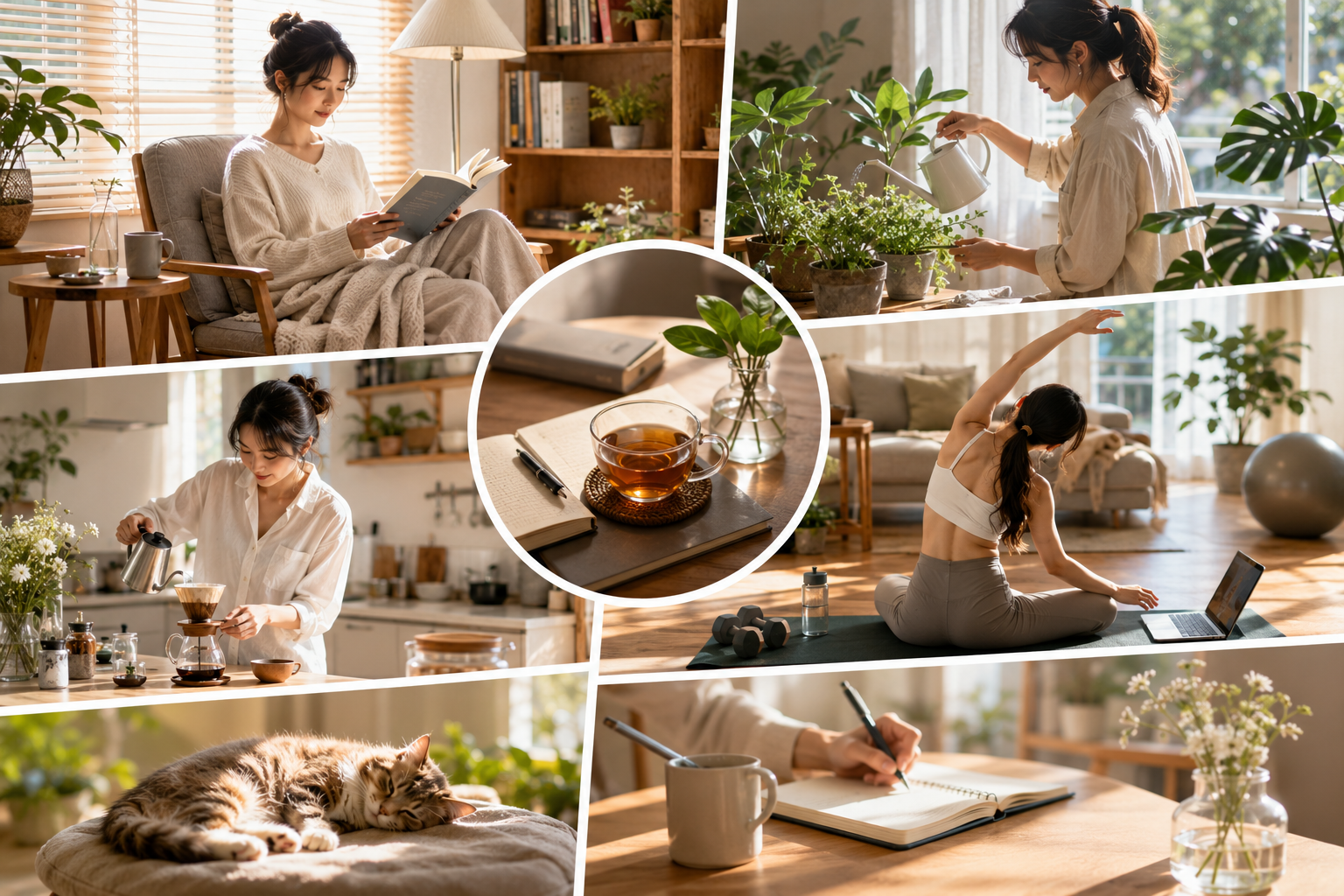
Morning Quiet Time
The first few minutes after waking up can influence the entire day.
Instead of immediately reaching for your phone, consider:
- Opening a window
- Drinking water
- Stretching
- Sitting quietly with tea or coffee
These simple actions create a calmer transition into the day.
Afternoon Reset Moments
Many people experience a drop in energy during the afternoon.
Rather than forcing yourself to push through exhaustion, consider taking a brief reset break.
A short walk, a few stretches, or simply stepping outside for fresh air can help restore focus.
Evening Wind-Down Rituals
The final hour before sleep is often filled with screens.
Replacing part of that screen time with relaxing activities can help both body and mind unwind.
Examples include:
- Reading
- Journaling
- Listening to music
- Preparing tea
- Spending time with family
Small rituals create a clear signal that the workday has ended.
Hobbies That Help You Slow Down
One of the most effective ways to improve quality of life is through hobbies.
Hobbies provide something increasingly rare in modern life:
Enjoyment without pressure.
Unlike work, hobbies do not require performance metrics or deadlines.
They simply allow us to engage in activities that bring satisfaction.
Reading
Reading encourages deep focus in a world built around constant distraction.
Books allow us to slow down, think more deeply, and temporarily step away from digital noise.
Even reading ten pages per day can become a rewarding long-term habit.
Gardening and Houseplants
Caring for plants introduces an element of nature into daily life.
Watching a plant grow over weeks or months teaches patience.
For many people, watering plants becomes a peaceful daily ritual.
Photography
Photography encourages observation.
Instead of rushing through the day, photographers learn to notice:
- Light
- Texture
- Colors
- Small details
It transforms ordinary moments into meaningful experiences.
Drawing and Creative Activities
Creative hobbies help activate different parts of the brain.
Whether sketching, painting, or crafting, creative activities often provide a welcome break from analytical work.
Cooking and Baking
Preparing food can be surprisingly therapeutic.
The process of measuring, mixing, and creating something tangible often feels rewarding in a world where much work is digital.
Why Tea and Coffee Rituals Still Matter
Tea and coffee have been part of human culture for centuries.
While many people focus on the beverages themselves, the real value often lies in the ritual.
Preparing tea or brewing coffee creates a natural pause in the day.
It encourages us to slow down, even if only for a few minutes.
In many cultures, tea time is less about drinking and more about creating space for conversation, reflection, and relaxation.
Similarly, a morning coffee ritual can provide a gentle transition into the day.
These moments remind us that rest does not always require a vacation.
Sometimes a few intentional minutes are enough.
Home Exercises for Busy People
Many people struggle to find time for exercise.
However, physical activity does not always require a gym membership or lengthy workout session.
Small amounts of movement performed consistently can make a meaningful difference.
Stretching
Simple stretching helps reduce stiffness caused by prolonged sitting.
Even five minutes can improve mobility and comfort.
Bodyweight Exercises
Exercises such as:
- Squats
- Push-ups
- Lunges
- Planks
require little space and no equipment.
Yoga
Yoga combines movement, flexibility, and mindfulness.
Many people find it particularly helpful for managing stress.
Walking
Walking remains one of the most accessible forms of exercise.
A short walk around the neighborhood can provide both physical and mental benefits.
How Your Home Environment Affects Your Mood
The spaces we live in influence how we feel.
A cluttered environment can contribute to stress and mental overload.
In contrast, a clean and organized space often feels calming and supportive.
This does not mean pursuing perfection.
Instead, focus on small improvements.
For example:
- Organize one drawer
- Fold laundry
- Clear a workspace
- Rearrange a bookshelf
These simple actions can create a surprising sense of accomplishment.
Bringing Nature Indoors
Adding natural elements can improve the atmosphere of a home.
Consider:
- Houseplants
- Fresh flowers
- Natural materials
- Soft lighting
These details contribute to a more comfortable and inviting environment.
Creating a Personal Corner
A dedicated space for relaxation can make a significant difference.
This might be:
- A reading chair
- A tea corner
- A small balcony setup
- A creative workspace
Having a place associated with calm activities encourages healthier routines.
The Role of Pets in Everyday Happiness
Pets offer companionship, routine, and emotional connection.
Many pet owners describe daily activities such as walking a dog or playing with a cat as some of the most relaxing moments of their day.
Pets encourage us to:
- Be present
- Maintain routines
- Spend time away from screens
They remind us that not every moment needs to be productive.
Sometimes simply being present is enough.
Building a Lifestyle Instead of Chasing Productivity
One of the most important mindset shifts is learning to build a lifestyle rather than constantly chasing productivity.
Many activities that improve life are valuable even when they produce no measurable outcome.
Reading does not always need to improve your career.
Walking does not always need to burn calories.
Tea does not always need to provide health benefits.
Sometimes activities are worth doing simply because they bring enjoyment.
This perspective reduces pressure and creates a healthier relationship with time.
Small Habits That Make Life Feel Better
Improving quality of life often begins with simple habits.
Consider incorporating a few of the following into your routine:
- Read ten pages each day
- Spend twenty minutes walking
- Water plants in the morning
- Organize one small area of your home
- Reduce screen time before bed
- Prepare tea or coffee mindfully
- Keep a journal
- Listen to music without multitasking
- Spend time with family or pets
None of these habits are dramatic.
Yet together, they can create a noticeable difference over time.
Quality of Life Is Built Through Everyday Moments
Many people associate quality of life with major achievements.
A larger house.
A higher income.
A luxury vacation.
While these experiences can certainly be enjoyable, daily satisfaction often comes from much smaller things.
A comfortable chair by a window.
A clean and organized room.
A favorite book.
Fresh flowers on a table.
A peaceful evening without distractions.
These moments may appear ordinary, but they often form the foundation of a fulfilling life.
Conclusion: Finding Calm in a Busy World
Slow living is not about rejecting modern life.
It is about creating balance within it.
The goal is not to escape responsibility but to build a lifestyle that supports both achievement and well-being.
By creating small rituals, developing hobbies, maintaining an inviting home environment, moving regularly, and making time for activities that bring genuine enjoyment, it becomes possible to navigate a fast-paced world without feeling constantly overwhelmed.
Ultimately, a meaningful life is rarely built through extraordinary events.
It is built through ordinary moments that are experienced fully and appreciated deeply.
References & Further Reading
Disclaimer:
This article is intended for educational and lifestyle discussion purposes only. It reflects general observations, published research, and commonly shared experiences related to well-being, productivity, leisure, and quality of life. The content should not be considered medical, psychological, or professional advice. Individual experiences may vary.
Research and Information Sources
- World Health Organization (WHO) — Mental Health and Well-Being Resources
- American Psychological Association (APA) — Stress Management and Lifestyle Research
- Harvard Business Review — Productivity, Focus, and Work-Life Balance Articles
- Global Wellness Institute — Wellness Economy and Lifestyle Trends Reports
- OECD Better Life Index
- University of California, Irvine — Research on Attention, Digital Distraction, and Cognitive Load
- Cal Newport — Deep Work and Digital Minimalism Research
- James Clear — Habit Formation and Behavioral Change Studies
- Environmental Psychology Research on Home Environments and Well-Being
- Community experiences and discussions from lifestyle, productivity, reading, gardening, home organization, and wellness-focused forums
The recommendations discussed throughout this article are intended as practical lifestyle ideas that readers may adapt according to their own circumstances, preferences, and daily routines.