
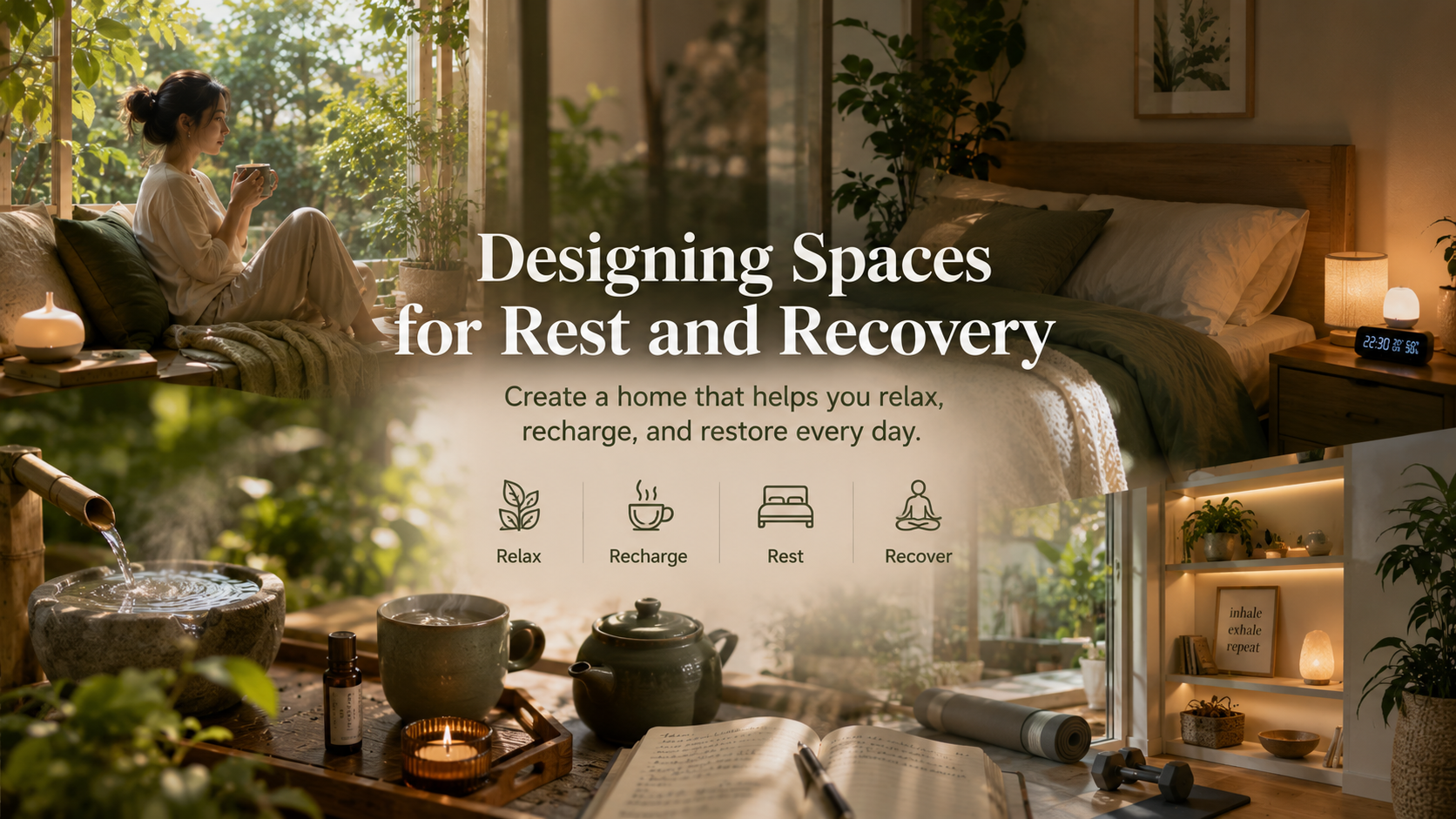
How Your Home Can Help You Recharge Physically and Mentally
Modern life is busy.
For many people, days are filled with work deadlines, constant notifications, traffic, social commitments, and an endless stream of information. Even when we are technically "resting," we may still be scrolling through our phones, checking emails, or consuming content.
As a result, many people finish the day feeling tired but not truly recovered.
This has led to a growing realization: recovery is no longer a luxury. It is an essential part of maintaining physical health, mental clarity, emotional balance, and long-term well-being.
While vacations and weekend getaways can help, most recovery happens at home.
The spaces we live in influence how effectively we relax, recharge, and prepare for the next day.
A thoughtfully designed home does more than provide shelter. It can actively support recovery by encouraging better habits, reducing stress, and creating moments of calm throughout the day.
This article explores how to design spaces that support rest and recovery, why recovery matters more than ever, and how small environmental changes can make a meaningful difference in everyday life.
Why Recovery Has Become More Important Than Ever
Many people live in what experts often describe as an "always-on" environment.
Technology allows us to stay connected at all times.
While this has many benefits, it also means our brains receive fewer opportunities to fully disengage.
Common modern stressors include:
- Continuous notifications
- Social media consumption
- Long working hours
- Urban noise
- Information overload
- Poor work-life boundaries
Over time, these factors can contribute to feelings of mental fatigue.
The challenge is not simply working hard.
The challenge is recovering effectively afterward.
Just as athletes require recovery after physical training, our minds and bodies need time and space to recover from daily demands.
Without recovery, fatigue tends to accumulate.
Recovery Is Not the Same as Entertainment
One of the biggest misconceptions about rest is the belief that entertainment automatically equals recovery.
Watching videos, browsing social media, or scrolling through news feeds may feel relaxing in the moment.
However, they do not always provide genuine recovery.
True recovery often involves reducing stimulation rather than replacing one form of stimulation with another.
Recovery typically supports:
- Reduced mental strain
- Emotional regulation
- Physical relaxation
- Improved focus
- Better sleep quality
This does not mean entertainment is bad.
It simply means that meaningful recovery often requires quieter, more intentional experiences.
Examples include:
- Reading a book
- Drinking tea without distractions
- Spending time in nature
- Journaling
- Gentle stretching
- Having a conversation with family
The spaces within our homes can either encourage or discourage these behaviors.
The Science Behind Restorative Environments
Researchers in environmental psychology have long studied how physical environments influence well-being.
Two concepts are particularly relevant.
Attention Restoration Theory
Developed by researchers Rachel and Stephen Kaplan, Attention Restoration Theory suggests that certain environments help restore mental focus.
Modern life frequently demands directed attention.
We constantly focus on tasks, screens, decisions, and responsibilities.
Over time, this mental effort becomes tiring.
Natural environments and calming spaces allow the brain to recover from this fatigue.
This is one reason why people often feel refreshed after spending time around:
- Trees
- Parks
- Gardens
- Water features
- Natural landscapes
Even small connections to nature within the home can contribute to this restorative effect.
Stress Recovery Theory
Research by Roger Ulrich suggests that natural and pleasant environments may help reduce stress responses.
Exposure to calming surroundings can support:
- Emotional relaxation
- Lower perceived stress
- Improved mood
This helps explain why comfortable spaces often feel restorative even when we are doing very little.
Creating Spaces That Encourage Relaxation
Many homes are designed primarily around function.
However, creating opportunities for relaxation is equally important.
Comfortable Seating Matters
A comfortable chair or sofa may seem simple, but it can have a significant impact on recovery.
Think about where you spend your evenings.
If a space encourages relaxation, you are more likely to:
- Read
- Reflect
- Rest
- Spend quality time with loved ones
Consider:
- Supportive cushions
- Ergonomic design
- Soft textiles
- Appropriate seat depth
Comfort should support the body rather than simply look attractive.
Soft Textures Create Warmth
Texture plays an important role in how a space feels.
Natural materials often create a sense of comfort and warmth.
Examples include:
- Cotton blankets
- Linen curtains
- Wool throws
- Wooden furniture
- Natural fiber rugs
These materials can make spaces feel more inviting and less sterile.
Lighting Has a Powerful Influence
Lighting affects both mood and comfort.
Bright white light may be useful for work, but it is not always ideal for recovery.
Many people find that warm lighting creates a more relaxing atmosphere.
Helpful strategies include:
- Maximizing natural daylight
- Using warm-toned lamps in the evening
- Avoiding excessive brightness before bedtime
Lighting should support the activities taking place in a space.
Creating a Personal Recovery Corner
Not everyone has an extra room available.
Fortunately, recovery spaces do not need to be large.
A small corner can be enough.
The goal is to create a dedicated area that signals relaxation.
Reading Corner
A comfortable chair, soft lighting, and a nearby bookshelf can transform an unused corner into a restorative retreat.
Reading encourages slower thinking and reduces exposure to constant digital stimulation.
Tea or Coffee Corner
Many people find comfort in small rituals.
A dedicated area for preparing tea or coffee can become a daily moment of calm.
The ritual itself often becomes more valuable than the beverage.
Journaling Space
Writing down thoughts can help process emotions and reduce mental clutter.
A simple desk, notebook, and quiet atmosphere are often enough.
Meditation or Reflection Area
This space does not need special equipment.
A comfortable cushion, a plant, and a peaceful environment can create an area for reflection and mindfulness.
Bringing Nature Indoors
Humans have a long-standing connection with nature.
Even in dense urban environments, natural elements can improve how spaces feel.
Indoor Plants
Plants add life to indoor environments.
Popular options include:
- Snake Plants
- Pothos
- ZZ Plants
- Spider Plants
- Peace Lilies
Beyond appearance, many people simply enjoy the experience of caring for plants.
Watching something grow can create a sense of progress and connection.
Natural Sunlight
Natural light often makes spaces feel:
- More open
- More welcoming
- More comfortable
Whenever possible:
- Open curtains during the day
- Position seating near windows
- Create reading spaces with natural light access
These adjustments can significantly improve the atmosphere of a room.
Fresh Air and Ventilation
Good airflow is often overlooked.
Fresh air can help indoor spaces feel less stagnant and more comfortable.
Simple habits include:
- Opening windows regularly
- Improving cross-ventilation
- Using fans to improve air circulation
This is particularly relevant in tropical climates where humidity can accumulate indoors.
Recovery Through Daily Rituals
Recovery is not only about space.
It is also about behavior.
Small rituals create opportunities to pause and recharge.
Morning Recovery Habits
A calm morning can influence the rest of the day.
Examples include:
- Drinking water after waking
- Gentle stretching
- Reading a few pages of a book
- Spending time near natural light
These habits require little time but can create a positive start.
Evening Recovery Habits
Evenings offer an opportunity to transition away from work and responsibilities.
Helpful practices may include:
- Limiting screen exposure
- Preparing tea
- Listening to music
- Reading
- Journaling
Creating consistent routines helps signal to the brain that it is time to relax.
The Role of Hydration in Recovery
Hydration is often associated with exercise, but it also plays a role in everyday well-being.
Warm climates, air-conditioned environments, and busy schedules can make it easy to drink less water than intended.
Simple strategies include:
- Keeping a water bottle nearby
- Drinking regularly throughout the day
- Including water-rich foods in meals
Hydration alone will not eliminate fatigue, but it supports many bodily functions involved in recovery and comfort.
Designing Better Sleep Environments
Sleep remains one of the most important forms of recovery.
A well-designed bedroom can help support healthier sleep habits.
Managing Temperature
Many people sleep better in cooler environments.
In tropical regions, balancing comfort and energy use can be important.
Excessively warm bedrooms often make falling asleep more difficult.
Reducing Light
Dark environments generally support better sleep.
Strategies include:
- Blackout curtains
- Dim lighting before bed
- Limiting bright screens at night
Controlling Noise
Noise can disrupt sleep quality even when it does not fully wake us.
Soft furnishings, rugs, and thoughtful room design can help create a quieter environment.
Spaces for Different Lifestyles
Recovery looks different for different people.
Busy Professionals
Often benefit from:
- Quiet relaxation zones
- Organized workspaces
- Clear boundaries between work and leisure
Parents
May need flexible recovery opportunities throughout the day.
Even short moments of quiet can be valuable.
Students
Benefit from balancing study environments with spaces designed for relaxation.
Remote Workers
Need environments that help separate work responsibilities from personal time.
Creating physical boundaries can improve recovery significantly.
Things That Quietly Drain Energy at Home
Some household conditions can reduce comfort without being immediately obvious.
Clutter
Visual clutter can create a sense of overwhelm.
Poor Lighting
Insufficient or harsh lighting can contribute to discomfort.
Constant Noise
Background noise may increase mental fatigue over time.
Poor Airflow
Stuffy rooms often feel less comfortable and less restorative.
Overstimulating Spaces
Too many screens, devices, and distractions can make relaxation difficult.
Designing for Recovery Instead of Appearance
Many beautifully photographed homes prioritize aesthetics above all else.
However, a home's most important job is not to impress visitors.
It is to support the people who live there.
A truly successful space encourages:
- Better sleep
- Better habits
- Better focus
- Better relaxation
- Better well-being
Sometimes this means choosing comfort over trends.
Sometimes it means keeping things simple.
The most restorative homes are often those that reflect real life rather than perfection.
Conclusion: A Home Should Give Energy Back
Life will always involve stress, responsibilities, and challenges.
A home cannot eliminate those realities.
What it can do is provide a place where recovery becomes easier.
Whether it is a comfortable chair by a window, a quiet reading corner, a collection of healthy routines, or simply a space filled with natural light and fresh air, small design choices can have a lasting impact.
Rest and recovery are not passive activities.
They are habits supported by environments.
When a home is designed with recovery in mind, it becomes more than a place to live.
It becomes a place that helps restore energy, improve well-being, and support a healthier, more balanced life.
References, Community Insights & Further Reading
Disclaimer: This article is intended for educational and lifestyle information purposes only. It does not constitute medical advice. Individual experiences may vary based on personal health conditions, environment, and lifestyle factors.
Research & Educational Sources
- Kaplan, R. & Kaplan, S. — Attention Restoration Theory (Environmental Psychology)
- Roger Ulrich — Stress Recovery Theory and Healthcare Environment Research
- American Psychological Association (APA) resources on stress management and environmental influences
- Harvard Health Publishing articles discussing sleep, stress, and healthy routines
- World Green Building Council reports on indoor environmental quality and well-being
- National Sleep Foundation resources related to sleep environment optimization
Community Experiences & Shared Insights
The practical suggestions in this article are also informed by recurring discussions across:
- Home organization communities
- Interior design forums
- Productivity and remote work groups
- Minimalist living communities
- Houseplant hobbyist groups
- Slow living and wellness blogs
Frequently Shared Community Observations
Many individuals consistently report improvements in comfort and recovery after:
- Creating dedicated reading spaces
- Increasing natural light exposure
- Reducing household clutter
- Adding indoor plants
- Improving bedroom comfort
- Establishing evening routines
- Limiting screen exposure before sleep
- Creating quiet spaces for reflection
While many of these observations are anecdotal, their consistency across diverse communities suggests that thoughtful environmental design can meaningfully support rest, recovery, and overall quality of life.