

How Coffee Became a Lifestyle, a Tradition, and a Daily Ritual
Introduction: Coffee Is More Than a Morning Drink in South America
For many people around the world, coffee is simply a way to start the day.
It provides energy before work, warmth during a quiet morning, or a small moment of relaxation between busy schedules.
But in South America, coffee represents something deeper.
It is connected with landscapes, communities, conversations, and traditions that have developed over generations.
A cup of coffee can tell a story.
It may begin in the mountains of Colombia, where farmers carefully cultivate coffee plants on steep hillsides. It may continue through local markets, family kitchens, traditional cafés, and modern specialty coffee shops in major cities.
The journey from coffee farm to coffee cup is not only a production process.
It is a reflection of lifestyle.
In South America, coffee often creates a reason to slow down.
A morning coffee shared with family.
A conversation with friends at a neighborhood café.
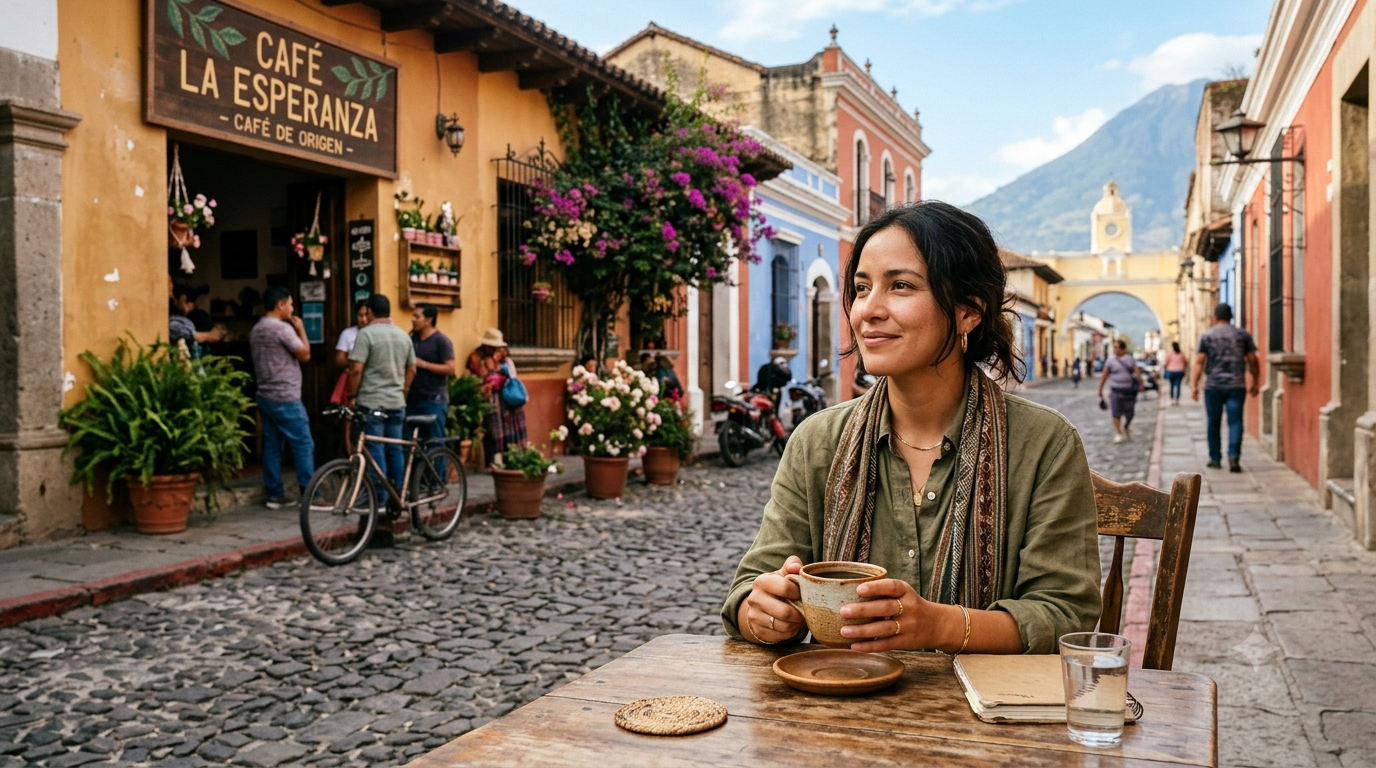
A quiet moment sitting outside and watching the city move.
These small rituals show an important cultural idea:
Coffee is not only about drinking. It is about experiencing.
From the high-altitude farms of Colombia to the urban cafés of Bogotá, Buenos Aires, and São Paulo, coffee has become a bridge connecting nature, people, and everyday life.
The Origins of South American Coffee Culture
How Geography Shaped a Coffee Legacy
South America has become one of the world's most important coffee regions because of its unique natural environment.
The continent offers many conditions that are ideal for coffee cultivation:
- Mountain landscapes
- High elevations
- Tropical climates
- Volcanic soils
- Diverse ecosystems
The Andes Mountains, stretching across several South American countries, create many microclimates where coffee plants can grow slowly and develop complex flavors.
Unlike crops produced in uniform industrial environments, many South American coffee farms are deeply connected with local geography.
The altitude, rainfall, soil, and farming traditions all influence the final taste of coffee.
This creates an important connection:
Every region produces not only a different flavor, but also a different story.
A coffee bean carries the characteristics of the place where it grows.
The mountains where it was planted.
The people who harvested it.
The traditions behind its production.
Colombia: The Heart of South American Coffee Culture
Colombia is often considered one of the most recognizable names in global coffee culture.
The country’s coffee regions are famous for beautiful mountain landscapes, family-owned farms, and generations of farming knowledge.
The Coffee Cultural Landscape of Colombia represents a unique relationship between people, agriculture, and nature.
Here, coffee farming is not simply an industry.
It is a way of life.
Many Colombian coffee farms are operated by families who have passed their knowledge from one generation to the next.
Farmers understand details that machines cannot easily replace:
- When coffee cherries reach the perfect level of ripeness
- How weather affects the plants
- How soil conditions influence growth
- How processing methods change flavor
The process begins with coffee plants growing on mountain slopes.
After careful cultivation, farmers harvest ripe coffee cherries by hand.
These cherries then go through several stages:
- Harvesting
- Processing
- Drying
- Sorting
- Roasting
Eventually, these beans become the coffee enjoyed in cafés around the world.
Behind every cup is a long journey.
This is one reason coffee culture in Colombia feels deeply connected to appreciation and respect.
A cup of coffee represents not only a beverage, but also the work, patience, and knowledge of many people.
Coffee Farming as a Connection Between People and Nature
Traditional coffee farming creates a unique relationship between humans and the environment.
Unlike many fast-consumption products, coffee requires time.
A coffee plant needs years before producing meaningful harvests.
Farmers must understand natural cycles and adapt to changing conditions.
This relationship creates a slower rhythm of production.
It reflects a broader South American lifestyle philosophy:
Good things often require patience.
The same idea appears in many aspects of local culture:
- Preparing traditional meals
- Sharing conversations
- Enjoying outdoor spaces
- Spending time with family and friends
Coffee fits naturally into this way of living.
It encourages people to pause and appreciate the moment.
Brazil: The World's Coffee Giant
While Colombia is strongly associated with coffee quality and tradition, Brazil plays another important role in South America's coffee story.
Brazil is one of the world's largest coffee producers and has a diverse coffee industry that includes many different growing regions and production styles.
However, coffee in Brazil is not only about global production.
It is also part of everyday life.
For many Brazilians, coffee is connected with ordinary moments:
A cup during breakfast.
A short break during work.
A conversation after a meal.
A visit with friends.
Coffee does not always require a special occasion.
It naturally exists within daily routines.
This is an important characteristic of South American coffee culture.
Coffee is accessible.
It belongs to everyone.
It can be enjoyed in a small family kitchen, a neighborhood bakery, or a modern urban café.
From Coffee Production to Everyday Rituals
One interesting aspect of South American coffee culture is how naturally coffee fits into daily life.
In many countries, coffee has become part of social interaction.
People do not simply ask:
“Do you want coffee?”
They often create an opportunity:
“Let’s have coffee.”
The difference is subtle but meaningful.
The coffee itself is not always the main purpose.
The moment around it is.
It creates space for:
- Conversation
- Connection
- Relaxation
- Reflection
A simple coffee break can become a meaningful pause in a busy day.
Peru and Emerging Coffee Regions: New Stories from the Andes
Beyond Colombia and Brazil, other South American countries are also developing their own coffee identities.
Peru, for example, has gained attention for its high-altitude coffee farms and increasing focus on specialty coffee.
Many Peruvian coffee-growing regions benefit from:
- Mountain environments
- Small-scale farming
- Traditional agricultural knowledge
The result is a coffee culture that combines heritage with innovation.
Younger generations of coffee producers are exploring new approaches:
- Specialty coffee production
- Sustainable farming methods
- Direct relationships with international consumers
This reflects a broader movement across South America.
Coffee culture is evolving.
Traditional knowledge is being preserved while new ideas continue to emerge.
Coffee Is a Reflection of South American Identity
From Colombia’s mountain farms to Brazil’s everyday coffee habits, coffee represents more than agriculture.
It reflects important cultural values:
Connection
Coffee creates opportunities for people to meet and communicate.
Patience
Coffee production requires time, care, and attention.
Appreciation
A good cup of coffee encourages people to notice small details.
Community
Coffee traditions often bring people together.
These values explain why coffee remains such an important part of South American life.
It is not only something people consume.
It is something people experience.
Part 2 — How Coffee Became a Lifestyle Beyond the Farm
From Coffee Farms to Urban Cafés: The Evolution of South American Coffee Culture
Coffee begins its journey in rural landscapes, but its cultural meaning continues to evolve when it reaches cities.
Across South America, coffee has moved beyond being an agricultural product.
It has become part of urban lifestyles.
In modern cities, cafés are no longer only places to purchase a drink.
They have become:
- Social spaces
- Creative environments
- Meeting points
- Personal retreats
A café can be a place where someone starts their morning, works remotely, meets friends, reads a book, or simply enjoys a quiet moment.
This transformation shows how coffee adapts to different generations.
The farmer in the mountains and the customer in a city café may seem separated by distance, but they are connected through the same daily ritual.
A coffee bean carries a journey.
From nature.
To craftsmanship.
To human connection.
Bogotá: A New Generation of Colombian Coffee Culture
Colombia has always been known for coffee production, but in recent years, its urban coffee culture has experienced a new transformation.
Especially in cities like Bogotá, coffee is becoming more than a traditional beverage.
It is becoming a lifestyle experience.
For many years, Colombian coffee was mainly recognized internationally as an export product.
However, a new generation of coffee professionals has started changing the way people experience coffee locally.
Modern coffee shops are introducing:
- Specialty coffee concepts
- Local roasting techniques
- Coffee education
- Direct relationships with farmers
The focus has shifted from simply drinking coffee to understanding the story behind it.
Customers are becoming more interested in:
Where did this coffee come from?
Who produced it?
How was it processed?
What makes this region unique?
This curiosity creates a stronger connection between consumers and producers.
Coffee Shops as Cultural Spaces
Modern cafés in Bogotá are often designed as comfortable community spaces.
They are places where people can:
- Work remotely
- Meet colleagues
- Study
- Relax
- Discover new flavors
The atmosphere matters.
Natural lighting.
Simple design.
Thoughtful details.
A carefully prepared cup of coffee.
These elements create an experience rather than a transaction.
This reflects a global lifestyle trend:
People increasingly value places that help them slow down.
A café becomes a small escape from fast-paced urban life.
Buenos Aires: Coffee as a Social Tradition
If Colombia represents coffee’s connection with origin and craftsmanship, Buenos Aires represents coffee as a social ritual.
In Argentina’s capital city, cafés have long played an important role in everyday culture.
A traditional café is not simply a place to quickly drink coffee before leaving.
It is a place to stay.
People may spend hours:
- Reading newspapers
- Talking with friends
- Discussing ideas
- Watching city life
The value is not only in the coffee itself.
The value is in the time spent around it.
The Art of Slowing Down
Buenos Aires café culture reflects a slower approach to daily life.
In many modern cities around the world, coffee has become associated with speed:
- Grab a coffee
- Take it away
- Continue working
But traditional Buenos Aires cafés often encourage the opposite.
Sit down.
Take your time.
Enjoy the conversation.
This idea connects strongly with the concept of slow living.
Slow living does not mean doing everything slowly.
It means being more intentional with everyday moments.
A simple coffee break becomes an opportunity to reconnect with yourself and others.
São Paulo: Where Coffee Meets Modern Urban Lifestyle
Brazil’s relationship with coffee has always been strong, but cities like São Paulo have created a modern interpretation of coffee culture.
As one of South America’s largest cities, São Paulo combines:
- Business
- Creativity
- Design
- International influences
Its café scene reflects this diversity.
Modern coffee spaces combine traditional Brazilian coffee appreciation with contemporary ideas.
They may include:
- Specialty coffee bars
- Minimalist interiors
- Creative communities
- Coffee-focused experiences
For many urban residents, cafés have become an extension of their lifestyle.
A place to:
- Start the morning
- Have a business conversation
- Work on creative projects
- Meet friends after work
Coffee becomes part of the rhythm of city life.
Coffee and Travel: Discovering South America Through a Cup
For travelers, coffee offers a unique way to understand a destination.
Many visitors explore South America through famous landmarks:
- Mountains
- Beaches
- Historic buildings
- Natural landscapes
But local coffee culture can reveal something deeper.
It introduces travelers to:
- Local traditions
- Everyday routines
- Regional flavors
- Community values
A coffee shop is often a small window into local life.
Coffee Experiences Worth Discovering
Colombian Coffee Farm Experiences
For travelers visiting Colombia, coffee farms provide an opportunity to understand the complete journey of coffee.
A typical experience may include:
- Walking through coffee plantations
- Learning about harvesting
- Understanding processing methods
- Tasting freshly prepared coffee
The experience is not only educational.
It creates appreciation.
After seeing the work behind a cup of coffee, people often develop a deeper connection with the drink.
Exploring Traditional Cafés in Buenos Aires
A visit to Buenos Aires is incomplete for many travelers without experiencing its café culture.
Traditional cafés offer something different from tourist attractions.
They provide a chance to observe everyday life.
You can experience:
- Local conversations
- Traditional desserts
- Historic interiors
- Relaxed afternoons
The café itself becomes part of the journey.
Discovering Brazil Through Coffee Lifestyle
In Brazil, coffee experiences can range from traditional family habits to modern specialty cafés.
Travelers can explore:
- Local coffee shops
- Regional flavors
- Contemporary coffee communities
The experience shows that coffee is not one single tradition.
It is a collection of different lifestyles.
Coffee, Sustainability, and Conscious Choices
As coffee culture continues to grow, many consumers are becoming more interested in sustainability.
People increasingly want to understand:
- Where their coffee comes from
- How farmers are supported
- How production affects the environment
This has encouraged more attention toward:
- Responsible sourcing
- Sustainable farming
- Supporting local producers
The future of coffee culture is not only about better flavors.
It is also about better connections.
A meaningful coffee experience considers everyone involved:
The farmer.
The environment.
The customer.
Bringing South American Coffee Moments Into Everyday Life
Although not everyone can visit a Colombian coffee farm or spend an afternoon in a Buenos Aires café, the spirit of South American coffee culture can be brought into everyday routines.
The key is creating intentional moments.
Morning Coffee: Starting the Day with Awareness
A morning coffee ritual does not need to be complicated.
It can simply be:
A quiet space.
A favorite drink.
A few minutes before the day begins.
This small habit creates a transition between rest and activity.
Instead of immediately entering a busy schedule, people create a moment of preparation.
Coffee at Work: A Personal Reset Moment
Modern work environments often move quickly.
Coffee breaks can become opportunities to pause.
A short break allows people to:
- Step away from screens
- Refresh their thoughts
- Return with better focus
The value is not only the caffeine.
It is the mental space created around the ritual.
Coffee While Traveling: Bringing Familiar Comfort Anywhere
Travel introduces new environments and experiences.
However, small familiar habits can make unfamiliar places feel more comfortable.
A personal coffee routine can travel with you:
- During road trips
- While exploring cities
- During outdoor adventures
A reusable tumbler or travel cup supports this lifestyle naturally.
It allows travelers to enjoy their preferred beverages while reducing dependence on disposable options.
The purpose is not simply carrying a container.
It is maintaining a small personal ritual wherever life takes you.
The Connection Between Coffee and Everyday Lifestyle
The popularity of coffee culture around the world shows something important.
People are looking for more than convenience.
They are looking for experiences.
A meaningful coffee moment represents:
- Comfort
- Connection
- Creativity
- Balance
These ideas are increasingly important in modern lifestyles.
As daily routines become faster, people value simple rituals that help them slow down.
Coffee provides one of those moments.
Conclusion: A Cup of Coffee, A Story of South America
South American coffee culture is not only about beans.
It is about people.
It begins with farmers working among mountain landscapes.
It continues through traditional communities and modern city cafés.
It appears in conversations between friends, quiet mornings, and moments of personal reflection.
Every cup carries a story.
A story of nature.
A story of craftsmanship.
A story of connection.
From Colombian farms to urban cafés across South America, coffee represents a simple but powerful idea:
The best moments in life are often created through small daily rituals.
A cup of coffee is not just something we drink.
It is a moment we experience.
And sometimes, a small moment is enough to help us slow down, reconnect, and appreciate where we are.