
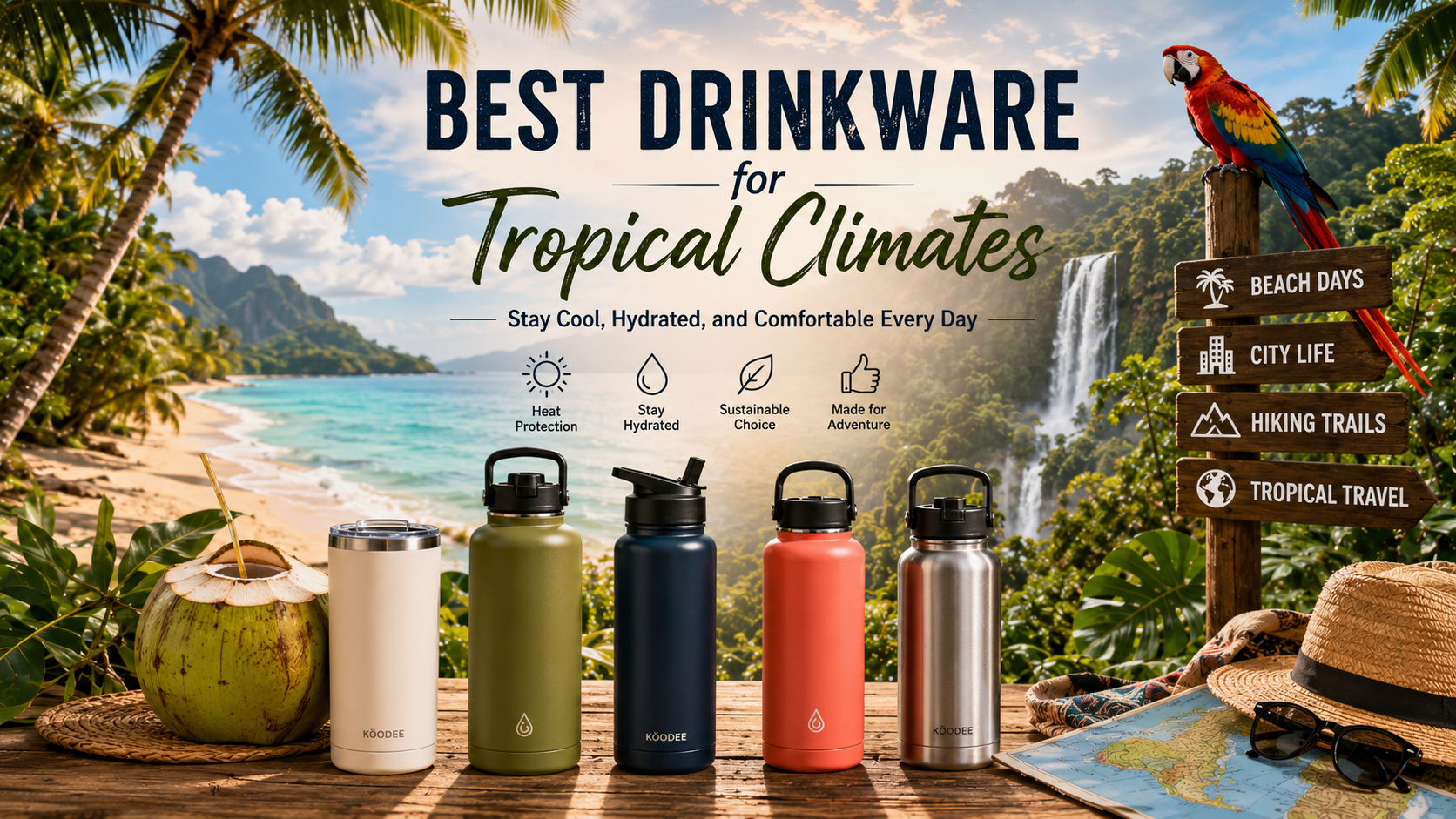
Choosing the Right Bottle, Tumbler, and Cup for Hot, Humid Weather and Everyday Life
Introduction: Not Every Water Bottle Is Designed for the Tropics
When people shop for drinkware, they often focus on appearance, color, capacity, or whether a bottle promises to keep drinks hot or cold. These features certainly matter, but there is another factor that has an even greater influence on everyday performance—the climate where the bottle will be used.
A drinkware product that works perfectly in a cool European city may not deliver the same experience in the tropical heat of Singapore, the humid streets of Kuala Lumpur, the beaches of Brazil, or the rainforests of Colombia.
Tropical climates present a unique combination of high temperatures, intense sunlight, elevated humidity, seasonal rain, and active outdoor lifestyles. These conditions influence not only how quickly beverages change temperature but also how often people drink, what they choose to drink, and how they care for their bottles.
In many tropical regions, staying hydrated is part of daily life rather than an occasional health reminder. Office workers carry insulated tumblers during long commutes. Students bring reusable bottles to school. Travelers rely on leakproof bottles while exploring beaches and rainforests. Cyclists, hikers, and motorcycle riders often spend hours outdoors under strong sunshine, making reliable drinkware an essential everyday companion.
Choosing the right bottle is therefore about much more than aesthetics. It is about comfort, convenience, hygiene, sustainability, and developing hydration habits that naturally fit the environment.
This guide explores how tropical climates affect drinkware performance, compares different materials, examines common hydration challenges, and offers practical advice for choosing drinkware that supports everyday life.
Understanding Tropical Climates
Before selecting drinkware, it helps to understand what makes tropical regions different from other parts of the world.
Although climates vary between countries, tropical regions generally share several characteristics:
- High average temperatures throughout the year
- Elevated humidity
- Strong ultraviolet (UV) radiation
- Frequent rainfall or monsoon seasons
- Long outdoor activity periods
- Minimal seasonal temperature variation
These conditions are common across much of Southeast Asia, Central America, northern South America, parts of Africa, and many Pacific islands.
Countries such as Brazil, Colombia, Indonesia, Malaysia, Thailand, the Philippines, Singapore, and Vietnam all experience climates where hydration becomes part of everyday routine.
Unlike regions with four distinct seasons, tropical residents often face warm weather year-round. As a result, drinkware experiences continuous exposure to heat, moisture, sunlight, and frequent use.
Why Hydration Is More Challenging Than It Appears
Many people assume hot weather naturally reminds us to drink more water.
In reality, hydration in tropical environments is more complicated.
Sweating is the body's primary cooling system. As body temperature rises, sweat evaporates from the skin, removing excess heat. However, high humidity changes this process.
When the surrounding air already contains large amounts of moisture, sweat evaporates more slowly. Instead of feeling cool, people often feel sticky or uncomfortable. The body responds by producing even more sweat in an attempt to regulate temperature.
This means people may lose substantial amounts of water without fully realizing it.
Another challenge is routine.
Busy work schedules, commuting, travel, exercise, and family activities often distract people from drinking regularly. By the time noticeable thirst develops, mild dehydration may already have occurred.
Rather than relying solely on thirst, building consistent drinking habits becomes increasingly important in tropical environments.
How Tropical Weather Affects Drinkware
Climate influences not only our hydration needs but also the performance of the bottle itself.
Understanding these effects helps explain why certain materials and designs work better than others.
Drinks Warm Up Quickly
One of the most common frustrations in hot climates is watching cold water become lukewarm within an hour.
Plastic bottles exposed to direct sunlight or left inside a parked vehicle can quickly lose their cooling effect.
For people who enjoy chilled water throughout the day, maintaining beverage temperature significantly improves the drinking experience.
Vacuum-insulated bottles slow heat transfer, allowing drinks to remain cold much longer than single-wall containers.
Although exact performance varies depending on environmental conditions, insulation can dramatically improve comfort during long workdays, outdoor activities, and travel.
Condensation Creates Everyday Annoyances
Anyone who has carried an iced drink in a traditional cup understands the problem of condensation.
Water droplets collect on the outside surface, soaking desks, notebooks, backpacks, and electronic devices.
In humid climates, this happens even faster.
Double-wall insulated drinkware helps prevent exterior condensation because the outer wall remains closer to room temperature.
This seemingly small feature makes daily commuting and office use much more convenient.
Heat and Humidity Increase Cleaning Requirements
Warm, moist environments encourage faster bacterial and mold growth than cooler climates.
This does not mean reusable bottles are unsafe—it simply means regular cleaning becomes even more important.
Areas requiring particular attention include:
- Silicone sealing rings
- Straw components
- Lid threads
- Flip-top mechanisms
- Drinking spouts
Disassembling lids periodically and allowing all parts to dry completely before reassembly helps maintain hygiene and extends product lifespan.
Plastic Bottles Can Retain Odors More Easily
Many users notice that inexpensive plastic bottles gradually absorb odors from coffee, tea, fruit drinks, or sports beverages.
Repeated exposure to heat may accelerate this process.
Food-grade stainless steel generally resists flavor retention more effectively, making it easier to switch between different beverages without lingering tastes.
Choosing the Right Drinkware Material
Different materials offer different advantages.
Rather than asking which material is universally "best," it is more helpful to ask which material best fits your lifestyle.
Stainless Steel
For tropical climates, double-wall stainless steel has become one of the most popular choices.
Advantages include:
- Excellent temperature retention
- Durable construction
- Odor resistance
- Long service life
- Suitable for both hot and cold beverages
Because it combines performance with durability, stainless steel works well for commuting, travel, hiking, offices, and outdoor recreation.
Plastic
Plastic bottles remain popular because they are lightweight and affordable.
Modern BPA-free plastics have improved significantly over older materials.
They work particularly well for sports, children's activities, and situations where minimizing weight is important.
However, they generally provide less insulation and may require more frequent replacement over time.
Glass
Glass offers a clean drinking experience and does not retain flavors.
Many people enjoy using glass bottles at home or in office environments.
However, tropical lifestyles often involve travel, commuting, and outdoor activities where durability becomes more important.
Protective sleeves help reduce breakage risk but cannot eliminate it entirely.
Ceramic
Ceramic mugs remain excellent for enjoying coffee or tea indoors.
They provide a pleasant drinking experience but are not typically designed for extended outdoor use or travel.
Titanium
Titanium combines impressive strength with extremely low weight.
Although often more expensive, it appeals to hikers, campers, and outdoor enthusiasts seeking premium lightweight equipment.
Matching Drinkware to Your Lifestyle
One bottle rarely fits every situation.
Choosing drinkware according to activity often provides the best overall experience.
Beach Days
Large-capacity insulated bottles help keep water refreshingly cool throughout long hours under direct sunshine.
A comfortable carrying handle makes transportation easier.
Hiking
Weight, durability, and leak resistance become priorities.
A medium-capacity insulated bottle balances portability with sufficient hydration.
Office Work
Compact tumblers fit neatly beside laptops and inside cup holders.
Leak-resistant lids reduce the risk of spills during meetings or commuting.
Fitness
Gym users often prefer bottles with quick-access drinking spouts that make frequent hydration easier during exercise.
Motorcycle Riding
For riders in tropical climates, drinkware should emphasize:
- Secure sealing
- Easy one-handed operation when stopped
- Durable construction
- Compatibility with backpacks or luggage
Convenient access encourages regular hydration during longer journeys.
Family Picnics
Larger bottles reduce the need for constant refilling.
Some families also carry separate insulated containers for hot beverages alongside cold water.
Cold Water or Room Temperature?
One of the most frequently debated hydration topics concerns beverage temperature.
Some cultures strongly prefer cold drinks.
Others traditionally favor room-temperature or warm beverages.
Scientific evidence suggests that both approaches can support healthy hydration.
Cold water often feels more refreshing during hot weather and may encourage greater voluntary intake.
Room-temperature water may feel more comfortable for some individuals and remains perfectly effective for maintaining hydration.
Ultimately, the most important factor is drinking consistently rather than focusing exclusively on temperature.
The best bottle is therefore one that keeps beverages at the temperature you personally enjoy.
Small Design Features That Make a Big Difference
When comparing bottles, insulation often receives the most attention.
Yet many everyday details influence long-term satisfaction.
Useful features include:
- Comfortable handles
- Wide-mouth openings
- Easy-to-clean lids
- Dishwasher-safe components where appropriate
- Powder-coated finishes for better grip
- Leakproof sealing systems
- Cup-holder compatibility
- Durable scratch-resistant surfaces
These design choices improve convenience and encourage more frequent use.
Better Drinkware Supports Better Hydration Habits
Hydration is ultimately a behavioral habit.
Research consistently shows that people drink more water when it is easily available.
Keeping a reusable bottle nearby serves as a simple visual reminder throughout the day.
When water remains pleasantly cool, the bottle feels comfortable to carry, and cleaning is straightforward, drinking becomes a natural part of everyday routine rather than something that requires conscious effort.
Over months and years, these small behavioral improvements can contribute to healthier daily habits while also reducing reliance on single-use plastic bottles.
Sustainability in Tropical Living
Many tropical destinations face increasing environmental challenges related to plastic waste.
Choosing durable reusable drinkware offers both personal and environmental benefits.
Instead of purchasing disposable bottled water every day, one quality bottle can accompany years of commuting, travel, outdoor adventures, and daily routines.
For travelers, carrying a reusable bottle also reduces waste while making hydration more convenient during flights, road trips, and sightseeing.
As refill stations become increasingly common in airports, hotels, offices, universities, and public spaces, reusable drinkware continues to play an important role in more sustainable lifestyles.
Common Mistakes When Choosing Drinkware
Many purchasing decisions focus on appearance while overlooking practical considerations.
Some common mistakes include:
- Choosing capacity that is too small for hot climates.
- Ignoring insulation when spending long hours outdoors.
- Buying bottles that are difficult to clean.
- Forgetting to clean silicone seals regularly.
- Leaving bottles inside hot vehicles for extended periods.
- Selecting oversized bottles that become uncomfortable to carry.
- Prioritizing marketing claims instead of everyday usability.
Thinking about your daily routine before purchasing often leads to a better long-term choice.
Conclusion: The Best Bottle Fits Your Climate—and Your Lifestyle
There is no universally perfect water bottle.
The ideal choice depends on where you live, how you travel, what you drink, and how you spend your day.
For people living in tropical climates, drinkware faces challenges that cooler regions rarely experience. Heat, humidity, strong sunlight, and active outdoor lifestyles place greater demands on both hydration habits and bottle performance.
Fortunately, thoughtful design can make a meaningful difference. Effective insulation, durable materials, leakproof construction, and easy maintenance all contribute to a better drinking experience.
More importantly, the right bottle encourages consistency.
When staying hydrated feels effortless—whether you're commuting through a busy city, relaxing on a tropical beach, hiking in a rainforest, or enjoying coffee at the office—healthy habits become easier to maintain.
In the end, the best drinkware isn't simply the one with the longest list of specifications. It's the one that fits naturally into your everyday life, helping you stay comfortable, refreshed, and ready for whatever the tropical climate brings.
References
The information presented in this article is based on publicly available guidance, scientific literature, and industry resources related to hydration, climate, food-safe materials, and sustainable reusable drinkware.
Hydration & Health
- World Health Organization (WHO) – Healthy Living & Hydration Resources
- Centers for Disease Control and Prevention (CDC) – Water and Healthier Drinks
- Hydration for Health Scientific Library
- European Food Safety Authority (EFSA) – Dietary Reference Values for Water
- Mayo Clinic – Water: How Much Should You Drink Every Day?
Climate & Environment
- World Meteorological Organization (WMO)
- National Oceanic and Atmospheric Administration (NOAA) Climate Resources
- NASA Earth Observatory – Climate and Environment
- Food and Agriculture Organization of the United Nations (FAO) Climate Resources
- United Nations Environment Programme (UNEP)
Drinkware Materials & Product Safety
- International Organization for Standardization (ISO)
- National Institute of Standards and Technology (NIST) – Materials Science Resources
- ASM International – Stainless Steel Resources
- British Stainless Steel Association (BSSA)
- U.S. Food & Drug Administration (FDA) – Food Contact Materials