
Choosing a water bottle for children sounds simple at first.
Many parents focus on:
- cute designs
- favorite colors
- cartoon prints
- matching school accessories
But after a few weeks, problems often begin to appear:
- the bottle leaks inside the school bag
- the lid becomes difficult to clean
- strange odors develop
- the bottle feels too heavy
- children stop using it regularly
This is because the best kids water bottle is not only about appearance.
It is about how well the bottle supports:
- safety
- hydration habits
- comfort
- portability
- daily usability
Children interact with drinkware differently from adults.
They drink differently.
Carry bottles differently.
Open lids differently.
Drop bottles more often.
And perhaps most importantly:
their hydration habits are still developing.
This means the right water bottle can do more than simply hold water.
It can actively help children build healthier hydration behaviors for everyday life.
In this guide, we’ll explore:
- the safest and most practical materials for kids
- how lid design changes drinking behavior
- why weight and ergonomics matter
- which bottle types work best for different age groups
- how parents can choose drinkware that children actually enjoy using
Because the best kids bottle is not necessarily the most expensive one.
It is the one that helps children drink comfortably, consistently, and confidently every day.
Why Kids Need Different Drinkware Than Adults
Children are not simply “smaller adults.”
Their drinking behavior is fundamentally different.
Understanding this changes how we evaluate kids drinkware.
1. Children Drink in Smaller, More Frequent Amounts
Most children naturally hydrate through:
- small sips
- repeated intake throughout the day
This is very different from adults who may drink large amounts at once.
As a result, children benefit from:
- easier flow control
- accessible lids
- lightweight bottles
Drinkware that feels effortless encourages more frequent hydration.
2. Children Have Limited Grip Strength and Coordination
Young children are still developing:
- hand strength
- motor control
- coordination
This means heavy bottles or difficult lids can quickly become frustrating.
If a bottle feels difficult to use, children are less likely to drink regularly.
3. Kids Bottles Experience More Impact
Children drop bottles constantly.
Whether at school, during play, or while traveling, kids drinkware must survive:
- impacts
- falls
- rough handling
Durability becomes much more important than it is for adult drinkware.
4. Drinkware Influences Hydration Habits
This is one of the most overlooked ideas.
The design of a bottle directly affects how often children drink water.
For example:
- straw lids often encourage more frequent drinking
- lightweight bottles feel easier to carry
- comfortable handles improve accessibility
Good drinkware design reduces “friction” around hydration.
That matters more than many parents realize.
The Most Important Factors When Choosing a Kids Water Bottle
Before choosing materials or styles, parents should understand the core factors that matter most.
1. Safety & Material Quality
This is usually the first concern for parents—and understandably so.
Children use their bottles daily and repeatedly.
Materials should be:
- durable
- food-safe
- easy to maintain
- suitable for repeated use
However, material choice should also match the child’s lifestyle and drinking habits.
2. Weight & Portability
Children carry bottles in:
- backpacks
- lunch bags
- side pockets
Heavy bottles can quickly become inconvenient.
Especially for younger children.
A lighter bottle often leads to more consistent use.
3. Lid Design
Lid structure strongly affects:
- drinking comfort
- leak prevention
- ease of use
In many cases, the lid matters more than the bottle body itself.
4. Ease of Cleaning
Children’s bottles commonly contain:
- milk residue
- flavored drinks
- juice
- sugary beverages
Poor cleaning accessibility can lead to:
- odor buildup
- mold growth
- hygiene problems
Wide openings and removable parts improve maintenance significantly.
5. Durability
Kids bottles need to survive real life.
This includes:
- drops
- scratches
- repeated opening and closing
- daily transport
Durability is not just about material strength—it also includes lid quality and structural design.
Understanding Kids Bottle Materials
Material selection should balance:
- safety
- practicality
- age suitability
- lifestyle needs
Different materials perform better in different situations.
Tritan Plastic: The Most Common Kids Bottle Material
Tritan has become one of the most popular materials for children’s bottles.
And for good reason.
Advantages of Tritan Bottles
Lightweight
One of the biggest advantages.
Children can carry Tritan bottles more comfortably than stainless steel alternatives.
Impact Resistant
Tritan handles drops and rough use very well.
Perfect for active kids.
Transparent Design
Many children enjoy seeing the liquid inside.
Parents also benefit because they can monitor:
- cleanliness
- hydration levels
- leftover residue
Comfortable for Younger Children
The lighter structure makes drinking easier for toddlers and preschool children.
Limitations of Tritan
Lower Insulation Performance
Tritan does not retain temperature like insulated stainless steel.
Potential Odor Retention in Lower-Quality Products
Higher-quality Tritan products minimize this issue, but cheaper products may retain smells over time.
Best Use Cases for Tritan
- preschool children
- kindergarten use
- cold water
- lightweight daily hydration
316 Stainless Steel: The Premium Long-Term Choice
316 stainless steel is becoming increasingly popular in modern kids drinkware.
Especially among parents looking for:
- durability
- insulation
- long-term use
Why 316 Stainless Steel Stands Out
316 stainless steel offers stronger corrosion resistance than standard 304 steel.
This becomes especially useful for:
- warm beverages
- flavored drinks
- long-term durability
Advantages of 316 Stainless Steel
Excellent Insulation
Keeps drinks warm or cool for extended periods.
Useful for:
- school days
- outdoor activities
- travel
Strong Durability
316 bottles typically handle years of use very well.
Better Corrosion Resistance
Particularly useful for flavored or mildly acidic beverages.
Limitations of 316 Stainless Steel
Increased Weight
Heavier than Tritan bottles.
This can matter for younger children.
Best Use Cases
- elementary school children
- outdoor use
- longer daily schedules
- insulated hydration needs
304 Stainless Steel: The Balanced Everyday Option
304 stainless steel remains one of the most common materials in drinkware.
Advantages
- durable
- practical
- widely available
- cost-effective
Best For
- general school use
- moderate insulation needs
- everyday hydration
Difference Between 304 and 316
Both are high-quality stainless steels.
However:
- 316 offers stronger corrosion resistance
- 304 is generally more affordable and lighter
For most normal water use, both perform very well.
Glass Bottles: Why They’re Usually Not Ideal for Kids
Glass provides excellent flavor neutrality.
However, it has major limitations for children.
Advantages
- pure taste
- odor resistance
- chemical stability
Limitations
- fragile
- heavier
- less practical for school or outdoor activity
Best Use Cases
Glass is better suited for:
- supervised home use
- short-term stationary environments
Not for active daily school routines.
Why Lid Design Matters More Than Many Parents Realize
Many hydration problems are actually lid problems.
Children interact with the lid constantly.
A good lid can encourage hydration.
A frustrating lid can discourage it.
Straw Lids: The Best Option for Most Young Children
Straw lids are often the most child-friendly solution.
Why Straw Lids Work So Well
Easier Drinking
Children can drink naturally with less effort.
Better Flow Control
Reduces sudden spills and choking risk.
Encourages More Frequent Hydration
Accessibility increases drinking frequency.
This is especially important for children who forget to drink water.
Better for Movement
Children can drink while:
- walking
- studying
- traveling
without tilting the bottle heavily.
Sip Lids
Sip lids work well for older children who have stronger coordination.
They support:
- slower drinking
- controlled flow
- insulated beverage use
Wide Mouth Bottles
Wide openings work well for:
- fast hydration
- sports activities
But for younger children, they may increase:
- spills
- over-pouring
- drinking difficulty
Dual-Lid Kids Bottles: A Growing Trend
Modern lifestyles are hybrid.
Children move between:
- classroom use
- sports activities
- travel
- outdoor environments
This is why dual-lid systems are becoming increasingly popular.
Advantages of Dual-Lid Designs
One bottle can support:
- straw-style sipping
- direct fast drinking
This creates flexibility across different situations.
Best Kids Bottle Types by Age Group
Different age groups require different hydration solutions.
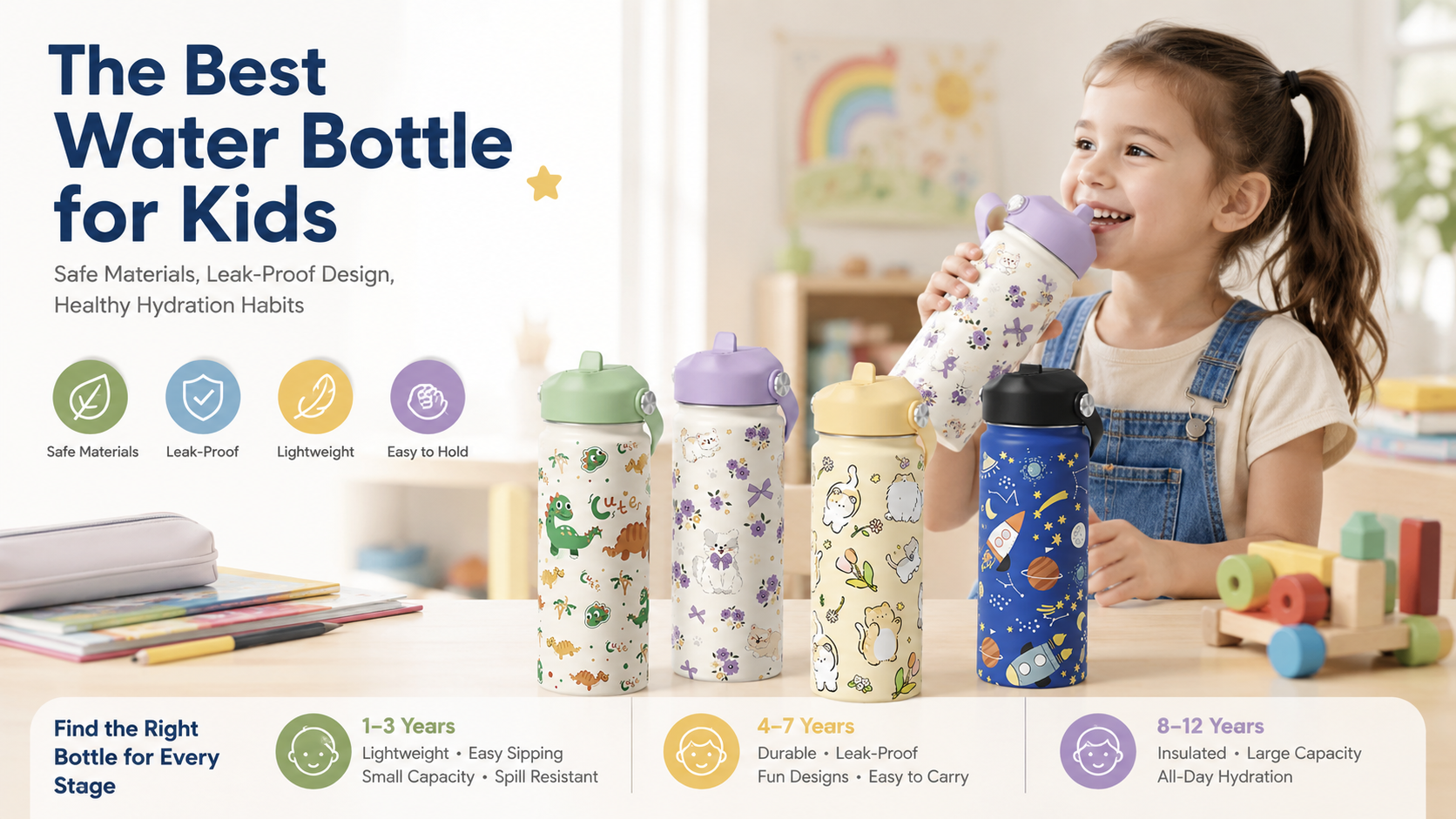
Ages 1–3: Toddlers
Key Priorities:
- lightweight design
- spill resistance
- simple handling
Recommended Bottles
- Tritan straw cups
- soft-flow lids
- small capacity bottles
Ages 4–7: Preschool & Early School Years
Key Priorities:
- independence
- durability
- leak resistance
Recommended Bottles
- straw lid bottles
- lightweight insulated bottles
- easy-open lids
Ages 8–12: Older Children
Key Priorities:
- insulation
- larger capacity
- all-day usability
Recommended Bottles
- 316 stainless steel bottles
- dual-lid systems
- larger insulated tumblers
Hydration Habits Matter More Than Most Parents Think
This is perhaps the most important section of all.
Good drinkware should not simply “hold water.”
It should encourage children to drink more consistently.
How Design Influences Hydration Behavior
Small design choices influence behavior significantly.
Examples include:
- colorful appearance
- comfortable handles
- accessible lids
- lightweight structure
- easy one-hand opening
Children naturally use products that feel enjoyable and effortless.
Why Convenience Matters
Hydration is often about reducing barriers.
If drinking water feels difficult:
- children delay drinking
- hydration frequency drops
Good design removes those obstacles.
Common Mistakes Parents Make When Buying Kids Bottles
Mistake 1: Choosing Based Only on Appearance
Cute designs matter—but usability matters more.
Mistake 2: Buying Oversized Bottles
Large bottles may feel too heavy for younger children.
Mistake 3: Ignoring Cleaning Difficulty
Complex lids can trap residue and moisture.
Mistake 4: Choosing the Wrong Lid Type
Lid structure should match the child’s age and coordination level.
Mistake 5: Prioritizing Insulation Over Comfort
An extremely heavy bottle may discourage use altogether.
How to Choose the Right Kids Water Bottle
Here’s a practical framework.
Step 1: Consider the Child’s Age
Younger children need simpler, lighter systems.
Step 2: Identify the Main Usage Environment
- school
- home
- travel
- sports
Step 3: Decide Whether Insulation Is Necessary
Not every child needs a heavy insulated bottle.
Step 4: Match the Drinking Style
- straw drinking
- sip drinking
- fast hydration
Simple Recommendation Guide
Younger Kids
Best Choice:
- Tritan + Straw Lid
School-Age Kids
Best Choice:
- 304 or 316 Stainless Steel + Leak-Proof Lid
Active Kids
Best Choice:
- Dual-Lid + Handle Design
Brand Perspective: Good Kids Drinkware Supports Daily Life
The best kids bottle is not just about premium materials.
It is about balancing:
- safety
- comfort
- usability
- hydration behavior
Good design helps children drink more naturally throughout the day.
And when hydration becomes easier, healthier habits become easier too.
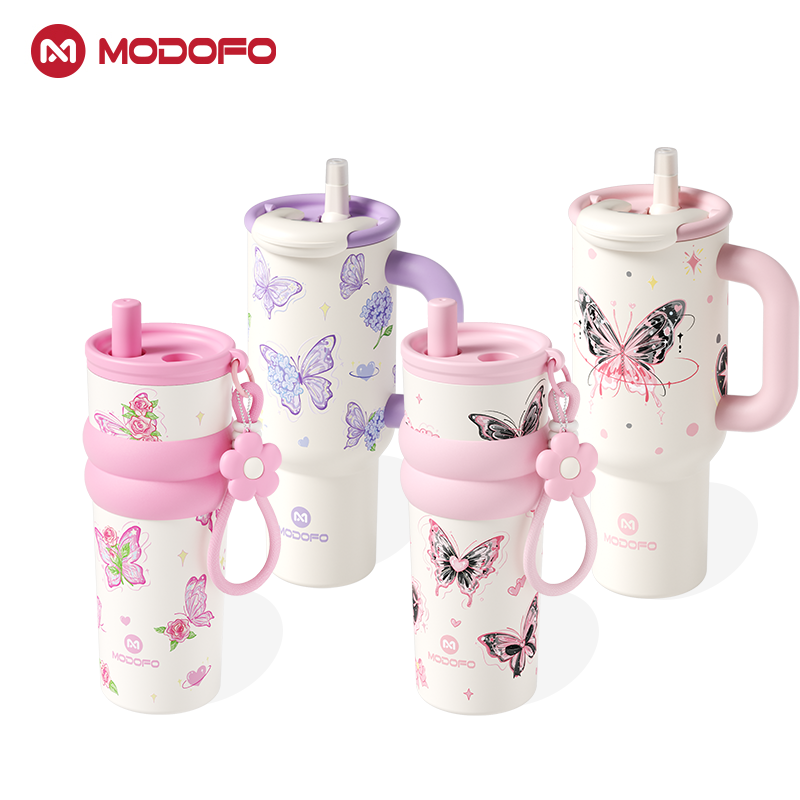
MODOFO KIDS BOTTLE
https://modofo.net/products/modofo-18oz-kids-tumbler-kids-thermos-water-bottle-thermos-flask-stainless-steel-cute-cartoon-water-bottle-water-cup-botol-air-tahan-sejuk-portable-aquaflask-tumbler
https://modofo.net/products/modofo-tumbler-18oz-thermos-bottle