
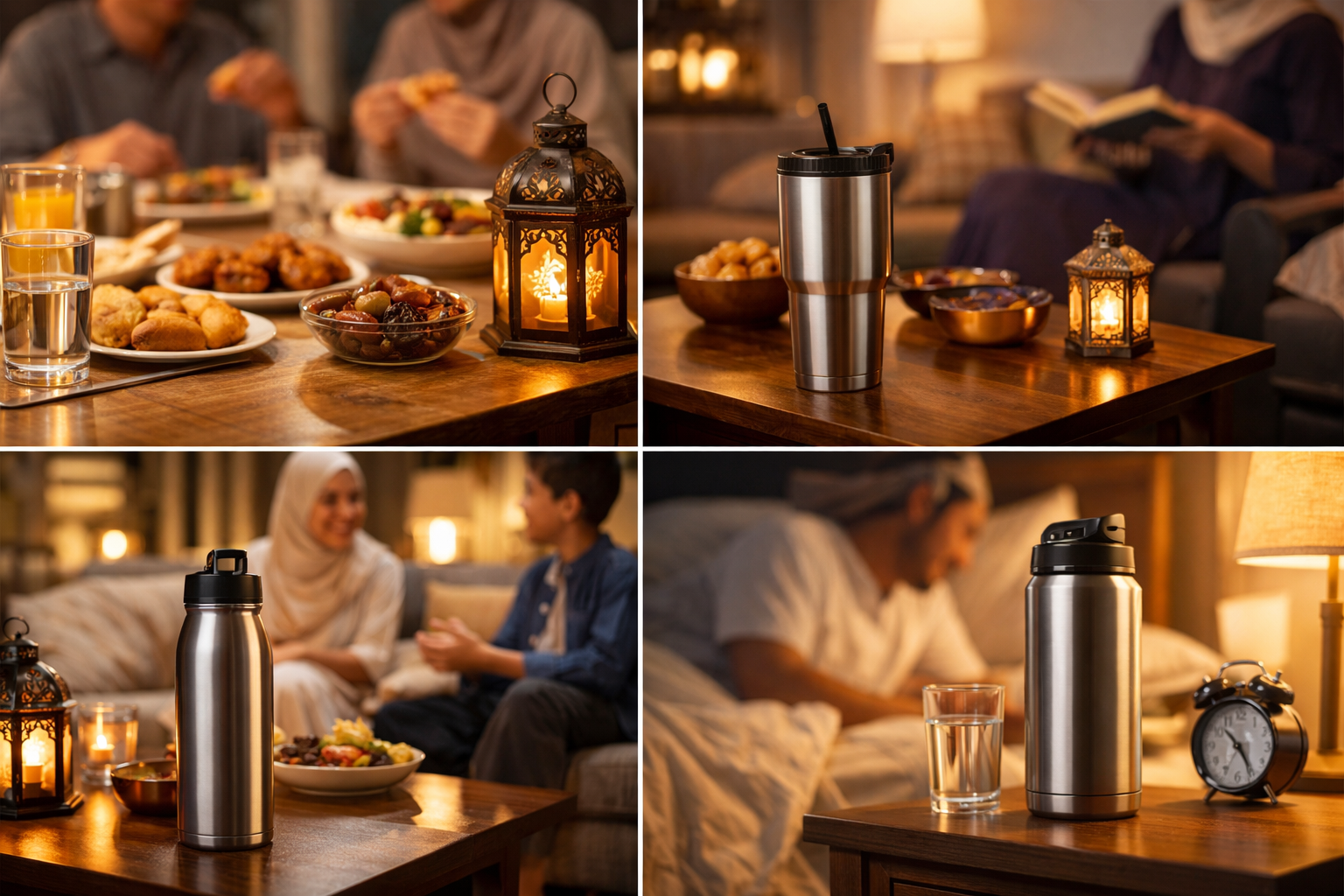
During Ramadan, daily life shifts into a different rhythm. The daytime hours are quieter, while evenings become the center of activity. Families gather to break their fast at Iftar, friends reconnect after sunset prayers, and many people stay active late into the night before preparing for Suhoor.
Because the night hours are often busy and social, simple routines sometimes fall out of place. One of the most common examples is drinking water regularly. Between meals, prayers, conversations, and rest, people can easily forget to take a few sips throughout the evening.
Rather than thinking about hydration as a strict rule, it can be more helpful to see it as a simple part of the evening routine. Small habits—like keeping water nearby or taking a few moments to refill a bottle—can make Ramadan nights feel smoother and more comfortable.
This article explores a few practical ways people naturally build hydration habits into the short window between Iftar and Suhoor.
The Short Window Between Iftar and Suhoor
One of the defining features of Ramadan evenings is how quickly time seems to pass. After sunset, the evening typically unfolds in a sequence of familiar moments.
First comes Iftar, when families and friends gather to break the fast. This is often followed by prayer, conversation, or time spent with loved ones. Later in the evening, people may continue social activities, relax at home, or prepare for the next day. Before dawn, Suhoor provides the final meal before the fasting hours begin again.
Although this schedule may last several hours, it often feels surprisingly short. Between preparing meals, participating in evening prayers, and enjoying time with family or community, the night can become quite full.
Because of this, people do not always notice how little water they drink during the evening. It is rarely intentional—rather, it is simply a result of being busy.
Creating small, consistent routines during these hours can help make drinking water feel natural instead of something that requires extra attention.
Building a Simple Hydration Routine
Many people find it easier to maintain a habit when it fits naturally into the flow of their evening. Instead of trying to remember to drink water randomly, a simple rhythm can make the routine effortless.
For example, some people begin their evening by enjoying a glass of water shortly after Iftar. Later, while relaxing, watching television, or spending time with family, they might take occasional sips from a nearby bottle or tumbler. Before Suhoor, another glass of water often becomes part of the pre-dawn meal routine.
This type of pattern does not require strict rules. Instead, it simply connects drinking water to moments that already exist throughout the evening.
The key idea is consistency. When water is part of a familiar rhythm—during meals, conversations, or quiet moments—it becomes an easy habit rather than something that feels like a task.
Making Hydration Part of the Evening
Ramadan evenings often include a mix of activities. Some people spend time with family members in the living room. Others may read, work, or enjoy quiet moments before heading to evening prayers. Many households also host guests or prepare shared meals during this time.
Because of these activities, keeping water nearby can make a big difference. A simple glass on the table, a reusable bottle on a desk, or a tumbler beside the sofa ensures that drinking water is always within reach.
Over time, these small details create a relaxed routine. Instead of pausing the evening to look for a drink, people simply take a sip whenever the moment feels right.
This approach works particularly well during Ramadan because the evenings already involve a natural rhythm of small breaks—between meals, conversations, or prayers.
Drinks People Enjoy During Ramadan Evenings
Ramadan evenings are also known for their variety of drinks. While water remains the most common choice, many households enjoy different beverages as part of their nightly routine.
Fruit juices are popular in many regions, often served fresh at Iftar. Coconut water is another refreshing option, especially in tropical climates. Some people prefer hot drinks later in the evening, such as tea or coffee, which can create a calm and comforting atmosphere.
In some homes, these drinks become part of a small ritual. A pot of tea may be prepared after dinner, or a tray of beverages might be placed on the table for family members to enjoy together.
These traditions add warmth and hospitality to Ramadan nights, turning simple drinks into shared experiences.
Creating a Comfortable Evening Setup
Another way people naturally build good habits during Ramadan is by arranging their living space for comfort.
Some households prepare a small table or corner where drinks and snacks are easily accessible throughout the evening. This area might include a water bottle, cups, or a teapot, along with light refreshments.
Having a designated place for drinks creates a relaxed environment where family members can gather, talk, and enjoy the evening together. It also makes it easier to refill a glass or pour another drink without interrupting the flow of conversation.
In many homes, this simple setup becomes a familiar part of Ramadan nights. Over time, it turns into a quiet tradition that everyone looks forward to.
Why Large Bottles Are Popular During Ramadan
During Ramadan, many people prefer using larger water bottles or tumblers. The reason is mostly practical.
Evenings can involve many activities—visiting friends, attending prayers, or simply moving between rooms in the house. Having a larger bottle nearby means there is always water available without needing to refill it frequently.
Large bottles are also convenient for shared spaces. When placed on a table, they allow several people to pour a drink throughout the evening.
For individuals who spend time studying, working, or relaxing late at night, a larger bottle can be especially useful. It provides enough water for long periods without needing constant attention.
Because of these advantages, large-capacity drinkware has become increasingly popular during Ramadan, particularly for households that stay active throughout the evening hours.
Small Habits That Make Ramadan Nights Easier
Ramadan is a time filled with meaningful routines, and small habits often make the biggest difference in daily comfort.
Keeping water within reach, using a convenient bottle, or setting up a small drink station at home are simple examples of these habits. None of them require major changes, yet they can make evenings feel more relaxed and organized.
For many people, these routines develop naturally over time. Once a habit becomes part of the nightly rhythm, it requires very little effort to maintain.
Conclusion: Simple Routines for Peaceful Evenings
Ramadan nights are filled with special moments—shared meals, quiet reflections, and time spent with loved ones. Because the hours between Iftar and Suhoor can feel short, small routines help bring balance and comfort to the evening.
Keeping water nearby, enjoying a favorite drink with family, or simply taking a few moments to refill a glass are small habits that fit naturally into the rhythm of the night.
In the end, Ramadan is not only about schedules or routines. It is also about creating peaceful moments and meaningful connections. Sometimes, the simplest habits—like sharing a drink or sitting together at the table—become the most memorable parts of the evening.