
In hot and humid regions like Southeast Asia, staying hydrated is not just a health recommendation—it’s a daily necessity.
Yet, despite living in environments where temperatures are consistently high and sweat loss is significant, many people still struggle to drink enough water. Not because they don’t know it’s important, but because their daily routines are not designed to support consistent hydration.
Most hydration advice sounds simple:
- “Drink more water”
- “Stay hydrated”
- “Aim for 8 glasses a day”
But in reality, these suggestions rarely stick.
The problem isn’t awareness.
The problem is execution.
So instead of focusing on how much water you should drink, this guide focuses on something more practical:
How to build a hydration habit that actually fits into your daily life—and lasts.
1. Why Hydration Matters More in Hot Climates
If you live in a cooler environment, missing a glass or two of water might not feel like a big deal.
In hot climates, it is.
1.1 The Impact of Heat and Humidity
High temperatures increase sweating.
High humidity reduces your body’s ability to cool down effectively.
This combination leads to:
- Faster fluid loss
- Higher risk of dehydration
- Increased fatigue throughout the day
Even if you’re not doing intense physical activity, your body is still working harder to regulate temperature.
1.2 The Hidden Effects of Mild Dehydration
You don’t need to be severely dehydrated to feel the effects.
Even mild dehydration can lead to:
- Lower energy levels
- Difficulty concentrating
- Headaches
- Reduced productivity
And because these symptoms are subtle, most people don’t connect them to hydration.
They just assume they’re tired.
1.3 Why “Drinking When Thirsty” Is Not Enough
Thirst is a delayed signal.
By the time you feel thirsty, your body is already behind on hydration.
In hot environments, relying on thirst alone often results in:
- Irregular drinking patterns
- Large, infrequent water intake
- Poor hydration consistency
Key Insight
In hot climates, hydration needs to be proactive, not reactive.
2. Why Most People Struggle to Drink Enough Water
The issue is not knowledge—it’s behavior design.
2.1 It’s Easy to Forget
Modern routines are fragmented:
- Meetings
- Screen time
- Commuting
Drinking water doesn’t always fit naturally into these activities.
So it gets skipped.
2.2 Water Is Often Not Convenient
If getting water requires effort—standing up, walking to the kitchen, refilling a container—it becomes a low-priority action.
2.3 There’s No Immediate Reward
Unlike coffee or sugary drinks, water doesn’t provide instant stimulation.
This makes it easier to ignore.
2.4 The Real Problem
Most people treat hydration as:
A task
When it should be:
A system built into daily routines
3. The Foundation: Building a Hydration System That Works
Instead of relying on discipline, focus on structure.
3.1 Reduce Friction
The easier it is to drink water, the more often you will do it.
Simple ways to reduce friction:
- Keep water within arm’s reach
- Use a container that is easy to open and drink from
- Avoid anything that requires multiple steps
3.2 Use Habit Triggers
Don’t rely on memory—attach hydration to existing habits.
Examples:
- Drink water after waking up
- Drink before meals
- Drink after returning from outside
This creates automatic behavior.
3.3 Drink in Small, Frequent Amounts
Trying to drink a large amount at once is uncomfortable and unsustainable.
A better approach:
- Drink smaller amounts consistently throughout the day
3.4 Make It Comfortable
Temperature matters.
In hot climates:
- Extremely cold water can feel refreshing, but may not always be ideal
- Slightly cool or room-temperature water is easier to drink consistently
Key Insight
The goal is not to “drink more”
The goal is to make drinking effortless
4. Hydration Strategies for Hot Weather (That Actually Work)
4.1 Adjust Based on Activity
- Indoor (air-conditioned): You may not feel sweat, but you still lose fluids
- Outdoor: Increase frequency, not just volume
4.2 Spread Intake Across the Day
Instead of drinking large amounts at once:
- Start early
- Maintain throughout the day
- Reduce excessive intake at night
4.3 Pay Attention to Timing
Simple structure:
- Morning: Rehydrate after sleep
- Midday: Maintain energy levels
- Afternoon: Prevent fatigue
- Evening: Moderate intake
4.4 Consistency Beats Volume
Drinking 200ml multiple times a day is often more effective than drinking 1 liter at once.
5. How to Build Hydration Habits for Children
This is where habits matter even more.
5.1 Why Children Often Don’t Drink Enough
- They don’t recognize thirst signals clearly
- They get distracted by play
- They prefer flavored drinks
5.2 Common Mistakes
- Replacing water with juice or sweet drinks
- Forcing children to drink large amounts
- Not providing easy access to water
5.3 What Works Better
Make Water Accessible
Children are more likely to drink water if it is:
- Always nearby
- Easy to use
- Part of their environment
Create Routine-Based Drinking
Instead of asking them randomly:
- Before school
- After play
- During meals
Make It Engaging
- Let them choose their own water bottle
- Make hydration feel like part of their routine
Key Insight
Children don’t build habits through instruction
They build habits through environment
6. The Role of a Water Bottle in Building Better Habits
At first glance, a water bottle seems like a simple object.
But in reality, it plays a critical role.
6.1 It Determines Accessibility
If water is always within reach, drinking becomes automatic.
6.2 It Reduces Effort
A good water container eliminates barriers:
- No need to constantly refill
- No complicated opening mechanisms
- Easy to carry
6.3 It Shapes Behavior
The easier it is to use:
👉 The more often it gets used
6.4 What Makes a Water Bottle Practical
Instead of focusing on brand or design, focus on usability:
- Easy to open (preferably one-hand operation)
- Moderate capacity (not too large, not too small)
- Easy to clean
- Comfortable to carry
A Subtle Shift in Product Thinking
More people are moving toward containers that are not just “storage,” but tools for consistency.
For example, insulated stainless steel designs are becoming more common—not because they look better, but because they:
- Keep water at a stable temperature
- Reduce the need for frequent refills
- Fit into both indoor and outdoor use
In that sense, a well-designed water container becomes part of the habit system—not just something you drink from.
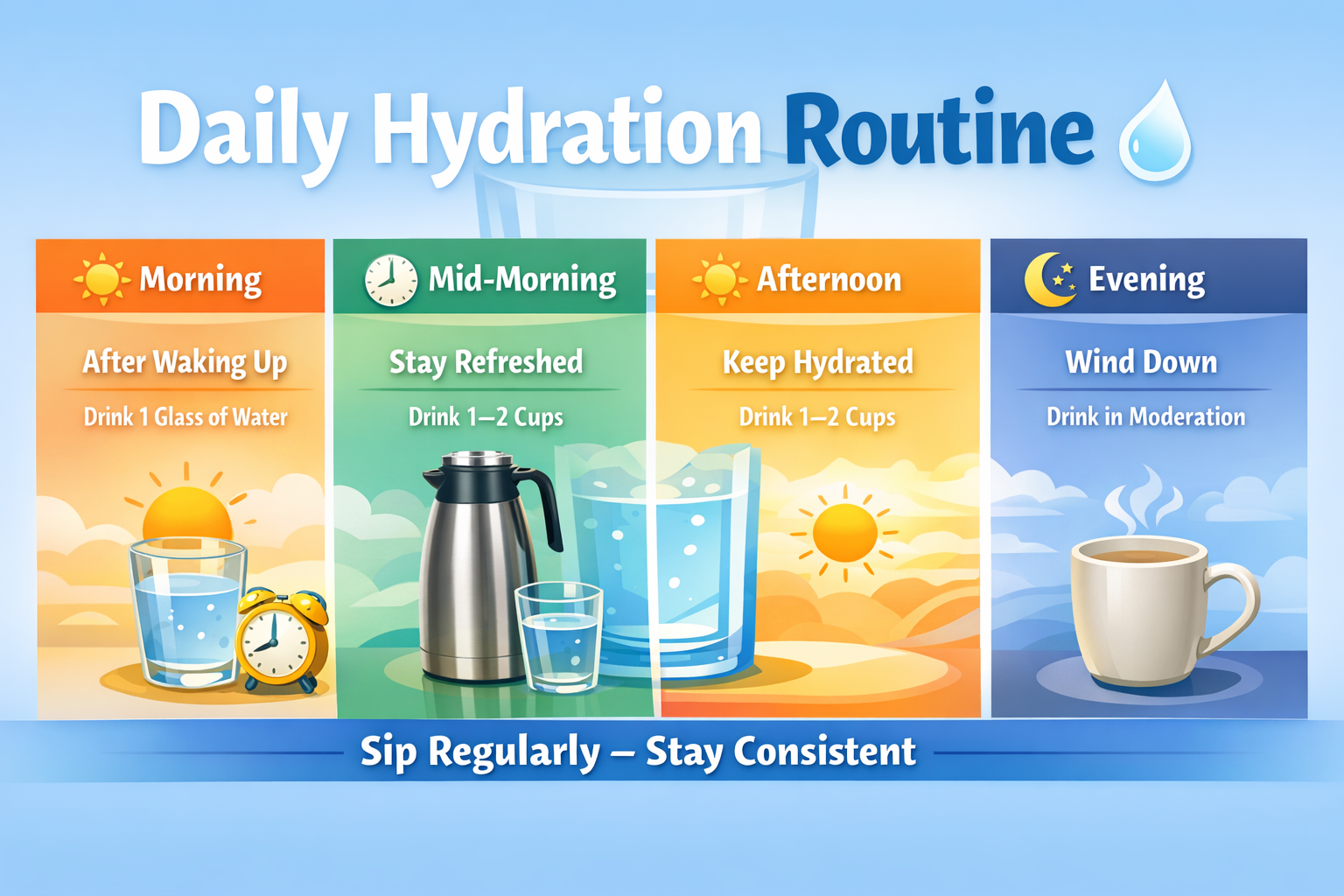
7. A Simple Daily Hydration Routine You Can Actually Follow
Basic Version
- After waking up → 1 glass
- Mid-morning → 1–2 times
- Afternoon → 1–2 times
- Evening → moderate intake
Adjusted Version (Hot Weather)
- Increase frequency, not volume
- Drink before you feel thirsty
- Stay consistent rather than reactive
For Children
- Morning → small amount
- School hours → regular sips
- After play → replenish
8. The Real Definition of “Good Hydration”
It’s not:
- Drinking a fixed number of glasses
- Forcing large amounts at once
It is:
Maintaining a steady, consistent intake throughout the day
9. Final Thought: Make Hydration Automatic
The most effective habits are the ones that don’t require thinking.
If drinking water feels like a task, it won’t last.
But if your environment supports it:
- Water is always nearby
- Drinking is easy
- No effort is required
Then hydration becomes automatic.
And that’s the real goal:
Not to remind yourself to drink water
But to create a system where you don’t have to
Evidence & References: Why Hydration Matters
While this guide focuses on practical, everyday habits, the importance of proper hydration is well supported by established research and global health organizations.
According to the World Health Organization, maintaining adequate hydration is essential for regulating body temperature, supporting metabolic functions, and preventing heat-related health risks—especially in hot and humid climates.
The Centers for Disease Control and Prevention also highlights that people living in warm environments or engaging in daily activities under heat exposure are at higher risk of dehydration, even without intense physical exertion. Regular fluid intake throughout the day is recommended to maintain normal body function.
Research from the Harvard T.H. Chan School of Public Health further emphasizes that hydration plays a role in cognitive performance, energy levels, and overall well-being. Even mild dehydration can impact concentration, mood, and daily productivity.
For children, guidance from organizations such as the American Academy of Pediatrics suggests that hydration habits should be built through routine and accessibility, rather than relying on thirst signals alone, as children are less likely to recognize early signs of dehydration.
Important Note
This article is intended for general educational purposes and does not replace professional medical advice. Individual hydration needs may vary depending on age, health conditions, and activity level. If you have specific health concerns, it is recommended to consult a qualified healthcare professional.