
Creating a Cleaner, Fresher, and More Comfortable Living Environment
For many people living in tropical and subtropical regions, humidity is simply considered a normal part of everyday life.
Whether you live in Malaysia, Indonesia, Singapore, the Philippines, Thailand, or other warm climates, you may already be familiar with some common experiences:
- Clothes that seem to take forever to dry
- Rooms that feel warm even when the temperature is not particularly high
- A lingering musty smell after rainy days
- Furniture that appears to age more quickly than expected
- Condensation on windows and cold surfaces
- A general feeling that the home never feels completely fresh
Because these experiences are so common, many people accept them as unavoidable.
However, humidity affects far more than comfort. Over time, excessive indoor moisture can influence the condition of your home, your daily habits, the longevity of household items, and even how relaxed or energized you feel inside your living space.
The good news is that creating a more comfortable home does not always require expensive renovations or complex equipment. Often, small daily habits and a better understanding of humidity can make a significant difference.
Understanding Humidity: Why It Feels Different From Heat
Many people confuse heat and humidity, but they are not the same thing.
Heat refers to temperature.
Humidity refers to the amount of water vapor present in the air.
This distinction is important because humidity directly affects how our bodies regulate temperature.
The human body cools itself primarily through sweat evaporation. When humidity levels are high, sweat evaporates more slowly. As a result, your body struggles to release heat efficiently.
This is why:
- A 32°C day with high humidity can feel more exhausting than a 38°C day in a dry climate.
- You may feel sticky and uncomfortable even when sitting still.
- Indoor spaces can feel stuffy despite adequate shade.
Many people describe humid weather as "heavy" or "oppressive" because the air literally contains more moisture.
When this same moisture enters our homes, similar effects begin to appear indoors.
The Hidden Ways Humidity Affects Everyday Life
Humidity influences daily comfort in subtle ways that often go unnoticed.
Most people focus on obvious signs such as mold or dampness, but the effects go much further.
Your Home May Feel Warmer Than It Actually Is
One of the most common complaints in humid climates is:
"Why does my house still feel hot?"
Even when indoor temperatures are reasonable, high humidity can create a sensation of warmth.
This often leads people to:
- Use air conditioning more frequently
- Set temperatures lower than necessary
- Feel less comfortable indoors
In many cases, reducing humidity can improve comfort as much as lowering temperature.
Clothes, Towels, and Bedding Stay Damp Longer
In humid environments, moisture evaporates slowly.
As a result:
- Laundry takes longer to dry
- Towels remain damp between uses
- Bed sheets may feel slightly moist
- Sportswear can develop odors more quickly
Many online discussions from tropical countries frequently mention this issue.
Residents often share experiences of laundry requiring an entire day—or even longer—to fully dry during rainy seasons.
Some people even describe re-washing clothes because they developed a musty smell while drying indoors.
Rooms Feel Less Fresh
Fresh air is one of the most overlooked components of a comfortable home.
When humidity levels remain high, rooms can feel:
- Stale
- Heavy
- Less inviting
Even if the room appears clean, the atmosphere may not feel refreshing.
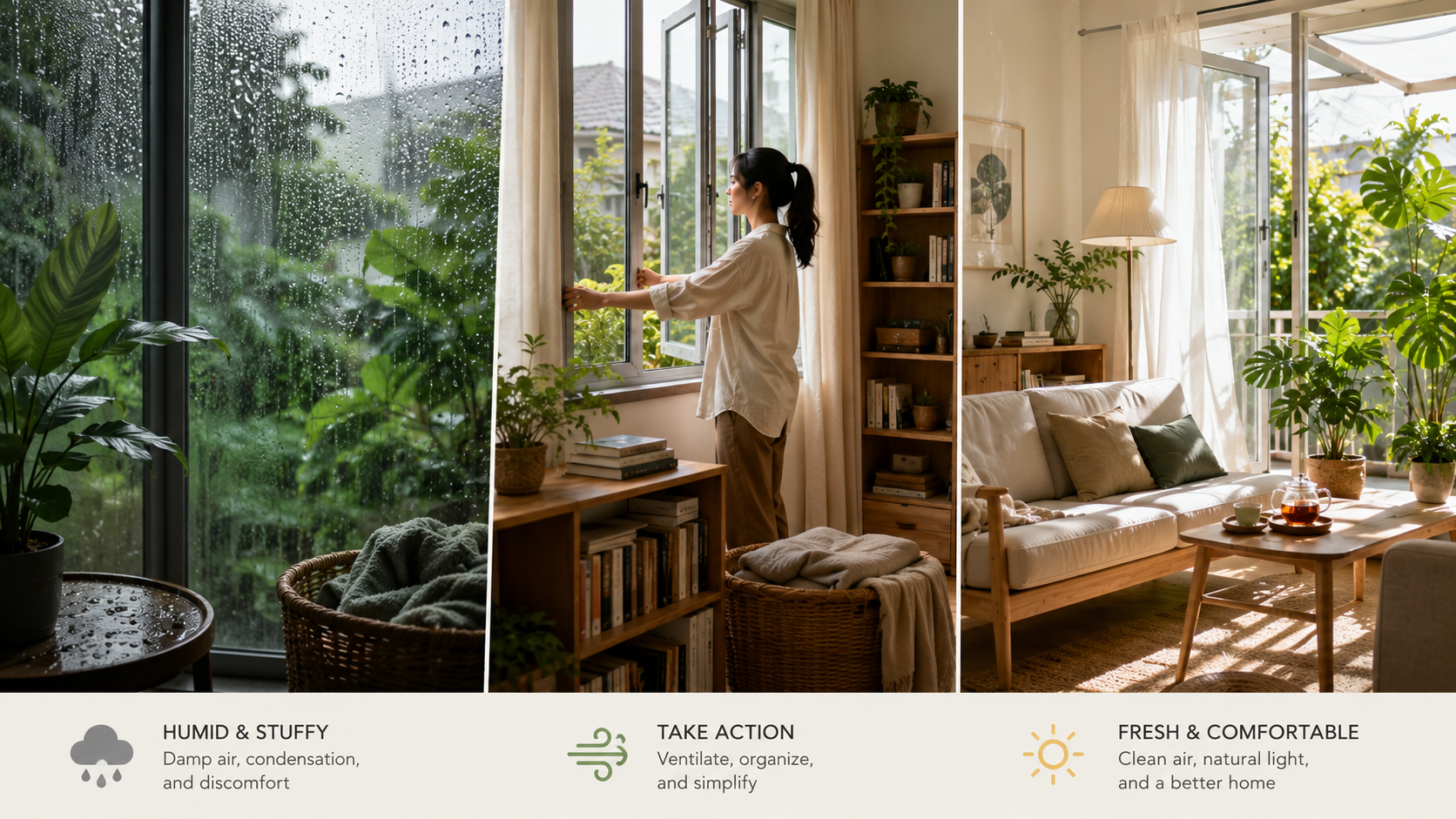
This is one reason why opening windows, improving airflow, and allowing natural ventilation remain common recommendations among homeowners in tropical regions.
Furniture and Home Décor Age Faster
Humidity affects more than people.
It also affects materials.
Over time, excessive moisture can contribute to:
Wooden Furniture
- Expansion and contraction
- Warping
- Surface deterioration
Fabrics
- Persistent odors
- Moisture retention
- Increased wear
Leather Items
- Mold growth
- Surface damage
Paper Products
- Curling
- Yellowing
- Deterioration
Books, photographs, important documents, and collectibles are particularly vulnerable in humid environments.
Metal Objects May Corrode More Quickly
Humidity accelerates corrosion.
Common household items that may be affected include:
- Door hinges
- Window hardware
- Kitchen tools
- Appliances
- Bicycle components
Many homeowners only notice this when metal surfaces begin showing signs of rust or discoloration.
Why Mold and Mildew Thrive in Humid Homes
One of the most visible consequences of excessive moisture is mold.
Mold requires three basic conditions:
- Moisture
- Warm temperatures
- Limited airflow
Unfortunately, many tropical homes naturally provide all three.
This does not mean every humid home will develop severe mold issues.
However, understanding where mold typically forms can help prevent problems before they become serious.
Common Places Where Mold Appears
Bathrooms
Bathrooms experience frequent moisture exposure.
Corners, grout lines, ceilings, and poorly ventilated areas are common trouble spots.
Window Frames
Condensation often accumulates around windows, especially in air-conditioned rooms.
This creates an ideal environment for mold growth.
Wardrobes and Closets
Closets are frequently overlooked.
Limited airflow combined with stored fabrics can create a damp environment over time.
Kitchens
Steam generated during cooking increases indoor humidity levels.
Without proper ventilation, moisture can accumulate on walls and cabinets.
Storage Areas
Boxes, old books, seasonal decorations, and rarely used items often trap moisture.
These spaces frequently become mold hotspots without regular inspection.
Signs That Your Home May Be Too Humid
Humidity problems are not always obvious.
Some warning signs include:
Persistent Musty Odors
A musty smell often indicates excess moisture somewhere in the home.
Condensation on Glass Surfaces
Windows that frequently collect moisture may suggest elevated indoor humidity.
Damp Clothing
Clothes that never seem completely dry are a common sign.
Peeling Paint or Wallpaper
Excess moisture can weaken wall surfaces over time.
Visible Mold Spots
Black, green, or gray patches should never be ignored.
Why Home Organization Matters More in Humid Climates
Many people do not associate organization with humidity control.
However, the two are closely connected.
A cluttered space often creates:
- Poor airflow
- Hidden moisture pockets
- Hard-to-clean areas
When furniture, boxes, and household items are tightly packed together, air circulation decreases.
This allows moisture to linger longer.
By contrast, organized homes tend to:
- Feel fresher
- Be easier to clean
- Dry more efficiently
- Reveal potential moisture issues sooner
Minimalism is not required.
Simply reducing unnecessary clutter can significantly improve airflow.
Simple Ways to Keep Your Home Fresher
Improving comfort often starts with simple daily habits.
Improve Air Circulation
Air movement helps moisture evaporate.
Practical methods include:
- Opening windows when weather permits
- Using fans
- Keeping vents unobstructed
Even a small increase in airflow can improve comfort.
Reduce Unnecessary Clutter
Less clutter means:
- Better airflow
- Easier cleaning
- Faster detection of moisture problems
Focus on areas that tend to accumulate items:
- Storage rooms
- Closets
- Laundry areas
Keep Fabrics Dry
Pay special attention to:
- Towels
- Bed sheets
- Curtains
- Rugs
Wash and dry them regularly.
Avoid storing fabrics while damp.
Let Natural Light In
Sunlight helps create a brighter and more inviting environment.
Many homeowners also report that rooms receiving more natural light tend to feel fresher and less damp.
Clean High-Risk Areas Regularly
Routine inspection and cleaning can prevent small issues from becoming larger problems.
Focus on:
- Bathrooms
- Kitchens
- Windows
- Closets
The Connection Between Clean Spaces and Comfort
A comfortable home is not necessarily a large or expensive home.
Many studies in environmental psychology suggest that organized and well-maintained environments can contribute to improved mood and reduced stress.
People often report feeling more relaxed when:
- Surfaces are clean
- Floors are uncluttered
- Natural light is available
- Air feels fresh
The goal is not perfection.
The goal is creating an environment that supports daily well-being.
Small Daily Habits That Make a Big Difference
Often, comfort comes from consistency rather than major changes.
Consider simple habits such as:
- Opening windows for a short period each morning
- Making the bed
- Drying bathroom surfaces after use
- Watering plants without overwatering
- Tidying one small area each day
- Washing towels regularly
- Inspecting hidden corners occasionally
None of these actions take much time.
Yet together, they can dramatically improve the feel of a home.
Creating a Home That Feels Comfortable Year-Round
When people think about a comfortable home, they often imagine expensive furniture, luxury appliances, or large living spaces.
In reality, comfort usually comes from something much simpler.
A comfortable home is often:
- Clean
- Dry
- Well-ventilated
- Organized
- Easy to maintain
These qualities affect daily life far more than square footage or decoration trends.
The most enjoyable homes are often the ones that feel fresh and inviting regardless of season.
Conclusion: Comfort Starts With the Environment Around You
Many people assume fatigue, irritability, or discomfort are caused solely by work stress or a busy lifestyle.
While these factors certainly matter, our living environment also plays an important role.
Humidity influences how we feel, how our homes function, and how comfortable our daily routines become.
By understanding the effects of moisture, improving airflow, maintaining organized spaces, and adopting a few simple habits, it is possible to create a home that feels cleaner, fresher, and more enjoyable throughout the year.
A better living environment does not happen overnight.
It is built through small actions repeated consistently.
And in humid climates, those small actions often make the biggest difference.
References and Further Reading
Disclaimer
This article is intended for educational and informational purposes only. It discusses common household experiences, environmental conditions, and lifestyle observations related to humidity and indoor comfort. It should not be considered professional medical, environmental, construction, or engineering advice. Individual homes and environmental conditions may vary.
Research and Information Sources
World Health Organization (WHO)
- Housing and Health Guidelines
- Indoor Environmental Quality Resources
United States Environmental Protection Agency (EPA)
- Indoor Air Quality (IAQ) Resources
- Moisture Control and Mold Prevention Guidance
Centers for Disease Control and Prevention (CDC)
- Mold Prevention and Home Moisture Management Information
American Society of Heating, Refrigerating and Air-Conditioning Engineers (ASHRAE)
- Indoor Environmental Standards
- Thermal Comfort Guidelines
Building Science Corporation
- Research on Ventilation, Humidity, and Building Performance
Environmental Psychology Studies
- Research exploring the relationship between home environments, cleanliness, organization, and psychological well-being
Community Discussions and Shared Experiences
- Home organization communities
- Home improvement forums
- Tropical living and expat communities
- Household maintenance discussions from Southeast Asian residents experiencing humid climates
Many practical recommendations in this article are based on a combination of published environmental guidance, home maintenance best practices, and commonly shared experiences from people living in humid and tropical regions around the world.