
Dahulu, pemilihan material untuk wadah minum sangat sederhana—plastik jika Anda menginginkan yang ringan, baja tahan karat jika Anda menginginkan daya tahan, dan kaca jika Anda menginginkan kemurnian. Saat ini, dengan fokus yang lebih tinggi pada standar keselamatan, transparansi kesehatan, konsumsi berkelanjutan, dan keputusan gaya hidup berdasarkan skenario tertentu, memilih material botol air yang tepat telah berkembang menjadi tugas yang lebih kompleks dan lebih penting.
Konsumen tidak lagi bertanya, “Botol mana yang terlihat lebih bagus?” Pertanyaannya telah bergeser ke arah kinerja:
• Apakah bahan ini aman untuk penggunaan sehari-hari?
• Apakah alat ini mampu menangani minuman panas atau fluktuasi suhu?
• Apakah akan tahan terhadap kondisi luar ruangan?
• Apakah hal itu memengaruhi rasa?
• Apakah hal ini selaras dengan kebiasaan keberlanjutan jangka panjang?
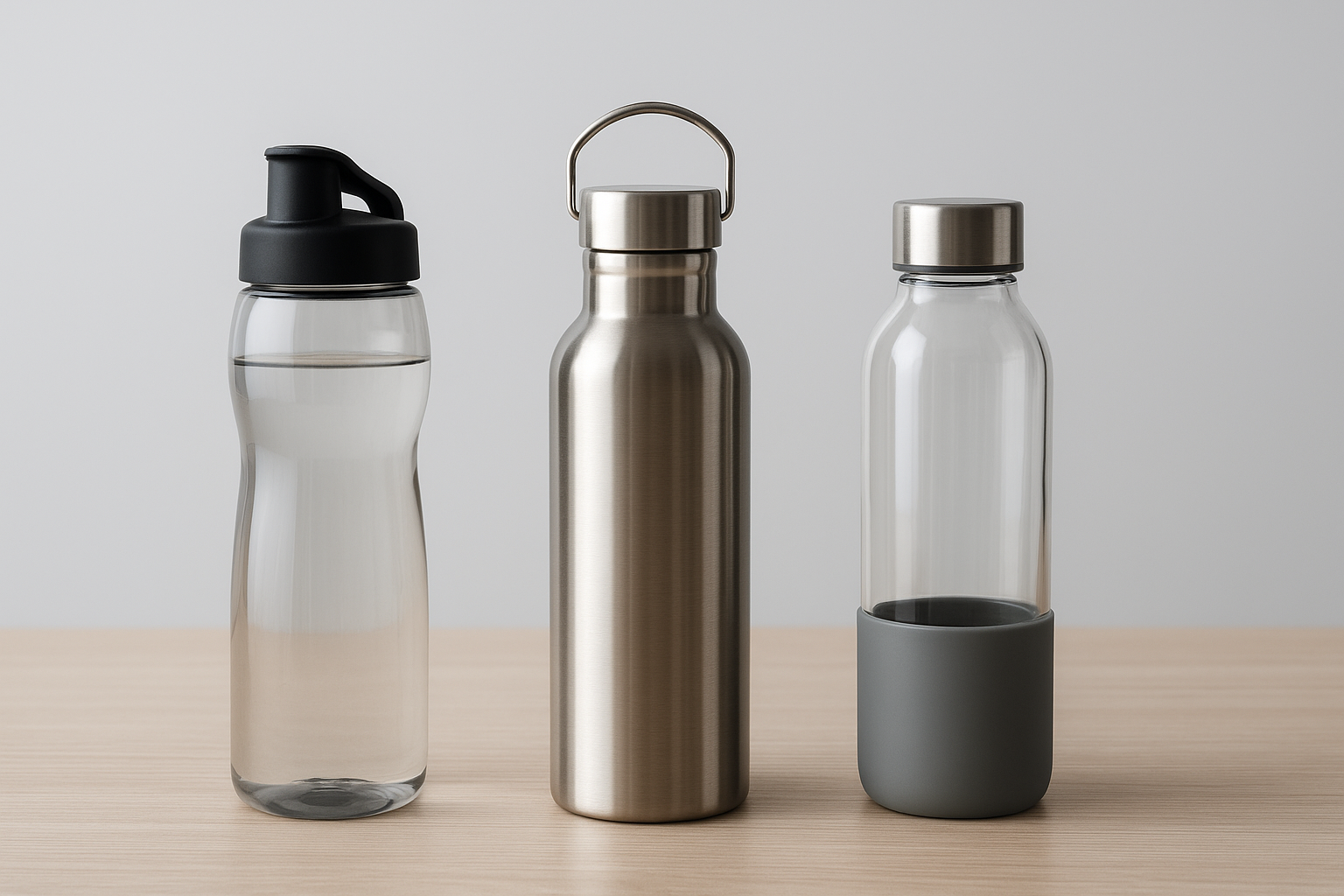
Artikel ini menyediakan kerangka kerja komprehensif berbasis bukti untuk memilih di antara tiga material peralatan minum terkemuka: Tritan , Baja Tahan Karat , dan Kaca . Artikel ini menguraikan kinerja, studi kasus di dunia nyata, dan skenario yang berpusat pada manusia sehingga pembaca dapat membuat pilihan yang percaya diri dan rasional—pilihan yang sesuai dengan rutinitas mereka, bukan slogan pemasaran.
1. Mengapa Pemilihan Material Lebih Penting dari Sebelumnya
Kebiasaan minum sangat melekat dalam kehidupan sehari-hari. Botol air digunakan berkali-kali dalam sehari, dipegang di berbagai lingkungan, sering dicuci, dan terpapar berbagai suhu. Karena kontak yang sering tersebut, bahan botol secara langsung memengaruhi:
• kesehatan dan keselamatan
• rasa dan kejernihan minuman
• daya tahan dan masa pakai
• berat dan portabilitas
• kemampuan termal
• dampak keberlanjutan jangka panjang
Singkatnya: bahan botol lebih memengaruhi pengalaman minum daripada desain, warna, atau merek.
Tritan, baja tahan karat, dan kaca telah muncul sebagai tiga pilihan dominan karena masing-masing memecahkan masalah hidrasi yang berbeda. Tidak ada yang secara universal lebih baik—ketiganya lebih baik secara kontekstual tergantung pada orang dan lingkungan.
Memahami perilaku mekanis dan kimiawi mereka adalah titik awal untuk pengambilan keputusan yang rasional.
2. Memahami Tiga Material
2.1 Tritan: Kopoliester Modern Bebas BPA
Tritan adalah plastik generasi terbaru yang diperkenalkan untuk mengatasi kekurangan polikarbonat tradisional. Tritan memiliki karakteristik sebagai berikut:
• Sepenuhnya bebas BPA dan bebas BPS
• sangat tahan benturan
• ringan
• transparan seperti kaca
• aman untuk penggunaan sehari-hari
Secara kimia, Tritan adalah kopoliester—dirancang untuk kejernihan tinggi dan ketahanan struktural. Tritan banyak digunakan dalam:
• botol olahraga
• botol pengocok
• botol anak-anak
• wadah hidrasi harian yang lebih ringan
• situasi di mana daya tahan lebih penting daripada kinerja termal
Keunggulan terbesar Tritan adalah hampir tidak bisa pecah tanpa mengurangi kejernihan.
2.2 Baja Tahan Karat: Standar Industri untuk Ketahanan dan Isolasi
Botol stainless steel—terutama yang terbuat dari baja tahan karat kelas makanan 304 atau 316 —mendominasi segmen premium peralatan minum karena:
• isolasi termal
• ketangguhan
• ketahanan terhadap korosi
• umur panjang
Jika dipadukan dengan insulasi vakum, baja tahan karat menjadi perangkat pengontrol suhu yang sangat andal:
• Menjaga minuman dingin tetap dingin selama 12–24 jam.
• Menjaga minuman panas tetap panas selama 6–12 jam.
Hal ini menjadikan baja tahan karat ideal untuk para profesional, pelancong, atlet luar ruangan, dan siapa pun yang menginginkan suhu yang konsisten sepanjang hari kerja.
Komprominya adalah berat dan opasitas.
2.3 Gelas: Bahan Pilihan Para Pencinta Rasa Murni
Kaca adalah bahan wadah minum tertua umat manusia, dan tetap tak tertandingi dalam satu kategori: kemurnian .
Kaca adalah:
• inert secara kimia
• bebas dari potensi pelarutan
• tahan terhadap bau
• mudah dibersihkan
• transparan
Orang yang sensitif terhadap rasa seringkali lebih menyukai gelas karena airnya tetap benar-benar netral—tidak ada rasa logam, tidak ada aroma plastik, tidak ada residu.
Keterbatasannya terletak pada daya tahan dan portabilitas. Bahkan dengan pelindung silikon, kaca tetap kurang efektif di lingkungan dengan pergerakan yang tinggi.
3. Evaluasi Kinerja: Kekuatan dan Kelemahan
Untuk memilih botol yang tepat, Anda perlu memahami dengan jujur apa keunggulan masing-masing material—dan apa yang pasti menjadi kelemahannya.
3.1 Botol Air Tritan
Kekuatan
Ringan
Tritan jauh lebih ringan daripada baja tahan karat dan bahkan lebih ringan daripada kaca berdinding ganda yang tebal.
Ketahanan benturan tinggi
Tidak mudah pecah saat terjatuh, sehingga ideal untuk anak-anak, olahraga, atau bepergian.
Transparansi
Pengguna dapat langsung melihat level air dan kebersihannya.
Aman dan bebas BPA
Direkayasa untuk menghilangkan kekhawatiran gangguan endokrin yang terkait dengan plastik generasi lama.
Perawatan mudah
Aman untuk mesin pencuci piring, tahan gores (sampai batas tertentu), dan kompatibel dengan siklus pengisian ulang harian.
Kelemahan
Toleransi panas terbatas
Bahan ini mulai berubah bentuk mendekati titik didih (100°C). Tidak ideal untuk teh panas, kopi panas, atau sterilisasi dengan air mendidih.
Tidak ada insulasi
Air dingin cepat menghangat. Air panas cepat mendingin.
Bisa tergores seiring waktu
Goresan pada permukaan bersifat kosmetik tetapi terlihat, terutama bagi orang yang menginginkan kejernihan sempurna.
3.2 Botol Air Minum Stainless Steel
Kekuatan
Isolasi termal
Baja yang disegel vakum adalah satu-satunya material utama yang secara andal mempertahankan suhu selama berjam-jam.
Daya tahan tinggi
Bahan ini lebih tahan terhadap benturan, penggunaan di luar ruangan, pendakian jarak jauh, dan perjalanan sehari-hari dibandingkan bahan lainnya.
Tahan korosi dan tahan lama
Baja 304/316 tahan terhadap karat, penumpukan bakteri, dan minuman asam.
Transfer rasa minimal
Secara umum netral, meskipun beberapa orang mendeteksi sedikit aroma logam.
Kelemahan
Berat
Lebih berat daripada Tritan atau kaca karena konstruksi dinding ganda.
Tidak transparan
Pengguna tidak dapat melihat ketinggian air, kebersihan, atau sisa-sisa di dalamnya.
Berpotensi terasa seperti logam bagi pengguna yang sensitif.
Tidak berbahaya, tetapi akan terasa bagi mereka yang memiliki sensitivitas rasa yang tinggi.
3.3 Botol Air Kaca
Kekuatan
Rasa murni
Air tetap persis seperti asalnya—tidak ada perpindahan rasa, tidak ada penahanan bau.
Tidak ada interaksi kimia sama sekali
Kaca bersifat inert, artinya tidak menyerap, melepaskan, atau bereaksi dengan minuman.
Mudah dibersihkan secara menyeluruh
Residu tidak dapat menempel pada permukaannya seperti yang terkadang terjadi pada plastik.
Kelemahan
Kerapuhan
Bahkan kaca borosilikat atau kaca temper pun bisa retak atau pecah.
Lebih berat
Tidak ideal untuk jalan kaki jarak jauh, membawa ransel, atau aktivitas fisik yang berat.
Tidak ada insulasi
Suhu dapat berubah dengan cepat dan botol mungkin terasa panas atau dingin saat disentuh.
4. Tabel Perbandingan: Tritan vs Baja Tahan Karat vs Kaca
Tabel ini merangkum karakteristik kinerja untuk perbandingan yang cepat dan objektif:
| Fitur | Tritan | Baja tahan karat | Kaca |
|---|---|---|---|
| Keamanan | Tinggi (bebas BPA/BPS) | Tinggi (baja kelas makanan) | Tertinggi (inert secara kimia) |
| Ketahanan Panas | Sedang (≤100°C) | Tinggi (ideal untuk air panas) | Sedang (hindari guncangan termal) |
| Isolasi | Tidak ada | Bagus sekali | Tidak ada |
| Ketahanan terhadap benturan | Sangat kuat | Kuat | Lemah |
| Berat | Lampu | Sedang–berat | Berat |
| Daya tahan | Sedang-tinggi | Sangat tinggi | Sedang |
| Netralitas Rasa | Tinggi | Sedang-tinggi | Paling tinggi |
| Transparansi | Ya | TIDAK | Ya |
| Kesulitan Pembersihan | Rendah | Sedang | Rendah |
| Ramah Anak | Bagus sekali | Sedang | Rendah |
| Kesesuaian untuk penggunaan di luar ruangan | Bagus | Bagus sekali | Miskin |
| Penggunaan Kantor/Rumah | Bagus | Bagus sekali | Bagus sekali |
| Kisaran Harga | Rendah-menengah | Menengah-tinggi | Rendah-menengah |
5. Kerangka Kerja Pengambilan Keputusan Berbasis Skenario: Pilih Berdasarkan Pola Hidup Anda
Konsumen seringkali memilih berdasarkan bahan terlebih dahulu. Namun, metode yang lebih strategis adalah memilih berdasarkan skenario , kemudian mengidentifikasi bahan yang paling sesuai untuk lingkungan tersebut.
Lingkungan yang berbeda memberikan penghargaan yang berbeda pula terhadap kekuatan yang berbeda.
5.1 Untuk Kantor dan Rumah: Kaca Memberikan Pengalaman Terbaik
Mengapa kaca paling cocok digunakan di dalam ruangan:
• Anda tidak bergerak cepat atau mengambil risiko terjatuh.
• Anda dapat menikmati cita rasa murni selama duduk dalam waktu lama.
• Anda kemungkinan memiliki akses ke permukaan yang aman (meja, rak).
• Anda tidak berurusan dengan cuaca ekstrem atau benturan.
Kaca sangat ideal untuk:
• meja kerja
• hidrasi di samping tempat tidur
• area dapur dan ruang makan
• Pecinta teh dan individu yang sensitif terhadap rasa
Di mana kaca menjadi tidak praktis:
• perjalanan pulang pergi
• kereta api yang penuh sesak
• bersepeda
• lintas alam
• penggunaan oleh anak
Kerapuhannya menetapkan batasan lingkungan yang jelas.
5.2 Untuk Perjalanan, Perjalanan Harian, dan Hari-hari Panjang: Baja Tahan Karat Adalah yang Paling Andal
Baja tahan karat memecahkan masalah yang tidak dapat dipecahkan oleh material lain:
• mempertahankan suhu dalam jangka waktu lama
• lingkungan yang tidak dapat diprediksi
• jatuh keras
• paparan cuaca
• kelelahan perjalanan
Ini mendukung:
• para profesional yang berangkat kerja pagi-pagi dan pulang larut malam
• siswa berada di kampus sepanjang hari
• pejalan kaki dan pesepeda
• pengemudi dan pelancong darat
• penggemar kebugaran yang membutuhkan air dingin selama berolahraga
Bobot dan opasitasnya adalah kompromi kecil dibandingkan dengan kinerja dan ketahanannya.
5.3 Untuk Anak-Anak, Kebutuhan Ringan, dan Penggunaan Kasual Sehari-hari: Tritan Adalah yang Paling Praktis
Tritan menempati posisi tengah yang luas—lebih tahan lama dan aman daripada plastik standar, lebih mudah dibawa daripada baja, dan tidak mudah pecah seperti kaca.
Ini adalah bahan terbaik untuk:
• anak-anak (tahan jatuh, ringan, transparan)
• pengguna olahraga dan pusat kebugaran
• ransel, tas sekolah, dan tas tangan
• komuter perkotaan
• orang yang sering mengisi ulang sepanjang hari
• pengguna yang perlu memantau hidrasi secara visual
Kelemahan utamanya adalah keterbatasan panas. Tritan tidak dirancang untuk air mendidih atau isolasi termal.
6. Pertimbangan Lanjutan: Material Apa yang Sesuai dengan Gaya Hidup Jangka Panjang Anda?
Pilihan material melampaui fungsi langsung. Pola penggunaan frekuensi tinggi selama berbulan-bulan atau bertahun-tahun secara diam-diam mengungkapkan faktor-faktor yang lebih dalam:
6.1 Keberlanjutan dan Dampak Lingkungan
Setiap material memiliki jejak karbon yang berbeda:
Tritan
• dapat didaur ulang
• tahan lama tetapi tidak selamanya
• sangat baik untuk mengurangi penggunaan plastik sekali pakai
Baja tahan karat
• sangat tahan lama
• Dapat bertahan 5–10+ tahun, mengurangi limbah siklus hidup
• Membutuhkan banyak energi untuk diproduksi, tetapi efisien secara ekologis dalam jangka panjang
Kaca
• dapat didaur ulang tanpa batas
• mengurangi emisi dalam siklus daur ulang
• Lebih mudah rusak, sehingga perlu diganti
6.2 Suhu dan Faktor Iklim
Beberapa material secara alami selaras dengan suhu musiman dan regional:
• Tritan berkinerja baik di iklim sedang.
• Baja tahan karat unggul dalam menghadapi musim panas yang terik dan musim dingin yang dingin.
• Kaca tetap stabil di dalam ruangan sepanjang semua musim.
Orang-orang di iklim tropis atau yang sangat dingin biasanya lebih menyukai baja tahan karat karena kemampuannya mempertahankan suhu yang dapat diprediksi.
6.3 Frekuensi Penggunaan dan Kebiasaan Pembersihan
Rutinitas pembersihan yang berbeda sesuai dengan gaya hidup yang berbeda:
• Jika Anda mencuci botol Anda sekali sehari → bahan apa pun bisa digunakan.
• Jika Anda mengonsumsi minuman beraroma (kopi, jus, elektrolit) → gelas atau baja lebih cocok.
• Jika Anda lebih menyukai konfirmasi visual tentang kebersihan → Tritan atau kaca.
• Jika Anda lupa botol Anda di dalam tas selama berjam-jam → baja tahan karat adalah pilihan terbaik untuk mengendalikan bau.
6.4 Sensitivitas Rasa
Tingkat sensitivitas rasa setiap orang sangat bervariasi:
• Jika rasa logam yang ringan sekalipun mengganggu Anda → gelas adalah pilihan terbersih.
• Jika Anda tidak menyukai bau plastik → baja tahan karat atau kaca.
• Jika Anda menginginkan rasa netral tetapi ringan → Tritan adalah pilihan tengah yang seimbang.
7. Rekomendasi Akhir: Pilih Materi yang Sesuai dengan Kehidupan Nyata Anda
Tidak ada bahan botol air yang "terbaik"—hanya ada bahan terbaik untuk gaya hidup tertentu.
Kerangka rasionalnya adalah:
Gelas = rasa terbaik + paling aman di dalam ruangan
Baja tahan karat = daya tahan terbaik + insulasi terbaik + pilihan terbaik untuk aktivitas luar ruangan/perjalanan sehari-hari
Tritan = paling ringan + terbaik untuk anak-anak + terbaik untuk hidrasi harian yang serba cepat
Kebiasaan minum Anda berubah seiring waktu. Orang yang awalnya menggunakan botol Tritan ringan sering kali beralih ke botol stainless steel setelah membutuhkan kontrol suhu yang lebih baik. Yang lain menyimpan botol kaca di rumah sementara menggunakan botol stainless steel untuk bekerja.
Strategi cerdas bukanlah memilih satu material untuk selamanya, tetapi membangun ekosistem botol yang sesuai dengan cara Anda hidup, bergerak, dan minum.
Hidrasi adalah perilaku yang sering dilakukan—dalam jangka panjang, bahan yang tepat adalah bahan yang mengurangi gesekan, meningkatkan kenyamanan, dan mendukung rutinitas Anda tanpa kesulitan.