
Smart Cleaning Tips for Work, Travel, Sports, Outdoor Adventures, and Everyday Hydration
Part 1 — Why Your Daily Routine Should Shape Your Bottle Care
Introduction: Your Water Bottle Goes Everywhere With You
For many people, a reusable water bottle is no longer just a container for drinking water.
It travels through almost every part of the day.
It sits beside your laptop during morning meetings.
It holds coffee on the commute to work.
It keeps you hydrated during an afternoon workout.
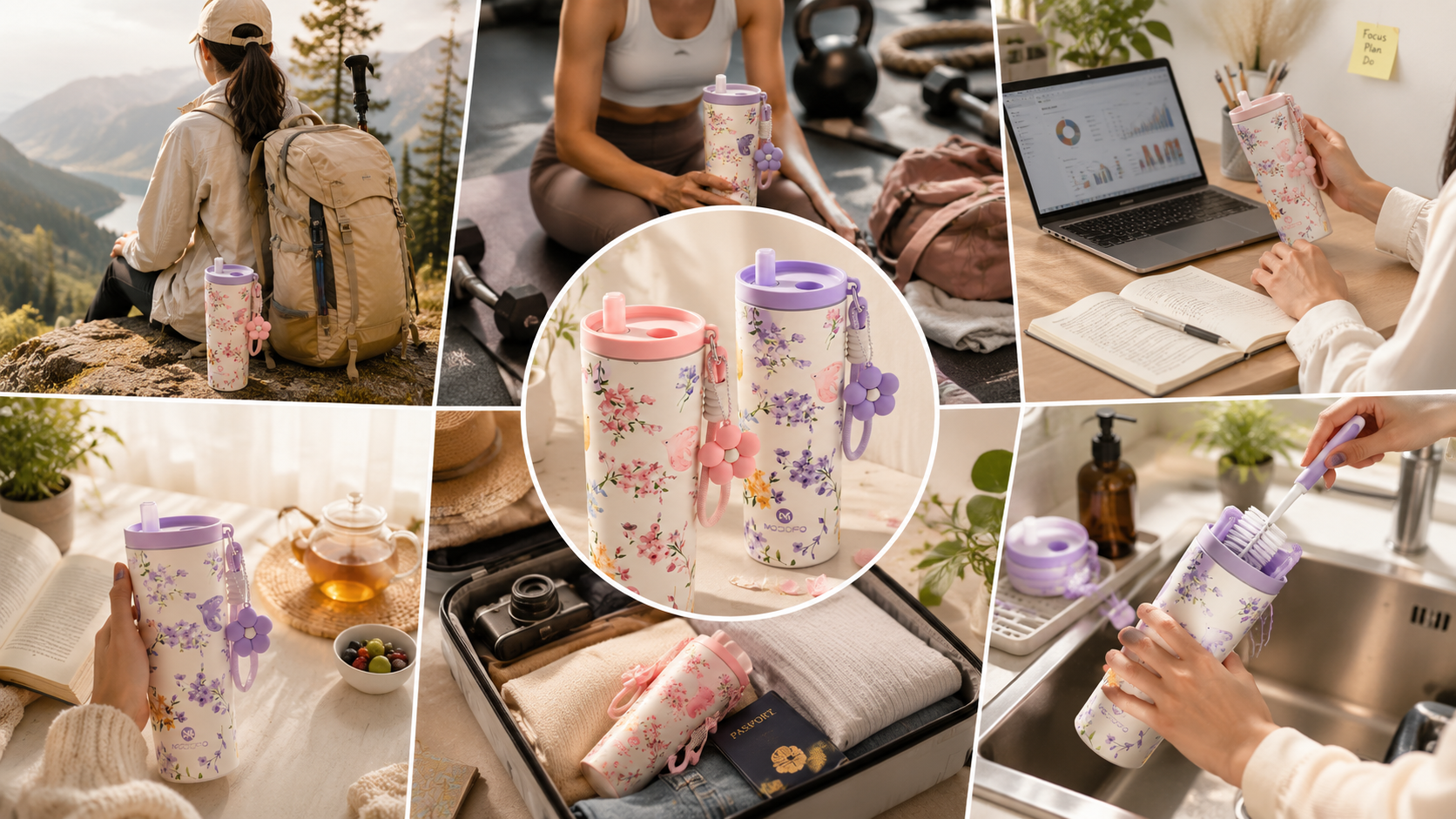
It accompanies weekend hikes, beach trips, road journeys, and family outings.
Unlike disposable bottles, reusable drinkware becomes part of our daily routines. Yet while our schedules constantly change, our cleaning habits often remain exactly the same.
Many people simply rinse their bottle at the end of the day without considering what has actually been inside it—or where it has been.
A bottle used only for water in an air-conditioned office has very different maintenance needs from one that has carried iced coffee during a morning commute, electrolyte drinks after a workout, and fruit-infused water on a sunny afternoon.
The more varied our lifestyles become, the more important it is to understand that different activities leave different kinds of residue.
Good bottle care isn't about cleaning more.
It's about cleaning smarter.
Why Your Daily Activities Matter More Than You Think
When people think about bottle hygiene, they often focus on the type of bottle they own.
Stainless steel or plastic?
Insulated or single-wall?
Wide mouth or straw lid?
While materials certainly influence cleaning methods, how the bottle is used often has an even greater impact on freshness.
Everyday activities expose reusable bottles to different environments.
Some increase moisture.
Others introduce dust or sand.
Certain beverages leave behind natural oils, while others leave sugars or proteins that require more thorough cleaning.
Understanding these differences helps prevent common problems such as:
- Lingering odors
- Flavor transfer
- Tea or coffee stains
- Sticky bottle interiors
- Mold around silicone seals
- Bacterial growth caused by beverage residue
A bottle that stays fresh for years usually isn't cleaned with stronger products.
It's cleaned at the right time for the right reason.
Every Drink Leaves a Different Story
Not all beverages affect reusable bottles in the same way.
Water is relatively simple.
Coffee, tea, smoothies, sports drinks, and juices each interact differently with bottle surfaces.
Here's a quick overview.
| Beverage | Common Residue | Cleaning Priority |
|---|---|---|
| Plain Water | Very little residue | Low |
| Coffee | Natural coffee oils | Medium |
| Black Tea | Tea tannins | Medium |
| Green Tea | Light tannins | Low to Medium |
| Fruit Juice | Natural sugars and fruit acids | High |
| Sports Drinks | Sugars and electrolytes | High |
| Protein Shakes | Protein and fat | Very High |
| Milk-Based Drinks | Protein and dairy fat | Very High |
| Fruit-Infused Water | Small amounts of fruit residue | Medium |
The goal isn't to avoid these beverages.
Each has its own place in a healthy lifestyle.
The important point is recognizing that different drinks require different cleaning routines.
For example, a bottle used only for plain water may need nothing more than routine washing.
The same bottle used for protein shakes should ideally be cleaned immediately after use to prevent residue from drying onto interior surfaces.
After Outdoor Adventures: Clean More Than Just the Inside
Outdoor activities often expose bottles to much more than dirt.
Whether you're hiking through a national park, cycling along the coast, enjoying a picnic, or spending a day at the beach, your bottle comes into contact with a surprisingly wide range of environmental elements.
These include:
- Dust
- Fine sand
- Mud
- Sunscreen residue
- Sweat
- Grass
- Tree sap
- Rainwater
- Salt spray near the ocean
Interestingly, after outdoor activities, the outside of the bottle is often dirtier than the inside.
Bottle handles, carrying loops, textured lids, and drinking spouts are especially likely to collect grime.
Outdoor Care Checklist
After returning home:
- Rinse the exterior with clean water.
- Wash the bottle body using mild dish soap.
- Wipe carrying handles and bottle straps.
- Remove visible sand around bottle threads.
- Dry the entire bottle before storing it.
These simple habits help preserve both hygiene and appearance.
After Exercise: Sweat Stays Outside, Drinks Stay Inside
Gym sessions, running, cycling, yoga, tennis, football, and other sports all increase hydration needs.
Many people switch from plain water to sports drinks or protein shakes during these activities.
While these beverages support recovery, they also create one of the most common causes of unpleasant bottle odors.
Sports drinks often contain:
- Electrolytes
- Natural or artificial sweeteners
- Flavorings
- Minerals
Protein shakes introduce even more cleaning challenges because proteins and fats adhere more easily to bottle surfaces than plain water.
According to food safety guidance from organizations such as the U.S. Food and Drug Administration (FDA), food residues should not be left inside reusable food-contact containers for extended periods, particularly at room temperature.
Although reusable bottles are designed for repeated use, prompt cleaning remains the most effective way to reduce odor and residue buildup.
Best Practice After Exercise
- Empty bottles immediately after training.
- Rinse with warm water if washing isn't possible right away.
- Wash thoroughly with mild soap as soon as practical.
- Clean shaker balls, mixing screens, and straw lids separately.
- Allow every component to dry completely before reassembly.
The sooner residue is removed, the easier cleaning becomes.
After a Long Day at the Office
Many people assume office bottles remain clean because they stay indoors.
In reality, office use creates its own unique maintenance pattern.
Consider a typical workday.
Morning coffee.
Mid-morning tea.
Afternoon water.
Another coffee during a meeting.
Perhaps herbal tea before heading home.
Even though each drink may seem harmless on its own, small amounts of residue gradually accumulate throughout the day.
Coffee leaves natural oils.
Tea contributes tannins.
Sugar from flavored beverages may settle around drinking lids.
Warm drinks also increase moisture inside bottle caps.
These changes often happen so gradually that users don't notice them until stains or lingering aromas appear.
Office Bottle Care Routine
At the end of each workday:
- Empty any remaining beverage.
- Wash bottles that held coffee or tea.
- Clean drinking lids thoroughly.
- Leave bottles open overnight whenever possible.
- Carry only water the next morning if the bottle hasn't yet been washed.
A five-minute routine each evening is often enough to keep bottles fresh for years.
Why Routine Matters More Than Intensive Cleaning
One of the biggest misconceptions about reusable bottle care is that difficult cleaning methods produce better results.
In reality, consistent maintenance is usually far more effective than occasional deep cleaning.
Think of bottle care like brushing your teeth.
A few minutes every day prevents problems that would otherwise require much more effort later.
The same principle applies to reusable drinkware.
Regular rinsing.
Prompt washing.
Proper drying.
Occasional deep cleaning.
Together, these simple habits help prevent stubborn stains, persistent odors, and unnecessary wear.
Good maintenance doesn't demand expensive cleaning products or complicated techniques.
It simply requires paying attention to how your bottle is used throughout the day.
Part 2 — Building Everyday Bottle Care Habits That Last
After School and Family Activities
Reusable water bottles play an important role in family life.
Children carry them to school, parents bring them to work, and many families take them along for weekend outings. However, bottles used by children often contain a wider variety of beverages than those used by adults.
Common drinks include:
- Fruit juice
- Chocolate milk
- Flavored milk
- Smoothies
- Yogurt drinks
- Diluted fruit beverages
- Warm milk during colder months
These beverages contain natural sugars, proteins, or fats that can leave noticeable residue if bottles are not cleaned promptly.
Unlike plain water, dairy-based drinks are especially likely to produce unpleasant odors when left inside a bottle for several hours.
Parents can make bottle maintenance much easier by encouraging a few simple habits:
- Empty bottles after school instead of leaving drinks overnight.
- Rinse bottles before placing them in a school bag.
- Wash bottle lids, straws, and silicone seals separately.
- Check bottles weekly for hidden residue around drinking spouts.
These small routines help keep bottles hygienic while extending their usable life.
Keeping Bottles Fresh During Travel
Whether you're taking a weekend road trip, flying to another city, or exploring a national park, travel often interrupts normal cleaning routines.
Reusable bottles may be refilled several times throughout the day without receiving a proper wash.
While this isn't necessarily a problem for plain drinking water, bottles used for coffee, juice, sports drinks, or flavored beverages deserve extra attention.
Travel also exposes bottles to a wider range of environments:
- Airport security trays
- Hotel rooms
- Public refill stations
- Hiking backpacks
- Beach bags
- Vehicle cup holders
Although most of these environments are perfectly suitable for reusable bottles, they can leave dust, fingerprints, sunscreen residue, or other surface contaminants on the bottle exterior.
A Simple Travel Bottle Care Kit
Many experienced travelers carry a small cleaning kit that takes up very little space.
It might include:
- A compact bottle brush
- A narrow straw-cleaning brush
- A small bottle of mild dish soap
- A microfiber towel
- A reusable drying cloth
These basic tools are often all that's needed to keep a reusable bottle fresh during multi-day trips.
Which Drinks Should Be Cleaned Immediately?
Some beverages are much more forgiving than others.
Plain water rarely leaves significant residue.
Others should never remain inside a bottle for extended periods.
The following ranking offers a practical guide rather than a strict rule.
| Beverage | Residue Level | Recommended Cleaning |
|---|---|---|
| Plain Water | ★☆☆☆☆ | Rinse daily, wash regularly |
| Sparkling Water | ★☆☆☆☆ | Regular washing |
| Green Tea | ★★☆☆☆ | Wash at the end of the day |
| Black Tea | ★★★☆☆ | Prevent tannin buildup with daily washing |
| Coffee | ★★★☆☆ | Wash after use whenever possible |
| Fruit Juice | ★★★★☆ | Wash immediately |
| Sports Drinks | ★★★★☆ | Wash after exercise |
| Smoothies | ★★★★★ | Clean immediately |
| Protein Shakes | ★★★★★ | Clean immediately |
| Milk-Based Drinks | ★★★★★ | Never leave overnight |
The more sugars, proteins, or natural oils a beverage contains, the sooner the bottle should be cleaned.
Creating a Daily Bottle Care Routine
One of the easiest ways to keep a bottle fresh is to build cleaning into your normal schedule rather than treating it as an occasional task.
A practical routine might look like this:
Morning
- Fill your bottle with your first drink of the day.
- Check that the bottle is completely dry before use.
- Ensure the lid and seal are properly assembled.
During the Day
- Refill with fresh water whenever possible.
- If switching from coffee to water, give the bottle a quick rinse first.
- Avoid leaving sweetened beverages inside for long periods.
Evening
- Empty any remaining liquid.
- Wash the bottle with warm water and mild dish soap.
- Clean the lid separately.
- Leave all components open to air dry overnight.
Weekly
- Remove silicone seals (if the manufacturer recommends doing so).
- Deep clean bottle threads and drinking spouts.
- Inspect for discoloration, odors, or mineral buildup.
- Clean reusable straws with an appropriate brush.
By spreading maintenance across the week, cleaning becomes quick and manageable.
A Fresh Bottle Starts with the Right Cleaning Habits
Many people assume that stronger cleaning products produce cleaner bottles.
In reality, gentle and consistent care is usually the better approach.
For everyday maintenance, experts generally recommend:
- Warm water
- Mild dish soap
- Soft bottle brushes
- Non-abrasive sponges
Avoid using abrasive steel wool or harsh cleaning products that may scratch interior surfaces or damage decorative finishes.
If mineral deposits or beverage stains begin to appear, occasional deep cleaning using bottle-safe cleaning methods can usually restore the interior without excessive scrubbing.
Always follow the care instructions provided by the bottle manufacturer, especially for insulated bottles with specialty coatings or painted finishes.
Fresh Bottles Support Healthier Daily Habits
Keeping a reusable bottle clean offers benefits beyond appearance.
A clean bottle is simply more enjoyable to use.
Water tastes fresher.
Coffee keeps its intended flavor.
Tea develops fewer lingering notes from previous drinks.
People are also more likely to carry and refill a bottle they enjoy using.
Research on hydration behavior suggests that easy access to drinking water encourages more consistent fluid intake throughout the day. When a reusable bottle is clean, odor-free, and ready to use, it becomes easier to build that habit into everyday life.
In this way, bottle care supports hydration—not only through hygiene, but by making healthy routines easier to maintain.
Sustainability Begins with Maintenance
Choosing a reusable bottle is only the first step toward reducing single-use waste.
Its environmental value grows over time.
A bottle that remains in daily use for several years replaces hundreds—often thousands—of disposable cups and plastic bottles.
Proper maintenance plays a key role in achieving that lifespan.
Regular cleaning helps preserve:
- Drinking hygiene
- Flavor quality
- Material performance
- Exterior appearance
- Lid and seal function
Well-maintained drinkware is also less likely to be replaced prematurely, supporting a more sustainable pattern of consumption.
Caring for a reusable bottle is therefore both a practical habit and an environmentally responsible one.
Conclusion: Let Your Lifestyle Guide Your Cleaning Routine
No two reusable bottles experience exactly the same day.
One may spend its morning holding coffee in an office, accompany an afternoon workout, and finish the evening with herbal tea at home.
Another may travel through airports, hiking trails, beaches, or school classrooms.
Each activity leaves its own mark.
Rather than relying on one universal cleaning schedule, the most effective approach is to match your maintenance routine to how your bottle is actually used.
Ask simple questions:
- What did I drink today?
- Where has my bottle been?
- Has it been exposed to heat, dust, sand, or sweat?
- Does it need a quick rinse or a thorough wash?
These small observations make cleaning easier, prevent long-term buildup, and help your bottle stay fresh every day.
Ultimately, good bottle care isn't about perfection.
It's about consistency.
Just a few thoughtful minutes each day can keep your favorite reusable bottle clean, fresh, and ready for whatever tomorrow brings.
References
The information in this article is based on publicly available guidance and research from recognized health, food safety, and environmental organizations, including:
- World Health Organization (WHO). Guidelines for Drinking-water Quality.
- U.S. Food and Drug Administration (FDA). Consumer guidance on cleaning reusable food-contact containers.
- Centers for Disease Control and Prevention (CDC). Recommendations for cleaning reusable food and beverage containers.
- National Sanitation Foundation (NSF). Best practices for maintaining reusable bottles and food-contact products.
- Pan American Health Organization (PAHO). Resources on healthy hydration and public health in the Americas.
- United Nations Environment Programme (UNEP). Information on reducing single-use plastics through reusable alternatives.
- International Journal of Environmental Research and Public Health. Studies on hydration behaviors, reusable products, and healthy lifestyle habits.
- Harvard T.H. Chan School of Public Health. Nutrition Source: Healthy Hydration guidance.
Editor's Note: Cleaning frequency depends on how often a bottle is used, the beverages it contains, and the environments it encounters. Following the manufacturer's care instructions alongside consistent daily cleaning is the best way to maintain both hygiene and long-term performance.