
Most people already know they should drink more water.
Hydration advice is everywhere:
- drink eight glasses a day
- carry a water bottle
- stay hydrated at work
- drink more during exercise
- avoid dehydration in hot weather
Yet despite this awareness, many people still struggle to drink enough water consistently.
Some forget to drink for hours.
Others only drink when they already feel thirsty.
Many carry a water bottle every day—but rarely finish it.
At first glance, this seems like a motivation problem.
But in many cases, it is actually a design problem.
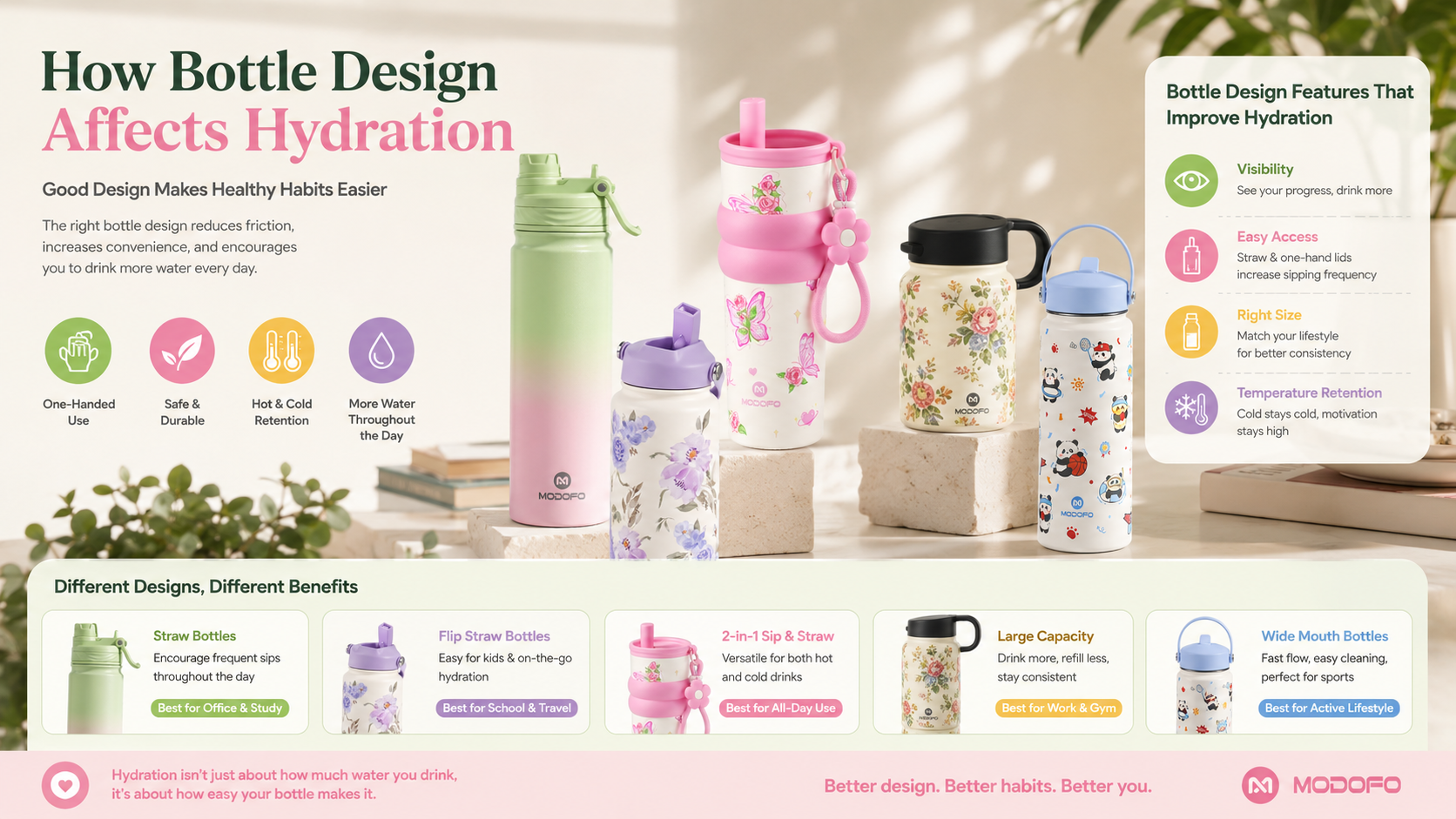
The way a bottle feels, opens, flows, fits into daily life, and interacts with behavior can dramatically influence hydration habits.
A well-designed bottle can make drinking water feel:
- easier
- faster
- more comfortable
- more enjoyable
- more automatic
A poorly designed bottle creates friction.
And small friction points repeated throughout the day can significantly reduce water intake over time.
This is why modern drinkware design has evolved far beyond simple storage containers.
Today, bottles are increasingly designed around:
- human behavior
- convenience
- accessibility
- emotional attachment
- lifestyle integration
In other words:
Modern hydration is no longer just about water.
It is about behavioral design.
Hydration Is Often a Behavioral Problem, Not a Knowledge Problem
Most adults already understand that hydration matters.
People know water supports:
- energy
- concentration
- physical performance
- temperature regulation
- daily comfort
The issue is rarely lack of information.
The real challenge is consistency.
Why do people forget to drink water even when they know it is important?
Because human behavior is strongly shaped by convenience and environmental cues.
Small design decisions influence habits more than most people realize.
The Psychology of Friction
One of the most important concepts in behavioral design is friction.
Friction refers to any small obstacle that makes an action less likely to happen.
For hydration, friction can include:
- difficult lids
- heavy bottles
- poor portability
- inconvenient cleaning
- uncomfortable drinking flow
- bottles stored out of reach
None of these problems seem serious individually.
But together, they reduce the frequency of drinking behavior throughout the day.
A bottle does not need to fail completely to discourage hydration.
It only needs to feel slightly inconvenient.
And over time, slight inconvenience changes habits.
Why Convenience Shapes Daily Hydration
People naturally repeat behaviors that feel easy.
This applies to:
- technology
- exercise
- eating habits
- hydration
The easier a bottle is to use, the more often people unconsciously reach for it.
This explains why some individuals dramatically increase water intake after changing bottles—even when nothing else changes in their routine.
The bottle itself changes the behavior.
How Bottle Design Influences Hydration Habits
Bottle design affects hydration through multiple mechanisms.
Some are physical.
Others are psychological.
The most effective drinkware combines both.
1. Bottle Size & Water Consumption
Bottle size changes hydration patterns significantly.
But bigger is not always better.
Large Capacity Bottles
Large bottles and tumblers have become increasingly popular in recent years.
Especially among:
- office workers
- gym users
- commuters
- long-distance drivers
Advantages
Large bottles reduce refill frequency.
This creates convenience during long work sessions or travel.
They also provide a visible hydration target.
Seeing a large bottle on a desk often acts as a behavioral reminder to drink.
Limitations
However, large bottles can also create problems.
They may feel:
- too heavy
- difficult to carry
- inconvenient for smaller bags
If portability decreases, actual usage frequency may decrease as well.
This is why extremely large bottles are not ideal for everyone.
Smaller Bottles
Smaller bottles are:
- lighter
- easier to transport
- more comfortable for mobility
People may carry them more consistently throughout the day.
However, they require more frequent refills.
For some users, this improves hydration through repeated interaction.
For others, it becomes inconvenient.
The Best Bottle Size Depends on Lifestyle
A bottle should match the user’s environment and behavior.
For example:
Office Workers
Often benefit from:
- larger insulated tumblers
- desk-friendly hydration systems
Students & Commuters
May prefer:
- medium lightweight bottles
- portable straw tumblers
Outdoor Users
Often need:
- large insulated bottles
- high-flow hydration systems
Lid Design Changes Drinking Frequency
This is one of the most overlooked aspects of hydration behavior.
Lid structure strongly affects how often people drink.
Different lids create different drinking patterns.
Straw Lids: The High-Frequency Hydration System
Straw tumblers are increasingly popular because they reduce effort.
Users can drink without:
- fully tilting the bottle
- unscrewing lids
- interrupting workflow
This creates more unconscious hydration behavior.
People sip more frequently simply because it feels easier.
Why Straw Lids Work So Well
Straw systems reduce physical friction.
They support:
- one-handed use
- desk drinking
- driving
- multitasking
This makes them especially effective for:
- office environments
- studying
- commuting
Behavioral Impact
One important observation is that straw tumblers often increase “passive hydration.”
People drink more without actively deciding to.
This subtle behavioral effect is extremely powerful.
Sip Lids Create Different Drinking Behavior
Sip lids encourage slower drinking.
They are often preferred for:
- coffee
- tea
- warm beverages
The drinking rhythm becomes more intentional and controlled.
This is ideal for mindful consumption, but may reduce rapid hydration frequency compared to straw systems.
Wide Mouth Openings & Chug Hydration
Wide-mouth bottles support:
- fast water intake
- sports hydration
- outdoor use
These systems prioritize volume over frequency.
They are effective for:
- gym sessions
- hiking
- intense activity
But less practical for desk environments where people tend to sip throughout the day.
One-Handed Design & Accessibility
Modern bottle design increasingly focuses on accessibility.
Why?
Because accessibility directly affects usage frequency.
If drinking requires multiple steps, hydration becomes less automatic.
One-Handed Systems Reduce Friction
Modern lids now emphasize:
- push-button opening
- flip-top systems
- quick-access drinking
These features matter because they reduce interruption.
People are more likely to drink when the process feels seamless.
Visibility Changes Hydration Behavior
Transparent bottles influence psychology in interesting ways.
Glass bottles and clear Tritan bottles allow users to:
- see water levels
- monitor progress
- visually track consumption
This creates behavioral feedback.
The brain responds positively to visible progress.
Why Visual Feedback Matters
Visible water levels create subtle accountability.
Many users instinctively want to “finish the bottle.”
This is one reason transparent bottles often encourage higher hydration consistency.
Emotional Attachment & Bottle Usage
One surprising factor in hydration behavior is emotional attachment.
People use products more consistently when they enjoy them aesthetically.
This includes:
- colors
- textures
- patterns
- shapes
- lifestyle compatibility
Why Attractive Bottles Increase Usage
A bottle people genuinely like is more likely to:
- stay visible on desks
- be carried outside
- travel between environments
- become part of daily identity
This increases exposure—and exposure increases hydration frequency.
Lifestyle Integration Matters
The best hydration systems fit naturally into daily life.
Modern users increasingly expect bottles to integrate with:
- car cup holders
- workspaces
- gym bags
- backpacks
- office aesthetics
Hydration becomes easier when the bottle feels like part of the environment rather than an extra object.
Material Choice Changes the Drinking Experience
Material affects more than durability.
It changes:
- temperature perception
- flavor experience
- tactile feeling
- emotional interaction
These factors influence drinking frequency more than many people expect.
Stainless Steel & Temperature Retention
Insulated stainless steel bottles remain extremely popular because they preserve temperature effectively.
Cold water staying cold longer can significantly improve hydration desire in hot climates.
This is especially important in:
- Southeast Asia
- tropical regions
- outdoor environments
People naturally drink more when the water feels refreshing.
Cold Water & Psychological Refreshment
Hydration is not purely biological.
It is sensory.
Cold water often feels:
- cleaner
- more satisfying
- more energizing
Good insulation increases these positive experiences.
Glass Bottles & Perceived Purity
Glass bottles create a different type of experience.
They emphasize:
- transparency
- purity
- flavor neutrality
Users often associate glass with cleaner and more mindful hydration.
Ceramic-Lined Bottles & Comfort Experience
Ceramic-lined bottles create a softer sensory experience.
Many tea and coffee drinkers prefer ceramic-lined interiors because they feel:
- smoother
- calmer
- less metallic
This emotional comfort influences product preference and repeated use.
Temperature Influences Drinking Behavior
Temperature changes how people consume liquids.
Cold Drinks Encourage Frequent Sipping
Cold beverages are often consumed more frequently in warm environments.
Insulated bottles support this behavior.
Warm Drinks Encourage Slower Consumption
Warm beverages promote:
- slower pacing
- longer sessions
- mindful drinking
This is why sip lids work especially well with hot drinks.
Modern Drinkware Is Becoming Behavioral Design
Drinkware is evolving beyond simple utility.
Modern bottle design increasingly combines:
- ergonomics
- psychology
- convenience
- emotional design
- lifestyle identity
This is why features like:
- dual-lid systems
- integrated handles
- modular lids
- straw systems
- large-capacity tumblers
have become so popular.
These are not random trends.
They are responses to real behavioral patterns.
Why Office Workers Often Struggle with Hydration
Office environments create multiple hydration barriers.
People become absorbed in:
- screens
- meetings
- concentration-heavy tasks
Hours pass without conscious hydration.
The Best Office Bottle Features
Office-friendly hydration systems usually prioritize:
Large Capacity
Reduces refill interruptions.
Straw Access
Supports passive sipping during work.
Quiet Lid Operation
Reduces distractions in shared environments.
Comfortable Desk Presence
A bottle that fits aesthetically into the workspace is more likely to remain visible and used.
Children & Adults Hydrate Differently
Hydration behavior changes with age.
Children
Children are strongly influenced by:
- colors
- playful design
- straw accessibility
- visual interaction
Adults
Adults respond more to:
- convenience
- portability
- efficiency
- workspace integration
Understanding behavioral differences helps explain why bottle design is increasingly specialized.
The Future of Hydration Design
Modern hydration systems are moving toward behavior-centered design.
The future of drinkware is not just about storing water.
It is about helping people build healthier daily routines naturally.
Emerging Trends
Multi-Mode Drinking Systems
Examples include:
- sip + straw systems
- dual-flow lids
- hybrid hydration bottles
Lifestyle-Oriented Drinkware
Bottles increasingly function as:
- desk accessories
- fashion items
- commuting tools
- wellness products
Behavioral Hydration Design
Future products will increasingly focus on reducing hydration friction completely.
The goal is simple:
Make drinking water feel automatic.
Brand Perspective: Good Design Supports Better Habits
The best bottle design is rarely the most complicated.
It is the one that quietly fits into everyday life.
Good drinkware reduces friction.
It encourages consistency.
It supports healthier habits without demanding constant attention.
Because ultimately, hydration is not only about discipline.
It is about environment, accessibility, and behavior.
Final Thoughts
People do not stay hydrated simply because they know water is important.
They stay hydrated when drinking water feels:
- easy
- comfortable
- enjoyable
- natural
This is why bottle design matters more than many people realize.
The shape, lid, weight, material, flow, and emotional experience of a bottle all influence how often people drink throughout the day.
Modern drinkware is no longer just about holding water.
It is becoming a tool for shaping healthier lifestyles and better everyday habits.
And in many ways, the best hydration system is not the one with the most features.
It is the one that makes drinking water feel effortless.