
I. Pendahuluan: Mengapa “Isolasi Vakum” Menjadi Standar Industri
Selama dua dekade terakhir, insulasi vakum dinding ganda secara diam-diam telah menjadi solusi termal standar untuk peralatan minum premium. Dari gelas stainless steel hingga stoples makanan dan wadah laboratorium, prinsip struktural yang sama muncul berulang kali. Adopsi yang meluas ini tidak didorong oleh estetika atau bahasa merek, tetapi oleh kinerja yang dapat diprediksi dan berulang yang berakar pada termodinamika.
Konsumen biasanya menganggap insulasi vakum sebagai sebuah janji: minuman tetap panas lebih lama, minuman dingin tetap dingin, dan bagian luarnya tetap nyaman disentuh. Yang jarang dijelaskan adalah mengapa struktur ini bekerja dengan sangat andal di berbagai merek dan kisaran harga, atau di mana sebenarnya keterbatasannya berada. Artikel ini menguraikan insulasi vakum dinding ganda sebagai sebuah sistem yang direkayasa, bukan sekadar fitur, dengan fokus pada mekanisme fisik, pilihan material, dan hasil kinerja yang terukur.
Tujuannya sederhana: menjelaskan bagaimana isolasi vakum dinding ganda sebenarnya bekerja, menggunakan data, fisika, dan batasan dunia nyata—tanpa mengandalkan jargon pemasaran atau klaim yang berlebihan.
II. Tiga Cara Panas Berpindah — Pengantar Sains Singkat
Semua sistem termal, terlepas dari skalanya, diatur oleh tiga mode perpindahan panas: konduksi, konveksi, dan radiasi. Setiap wadah yang mengklaim dapat "menjaga suhu" harus mengatasi ketiga hal tersebut.
Konduksi adalah perpindahan panas melalui kontak langsung antara material. Dalam cangkir berdinding tunggal, energi termal mengalir dari cairan panas, melalui dinding cangkir, dan ke udara sekitarnya. Material seperti keramik atau baja tahan karat menghantarkan panas dengan kecepatan yang sangat berbeda, tetapi tidak ada yang sepenuhnya menghalangi konduksi.
Konveksi terjadi ketika fluida (cairan atau gas) bergerak dan membawa panas bersamanya. Udara sangat efektif dalam perpindahan panas konvektif. Udara hangat naik, udara dingin menggantikannya, dan panas terus menerus keluar. Dalam cangkir terbuka atau wadah terisolasi berisi udara, konveksi mendominasi keseluruhan kehilangan panas.
Radiasi melibatkan emisi energi inframerah dari permukaan yang hangat. Bahkan tanpa adanya udara, benda-benda di atas suhu nol mutlak memancarkan radiasi termal. Meskipun radiasi kurang berkontribusi terhadap kehilangan panas dibandingkan konduksi atau konveksi dalam sebagian besar skenario peralatan minum, radiasi menjadi signifikan begitu kedua faktor lainnya berkurang.
Dalam cangkir keramik standar yang berisi air bersuhu 95°C di lingkungan bersuhu 22°C, penelitian menunjukkan suhu dapat turun di bawah 60°C dalam waktu kurang dari 45 menit. Penurunan suhu yang cepat ini terjadi karena ketiga jalur perpindahan panas tetap aktif. Isolasi yang efektif membutuhkan pembatasan ketiga jalur tersebut secara bersamaan.
III. Apa Arti Sebenarnya dari “Dinding Ganda” dalam Struktur Fisik
Istilah “dinding ganda” sering disalahpahami sebagai sekadar berarti “lebih tebal.” Pada kenyataannya, ketebalan saja tidak banyak berpengaruh untuk memperlambat kehilangan panas. Isolasi vakum dinding ganda didefinisikan bukan berdasarkan massa material, tetapi berdasarkan pemisahan struktural.
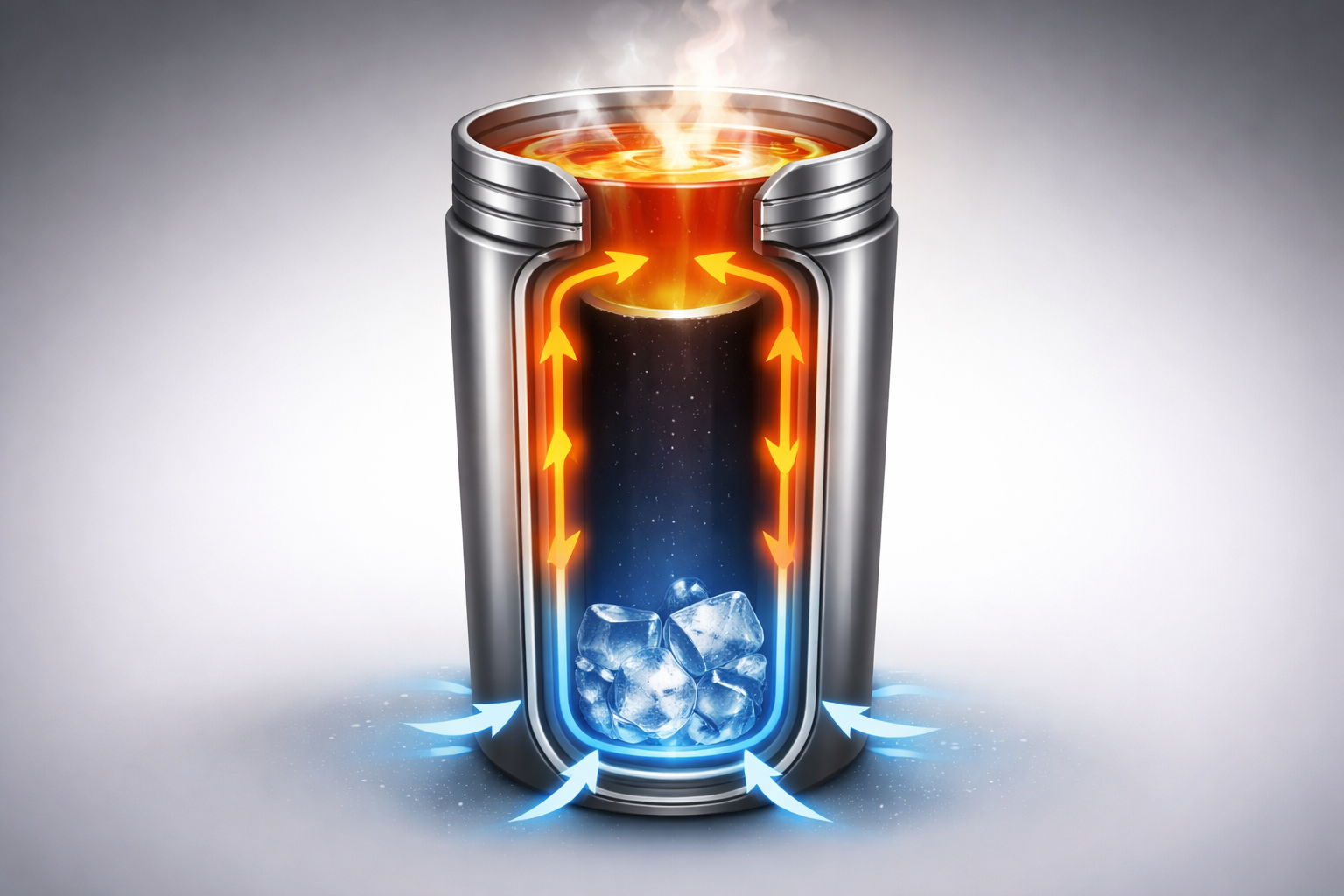
Bejana berinsulasi vakum berdinding ganda sejati terdiri dari tiga komponen utama:
Dinding bagian dalam , yang bersentuhan langsung dengan cairan.
Dinding luar , yang berinteraksi dengan lingkungan sekitar.
Ruang antara , yang dikosongkan untuk membentuk ruang hampir vakum.
Ruang antara ini biasanya hanya berukuran beberapa milimeter. Selama proses manufaktur, udara dihilangkan hingga tekanan internal turun di bawah 0,001 atmosfer. Pada tingkat ini, jumlah molekul gas yang tersisa tidak cukup untuk mempertahankan perpindahan panas konvektif yang berarti.
Berbeda dengan insulasi busa atau celah udara yang masih memungkinkan pergerakan gas, vakum hampir sepenuhnya menghentikan konveksi. Dinding dalam dan luar hanya terhubung secara fisik di bagian tepi dan dasar, meminimalkan titik kontak konduktif.
Hasilnya bukanlah "panas yang tersimpan," melainkan pertukaran panas yang melambat secara drastis.
IV. Bagaimana Lapisan Vakum Menghentikan Perpindahan Panas
Lapisan vakum merupakan inti fungsional dari sistem ini. Dampaknya dapat diukur dengan meneliti bagaimana lapisan tersebut mengganggu setiap mode perpindahan panas.
Penghilangan konveksi adalah efek yang paling signifikan. Pada tekanan atmosfer, udara menghantarkan panas sekitar 0,024 W/m·K. Dalam kondisi mendekati vakum, nilai ini mendekati nol. Tanpa molekul udara untuk bersirkulasi, kehilangan panas konveksi turun lebih dari 95% dibandingkan dengan desain dinding ganda berisi udara.
Pengurangan konduksi terjadi karena dinding dalam dan luar tidak lagi terhubung langsung melalui luas permukaannya. Panas hanya dapat menghantarkan melalui jembatan struktural yang terbatas—biasanya las tepi dan penyangga dasar. Hal ini secara drastis mengurangi penampang konduksi efektif.
Perpindahan panas radiasi tetap ada, tetapi dikurangi dengan rekayasa permukaan. Baja tahan karat yang dipoles memantulkan lebih dari 90% radiasi inframerah. Beberapa produsen lebih meningkatkan efek ini dengan menggunakan lapisan tembaga atau aluminium pada permukaan internal, mengurangi kehilangan radiasi hingga 5–10% tambahan.
Dalam kondisi laboratorium yang terkontrol, isolasi vakum dapat mengurangi laju perpindahan panas total hingga 10 sampai 15 kali lipat dibandingkan dengan wadah berdinding tunggal.
V. Mengapa Baja Tahan Karat Hampir Selalu Digunakan
Baja tahan karat tidak dipilih karena merupakan isolator termal yang unggul. Bahkan, baja tahan karat menghantarkan panas jauh lebih mudah daripada plastik atau kaca. Pemilihannya didorong oleh kendala struktural, kimia, dan manufaktur.
Pertama, baja tahan karat menawarkan kekuatan tarik yang tinggi , memungkinkan dinding tipis untuk menahan tekanan atmosfer setelah vakum disegel. Botol berinsulasi vakum mengalami gaya ke dalam terus menerus sekitar 101 kPa di seluruh permukaannya. Material yang lebih lemah akan berubah bentuk atau runtuh seiring waktu.
Kedua, baja tahan karat sangat mudah dilas , memungkinkan pembuatan segel kedap udara yang dapat mempertahankan vakum selama bertahun-tahun. Tingkat kegagalan vakum di bawah 1% selama lima tahun dapat dicapai dengan teknik pengelasan yang tepat.
Ketiga, baja tahan karat memberikan ketahanan terhadap korosi dan keamanan pangan , menjaga integritas struktural bahkan di bawah siklus termal antara suhu mendekati titik beku dan suhu mendidih.
Kinerja isolasi berasal dari vakum, bukan dari logamnya. Baja tahan karat hanya membuat vakum menjadi stabil, tahan lama, dan dapat diproduksi dalam skala besar.
VI. Peran Tutup: Mata Rantai Terlemah dalam Isolasi
Bahkan wadah berinsulasi vakum terbaik pun tidak dapat mengungguli tutupnya. Pengujian empiris secara konsisten menunjukkan bahwa tutuplah yang bertanggung jawab atas sebagian besar kehilangan panas pada wadah minuman berinsulasi.
Tidak seperti bagian bodinya, tutup tidak dapat diisolasi vakum. Tutup memiliki lubang, segel, dan komponen yang bergerak. Panas keluar melalui konduksi melintasi bahan plastik, konveksi melalui celah udara, dan pertukaran uap langsung saat dibuka.
Studi pencitraan termal menunjukkan bahwa 60–70% dari total kehilangan panas pada gelas berinsulasi vakum terjadi di tutupnya. Tutup yang tidak tertutup rapat dapat mengurangi waktu retensi panas efektif hingga 30–40%, bahkan jika badan botol berfungsi optimal.
Ini menjelaskan mengapa dua botol dengan klaim isolasi vakum yang identik mungkin berkinerja sangat berbeda dalam penggunaan sebenarnya. Desain tutup, kualitas segel, dan frekuensi pembukaan lebih penting daripada ketebalan dinding atau waktu isolasi yang diiklankan.
VII. Berapa Lama Isolasi Vakum Dapat Menjaga Minuman Tetap Panas atau Dingin?
Produsen sering mengiklankan angka retensi panas seperti "12 jam panas" atau "24 jam dingin". Angka-angka ini biasanya diukur dalam kondisi terkontrol: volume penuh, tutup tertutup rapat, gangguan minimal, dan suhu lingkungan yang stabil.
Dalam penggunaan di dunia nyata, kinerja bergantung pada beberapa faktor yang dapat diukur:
Suhu awal cairan : Suhu awal yang lebih tinggi meningkatkan kehilangan panas absolut tetapi belum tentu meningkatkan laju kehilangan panas.
Tingkat pengisian : Botol yang terisi sebagian mengandung lebih banyak udara, sehingga meningkatkan konveksi internal saat dibuka.
Suhu lingkungan : Lingkungan dingin meningkatkan gradien suhu dan mempercepat kehilangan panas.
Perilaku penggunaan : Frekuensi pembukaan dapat menggandakan total kehilangan panas seiring waktu.
Dalam kondisi ruangan biasa, gelas termos berinsulasi vakum berkualitas tinggi menunjukkan tingkat kehilangan panas 1–2°C per jam untuk cairan panas dan menjaga minuman dingin di bawah 5°C selama 18–24 jam.
Kondisi luar ruangan dapat mengurangi kinerja hingga 30–50%, terutama di lingkungan yang dingin atau berangin.
VIII. Kesalahpahaman Umum Tentang Gelas Minum Berinsulasi Vakum
Beberapa kesalahpahaman masih beredar seputar insulasi vakum.
Salah satu keyakinan yang beredar adalah bahwa isolasi vakum "menghentikan kehilangan panas." Padahal tidak. Isolasi vakum memang memperlambat perpindahan panas secara signifikan, tetapi tidak dapat menghilangkannya sepenuhnya.
Kesalahpahaman lainnya adalah menganggap bahwa bagian luar yang tetap dingin menunjukkan tidak ada kehilangan panas internal. Pada kenyataannya, bagian luar yang dingin hanya mencerminkan penurunan konduksi—bukan stabilitas suhu internal.
Mungkin kesalahpahaman yang paling kritis adalah bahwa isolasi vakum dapat diperbaiki. Begitu segel vakum terganggu—akibat benturan, korosi, atau cacat produksi—penurunan kinerja bersifat permanen. Lapisan vakum yang rusak mengembalikan wadah ke tingkat kinerja yang hampir sama dengan dinding tunggal.
IX. Kapan Isolasi Vakum Dinding Ganda Paling Tepat Digunakan
Isolasi vakum memberikan nilai tertinggi dalam skenario yang membutuhkan kontrol suhu dalam jangka waktu lama.
Ini termasuk perjalanan jauh, aktivitas luar ruangan, penggunaan di kantor selama beberapa jam, dan situasi di mana pemanasan ulang atau pengisian ulang berulang kali tidak praktis. Untuk penggunaan jangka pendek, seperti mengonsumsi minuman dalam waktu 30 menit, desain yang lebih sederhana mungkin sudah cukup.
Memahami pertimbangan untung rugi memungkinkan pengguna untuk memilih sistem insulasi berdasarkan kebutuhan fungsional, bukan berdasarkan bahasa pemasaran.
X. Kesimpulan: Isolasi Vakum Adalah Fisika Sederhana, yang Dilakukan dengan Baik
Isolasi vakum dinding ganda berhasil bukan karena kompleksitasnya, tetapi karena menerapkan fisika fundamental dengan presisi. Dengan menghilangkan udara, membatasi jalur konduktif, dan mengelola kehilangan radiasi, isolasi ini menciptakan sistem termal yang stabil dengan hasil yang dapat diprediksi.
Keefektifannya lebih bergantung pada eksekusi daripada slogan: kualitas vakum, integritas struktural, desain penutup, dan kondisi penggunaan yang realistis. Ketika elemen-elemen ini selaras, isolasi vakum memberikan kinerja yang terukur dan dapat diulang yang didasarkan pada sains—bukan janji.
Pada akhirnya, isolasi vakum bukanlah sebuah misteri. Ini adalah disiplin ilmu teknik, yang disesuaikan untuk penggunaan sehari-hari.