
A Practical Guide to Exercise, Recovery, and Everyday Wellness in South America's Warm and Humid Regions
Modern wellness trends often focus on exercise routines, workout intensity, and performance goals. While these topics are important, many people overlook a factor that quietly influences how they feel before, during, and after physical activity: hydration.
In many parts of South America, particularly in tropical and subtropical regions, warm temperatures and high humidity create unique challenges for maintaining comfort during daily activities and exercise. Whether someone enjoys morning walks, cycling, gym workouts, hiking, recreational sports, or simply staying active throughout the week, hydration habits can play a meaningful role in the overall experience.
This article explores how hot climates influence physical activity, why hydration and electrolyte balance are commonly discussed among active individuals, and practical lifestyle habits that may help people feel more comfortable and consistent in their wellness routines.
Disclaimer: This article is intended for general educational and lifestyle information only. It does not provide medical advice, diagnosis, or treatment recommendations. Individual needs may vary based on age, activity level, health conditions, and local climate.
Why Hot and Humid Weather Feels Different During Exercise
South America is home to a wide variety of climates.
In countries such as Brazil, Colombia, Ecuador, Venezuela, and parts of Peru, many regions experience warm temperatures for much of the year. In some areas, humidity levels can remain relatively high even outside the hottest months.
People who move from cooler climates often notice that physical activities feel different.
A morning jog may feel more demanding.
An afternoon walk may leave someone feeling more tired than expected.
Even routine household activities such as gardening, cleaning, or carrying groceries can feel more physically taxing during hot weather.
One reason is that the body naturally works to regulate temperature through sweating.
When humidity is high, sweat evaporates more slowly. Since evaporation helps cool the body, warm and humid conditions can sometimes feel less comfortable than dry heat.
Many fitness enthusiasts in online running communities and outdoor activity forums frequently mention that tropical climates require a different mindset. Rather than focusing solely on pace or performance, they often emphasize consistency, hydration habits, and recovery.
Understanding Water Loss During Physical Activity
When people exercise, the body naturally loses water through sweat and breathing.
The amount varies depending on factors such as:
- Temperature
- Humidity
- Exercise intensity
- Clothing
- Individual physiology
- Duration of activity
This is one reason why hydration is frequently discussed among runners, cyclists, hikers, and fitness enthusiasts.
Interestingly, thirst does not always appear immediately.
Many active individuals report that they feel relatively comfortable during an activity but become noticeably tired afterward. While there can be many reasons for this, hydration is often one factor worth considering as part of an overall wellness routine.
The goal is not necessarily to constantly measure every sip of water, but rather to develop awareness of how environmental conditions influence daily habits.
Why Electrolytes Are Frequently Mentioned in Fitness Communities
The word "electrolytes" appears frequently in sports, fitness, and wellness discussions.
For many people, it sounds highly technical, but the concept itself is fairly simple.
Electrolytes are minerals that naturally occur in the body and are commonly obtained through food and beverages.
Some commonly discussed electrolytes include:
| Electrolyte | Commonly Associated With |
|---|---|
| Sodium | Fluid balance |
| Potassium | Muscle function |
| Magnesium | Various body processes |
| Calcium | Bone and muscle support |
Fitness communities often discuss electrolytes because these minerals are lost through sweating to varying degrees.
However, it is important to remember that most people obtain electrolytes through normal eating patterns.
Balanced meals, fruits, vegetables, dairy products, and many everyday foods naturally contribute to electrolyte intake.
This is why many lifestyle experts recommend focusing on overall dietary habits rather than viewing hydration as only a sports nutrition topic.
Popular Exercise Habits Across Warm Regions of South America
One interesting observation from local fitness communities is how people adapt their routines to climate conditions.
Instead of trying to fight the weather, many choose to work with it.
Early Morning Activities
Morning exercise remains popular in many warm cities.
Common activities include:
- Walking
- Running
- Outdoor fitness classes
- Cycling
The appeal is simple:
- Lower temperatures
- Reduced sun exposure
- More comfortable conditions
Many experienced runners describe early mornings as the most enjoyable time to train.
Evening Exercise
For office workers and students, evenings are often the most practical option.
Parks and outdoor recreation spaces in many South American cities become active after sunset as temperatures begin to cool.
Walking groups, casual football matches, cycling clubs, and fitness classes are common examples.
Active Daily Living
Not all exercise happens in a gym.
Many lifestyle experts now emphasize everyday movement such as:
- Walking instead of driving short distances
- Taking stairs
- Gardening
- Housework
- Recreational activities
These smaller forms of movement can contribute to an active lifestyle without requiring structured workout programs.
Practical Hydration Habits Before, During, and After Activity
Hydration discussions sometimes become overly complicated.
In reality, many experienced athletes and active individuals rely on simple routines.
Before Activity
Some people find it helpful to begin activities feeling reasonably hydrated rather than waiting until afterward.
Practical habits include:
- Drinking water throughout the day
- Including fluids with meals
- Carrying a reusable bottle during travel
During Activity
For longer activities, many active individuals prefer small, consistent sips rather than drinking large amounts all at once.
Community discussions among runners and cyclists frequently highlight comfort and consistency over rigid rules.
After Activity
Many people focus on recovery after exercise.
This may include:
- Drinking water
- Eating balanced meals
- Resting
- Stretching
- Getting adequate sleep
Recovery is often where long-term habits are built.
Natural Hydration Sources Popular in South America
One advantage of South America's diverse food culture is the availability of refreshing fruits and beverages.
Coconut Water
Especially common in tropical regions.
People often enjoy coconut water because it is:
- Refreshing
- Convenient
- Widely available
It is frequently mentioned in local wellness discussions as a popular option during warm weather.
Fresh Fruits
Many fruits naturally contain water and can complement overall hydration habits.
Popular examples include:
- Watermelon
- Pineapple
- Papaya
- Mango
- Orange
These foods are often associated with summer and outdoor lifestyles.
Herbal Infusions
Various herbal beverages remain popular throughout the continent.
Many people enjoy them simply for variety and taste.
Plain Water Still Matters
Despite the popularity of specialty beverages, most fitness communities continue to view plain water as the foundation of everyday hydration.
Other drinks may add variety, but water remains the most accessible and versatile choice.
Coffee, Mate, and Active Lifestyles
No discussion of South American beverage culture would be complete without mentioning coffee and yerba mate.
Coffee Culture
Brazil and Colombia are among the world's most recognized coffee-producing countries.
Coffee is part of daily life for millions of people.
Many active adults enjoy coffee before workouts or during work hours.
Moderate coffee consumption is frequently discussed within wellness communities as part of a balanced lifestyle.
Yerba Mate
Particularly popular in Argentina, Uruguay, Paraguay, and southern Brazil, yerba mate carries strong social and cultural significance.
Many people enjoy it:
- During conversations
- While working
- During leisure time
- Outdoors with friends
Like coffee, mate is often enjoyed alongside normal hydration habits rather than as a complete substitute for water.
Recovery: The Often-Overlooked Side of Fitness
One of the most common themes appearing across wellness forums and community discussions is that recovery deserves more attention.
Many beginners focus heavily on training.
More experienced individuals often talk about recovery.
This includes:
- Rest
- Sleep
- Nutrition
- Hydration
- Stress management
Interestingly, some of the most sustainable fitness journeys are built not on extreme workouts but on consistent routines.
A person who exercises moderately, stays active, gets enough sleep, and maintains healthy daily habits may find it easier to sustain those behaviors long term.
Building Sustainable Wellness Habits
In recent years, many lifestyle experts have shifted away from "all-or-nothing" approaches.
Instead of pursuing perfection, the emphasis is increasingly placed on consistency.
Examples include:
- Taking regular walks
- Staying active throughout the week
- Keeping water nearby
- Spending time outdoors
- Prioritizing recovery
These habits may seem simple, but they are often easier to maintain over months and years.
For people living in warm climates, adapting habits to local conditions can make active living feel more enjoyable and sustainable.
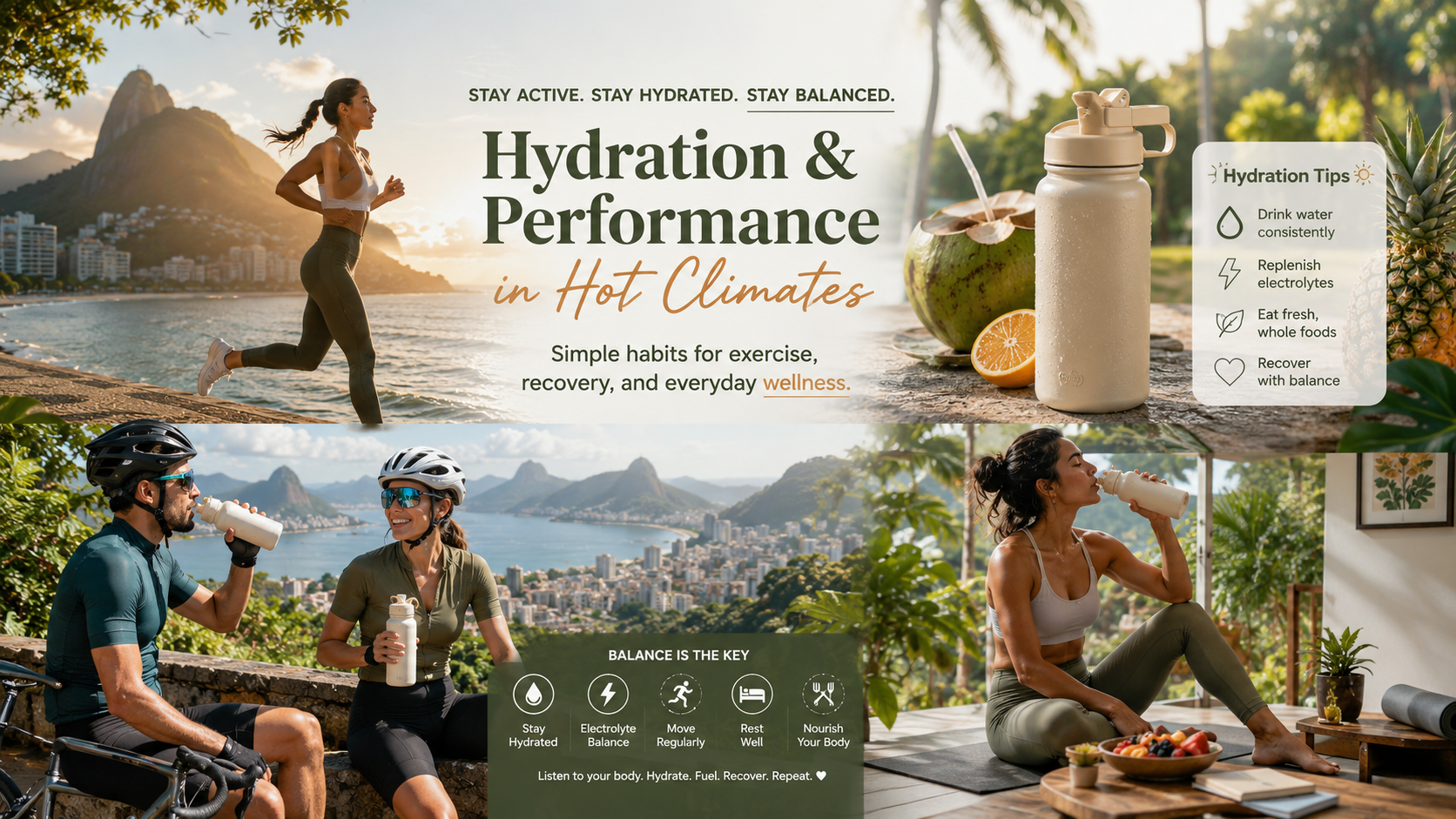
Choosing Practical Hydration Tools for Active Lifestyles
While equipment cannot replace healthy habits, practical tools can make those habits easier to maintain.
Many active individuals choose reusable bottles based on their daily routines.
Different lifestyles may favor different features:
Outdoor Activities
- Larger capacity
- Insulation
- Durability
Office Use
- Compact size
- Easy access
- Convenient portability
Weekend Adventures
- Leak-resistant designs
- Comfortable carrying options
The most effective hydration tool is often the one that naturally fits into everyday life.
Conclusion: Healthy Living Starts With Balance
Living an active lifestyle in South America's warm and humid regions involves more than simply exercising harder.
Climate, comfort, recovery, and hydration all play a role in the overall experience.
Rather than viewing hydration as a strict formula, many people find success by developing practical habits that fit their environment and lifestyle.
Small actions—such as carrying water, staying aware of weather conditions, eating balanced meals, and prioritizing recovery—can contribute to a more comfortable and sustainable approach to wellness.
At its core, healthy living is rarely about extremes.
It is about finding a balance that supports long-term consistency, enjoyment, and well-being.
References & Further Reading
The following resources were consulted as general educational references and background materials. They are provided to encourage further reading and do not imply endorsement of any specific lifestyle approach.
Public Health & Wellness Resources
- World Health Organization (WHO) – Hydration and Healthy Living Resources
- Pan American Health Organization (PAHO) – Health Information for Latin America and the Caribbean
- Harvard T.H. Chan School of Public Health – Nutrition and Healthy Beverage Guidance
- Mayo Clinic – Exercise and Wellness Resources
- Cleveland Clinic – Healthy Lifestyle and Hydration Articles
Climate & Environmental Information
- National Oceanic and Atmospheric Administration (NOAA)
- World Meteorological Organization (WMO)
- Regional climate reports covering South American tropical and subtropical environments
Community Experiences & Lifestyle Discussions
The practical lifestyle observations discussed in this article reflect commonly shared experiences found across:
- Running communities
- Cycling forums
- Hiking and outdoor recreation groups
- South American travel communities
- Fitness and wellness discussion boards
- Lifestyle and healthy living communities
Community experiences can provide useful real-world perspectives but should be interpreted alongside evidence-based information from reputable health and scientific organizations.
Author's Note: This article reflects a lifestyle and wellness perspective intended to encourage mindful hydration, balanced activity, and sustainable healthy habits. Individual experiences and needs may vary depending on personal circumstances, climate conditions, and activity levels.