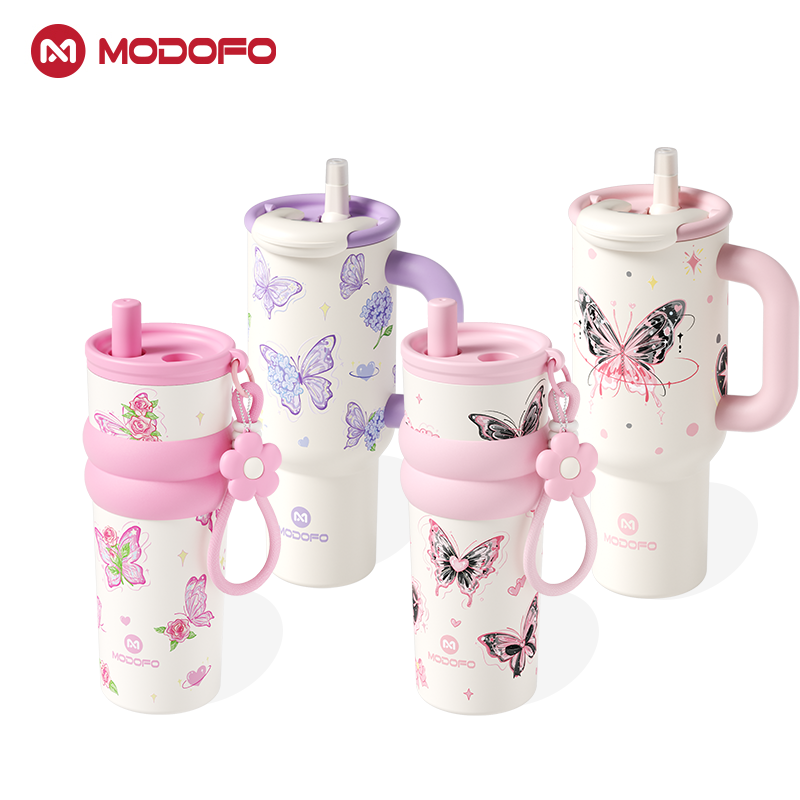


Part 1 — Why Premium Drinkware Relies on Silicone More Than You Think
Introduction: The Smallest Component Can Have the Biggest Impact
When shopping for a reusable water bottle, most people pay attention to the obvious features.
They compare:
- Stainless steel grades
- Insulation performance
- Bottle capacity
- Lid styles
- Colors and designs
Very few people stop to ask another important question:
What is the sealing ring made of?
Or...
Why do premium bottles almost always mention food-grade silicone?
Although silicone components are often hidden inside the lid, they play an essential role in everyday performance.
They help prevent leaks, improve comfort while drinking, maintain temperature, and contribute to the overall durability of the bottle.
In many ways, the smallest component inside your bottle works just as hard as the stainless steel body.
Understanding the difference between silicone and rubber helps explain why modern reusable drinkware has become more reliable, hygienic, and comfortable to use.
Why Bottle Design Is About More Than Stainless Steel
The bottle body usually receives most of the attention.
Consumers often compare:
- 304 stainless steel
- 316 stainless steel
- Double-wall insulation
- Powder coating
- Vacuum technology
Yet a reusable bottle is actually a collection of many carefully designed components working together.
A typical insulated tumbler may include:
- Stainless steel body
- Tritan or polypropylene lid
- Silicone sealing ring
- Silicone straw valve
- Drinking spout
- Straw
- Carry handle
- Threaded locking system
If any one of these components performs poorly, the overall user experience changes.
A perfectly insulated bottle that leaks inside a backpack quickly becomes frustrating.
Likewise, a beautifully designed tumbler loses much of its appeal if the lid becomes difficult to open or develops unpleasant odors over time.
This is why product designers often spend considerable time selecting materials for the smallest parts of the bottle—not just the largest ones.
What Exactly Is Silicone?
Silicone is a synthetic elastomer made primarily from silicon, oxygen, carbon, and hydrogen.
Unlike many traditional rubber materials, food-grade silicone is specifically engineered for repeated contact with food and beverages.
It is widely used in products people interact with every day, including:
- Baby bottle nipples
- Baking molds
- Kitchen utensils
- Medical devices
- Coffee machine seals
- Water bottle gaskets
- Drinking straws
For reusable drinkware, silicone offers several characteristics that make it particularly suitable.
It remains flexible across a wide range of temperatures.
It compresses easily to create reliable seals.
It returns to its original shape after repeated use.
And when manufactured according to recognized food-contact standards, it is generally odor-neutral and stable during everyday use.
These qualities explain why silicone has become the preferred sealing material in many premium reusable bottles.
What About Rubber?
The word "rubber" actually describes a broad family of materials rather than one single material.
Some rubber products are derived from natural latex.
Others are manufactured synthetically for industrial applications.
Depending on the formulation, rubber may be designed for:
- Automotive parts
- Construction
- Industrial machinery
- Consumer products
- Household items
Certain rubber compounds are suitable for food-contact applications.
Others are not.
This distinction is important because "rubber" by itself does not automatically describe the material's safety or intended purpose.
In reusable drinkware, manufacturers increasingly choose food-grade silicone because it offers more consistent performance in environments involving repeated washing, temperature changes, and long-term contact with beverages.
This does not mean rubber is a poor material.
Rather, different materials are optimized for different applications.
Why Premium Bottles Commonly Use Silicone Seals
If you remove the lid from many insulated bottles, you'll usually find a flexible ring sitting inside the cap.
That ring is often made from food-grade silicone.
Its purpose is simple:
Create a reliable seal between the bottle and the lid.
Every time the lid is tightened, the silicone compresses slightly.
This compression fills microscopic gaps that might otherwise allow liquid or air to escape.
Once the lid is opened again, the silicone returns to its original shape.
This process happens hundreds—or even thousands—of times during the life of the bottle.
Good elasticity is therefore essential.
Many product engineers favor silicone because it maintains this flexibility across repeated daily use.
Silicone vs. Rubber: A Practical Comparison
Although both materials are flexible, their performance differs in several areas important to reusable drinkware.
| Feature | Food-Grade Silicone | General Rubber* |
|---|---|---|
| Food-contact suitability | Excellent when certified | Depends on formulation |
| Heat resistance | Excellent | Varies |
| Cold resistance | Excellent | Moderate to good |
| Elastic recovery | Excellent | Good |
| Odor neutrality | Generally better | Can vary by material |
| Long-term aging | Excellent | Depends on type |
| Dishwasher compatibility | Commonly suitable | Material dependent |
*Rubber is a broad category of materials. Performance varies depending on the specific compound and intended application.
Rather than identifying one material as universally "better," the table illustrates why food-grade silicone has become the preferred choice for many drinkware manufacturers.
Its combination of flexibility, durability, and stability aligns well with the demands of everyday reusable bottles.
Where Silicone Appears Inside Your Bottle
Many users imagine there is only one silicone part inside a bottle.
In reality, premium drinkware often contains several silicone components working together.
These may include:
- Lid sealing gasket
- Straw valve
- Flip-lid seal
- Leak-proof ring
- Air-release valve
- Protective base ring
- Soft carrying grip
Most of these parts are small enough that users rarely notice them.
Yet each contributes to the overall experience.
When people describe a bottle as "easy to drink from," "comfortable to carry," or "completely leak-proof," silicone often plays an important supporting role behind the scenes.
Great Drinkware Is Built Around Everyday Experiences
The best bottle designs are rarely defined by one impressive feature.
Instead, they result from dozens of thoughtful decisions working together.
A comfortable handle.
A smooth drinking spout.
A leak-resistant lid.
A seal that continues performing after years of daily use.
These details are easy to overlook because they work quietly in the background.
But they are exactly what transform a reusable bottle from a simple container into something people enjoy carrying every day.
Understanding materials like silicone helps us appreciate that great design isn't only about what we can see—it is also about the invisible engineering that improves everyday life.
Part 2 — How Silicone Improves Everyday Bottle Performance (And Why It Matters More Than You Think)
Good Bottle Design Is Something You Feel, Not Something You Notice
The best reusable bottles rarely impress users with a single feature.
Instead, they quietly solve dozens of small problems throughout the day.
Think about how often you interact with your bottle:
- Opening it before your morning commute.
- Taking a sip during a meeting.
- Tossing it into a backpack.
- Carrying it on a weekend hike.
- Washing it after dinner.
Each interaction depends on tiny design details working together.
One of those details is silicone.
Unlike stainless steel, which provides strength, or plastic, which shapes the lid, silicone creates the flexible connection between every moving part.
When it performs well, most people never think about it.
Leak Prevention Begins with Material Science
One of the most common reasons people replace reusable bottles isn't insulation failure.
It's leaking.
Whether the bottle is inside a laptop bag, gym backpack, or car cup holder, a reliable seal quickly becomes one of the most appreciated features.
Silicone contributes to leak prevention because it can compress under pressure while maintaining its shape after repeated use.
Every time the lid is tightened, the gasket creates a uniform seal around the bottle opening.
When the lid is removed, the material naturally rebounds.
This repeated compression-and-recovery cycle may occur thousands of times over the life of a reusable bottle.
Users rarely notice this engineering, but they immediately notice when it stops working.
Comfort Is Also a Design Material
Bottle design isn't only about preventing leaks.
It's also about creating a comfortable daily experience.
Many premium drinkware products now use silicone in places that directly interact with the user.
Examples include:
- Soft drinking spouts
- Straw valves
- Carry loops
- Protective bottle bases
- Grip accents on lids
These additions aren't simply decorative.
They improve usability.
For example:
A soft silicone mouthpiece often feels more comfortable during long drinking sessions than a rigid plastic edge.
A flexible carrying loop moves naturally while walking.
A silicone base can reduce noise when placing the bottle on a hard table in an office or café.
These are small improvements individually.
Together, they create a noticeably better user experience.
Industrial designers often describe this as human-centered design—products that quietly adapt to everyday behaviors instead of asking users to adapt to the product.
Does Silicone Affect the Taste of Your Drinks?
One question appears frequently in coffee forums and reusable bottle communities:
"Can silicone change the taste of my drink?"
The answer depends largely on the quality of the material.
High-quality food-grade silicone is designed to be chemically stable under normal food-contact conditions.
When properly manufactured and maintained, it generally does not add noticeable flavors to water, coffee, tea, or other everyday beverages.
However, experienced bottle users often point out something else.
What people describe as a "silicone smell" is frequently not caused by the silicone itself.
Instead, it usually comes from:
- Coffee oils trapped beneath the seal.
- Tea residue inside the lid.
- Milk proteins left after protein drinks.
- Incomplete drying after washing.
In other words, cleanliness has a greater influence on taste than the material itself.
This idea aligns with recommendations from coffee professionals, who consistently emphasize that clean brewing equipment preserves flavor more effectively than any premium material alone.
Why Silicone Is Easier to Maintain
One reason manufacturers increasingly choose silicone is that it supports everyday maintenance.
Unlike many rigid components, silicone can often be removed from the lid for cleaning.
This allows users to reach areas where moisture and beverage residue tend to accumulate.
Many experienced bottle owners recommend a simple routine:
- Remove the sealing ring once every week or two.
- Wash it with warm water and mild dish soap.
- Use a soft brush around hidden grooves.
- Allow every part to dry completely before reassembly.
These small habits require only a few extra minutes but can significantly reduce lingering odors.
Interestingly, discussions across outdoor forums, coffee communities, and parenting groups often reach the same conclusion:
The lid usually deserves more attention than the bottle body.
How Long Does Silicone Last?
Another common question is whether silicone components need replacing.
The answer depends less on time and more on use.
A bottle carried every day experiences thousands of opening and closing cycles each year.
Over time, even high-quality silicone naturally ages.
Signs that a seal may need replacement include:
- Visible cracks.
- Permanent deformation.
- Loss of elasticity.
- Tears around the edges.
- Persistent odors that remain after thorough cleaning.
Fortunately, many premium bottle manufacturers now offer replacement seals and accessories, allowing users to extend the life of the entire bottle rather than replacing it completely.
This reflects a broader shift toward repairability and long-term product ownership.
Common Mistakes That Shorten the Life of Silicone Components
Most silicone parts are remarkably durable, but everyday habits still matter.
Some practices can unnecessarily reduce their lifespan.
Common mistakes include:
- Using sharp tools to remove seals.
- Cleaning with highly abrasive brushes.
- Leaving sugary drinks inside the bottle overnight.
- Reassembling the bottle while components are still damp.
- Ignoring residue hidden beneath removable gaskets.
None of these issues usually cause immediate damage.
Instead, they gradually reduce cleanliness and long-term performance.
Fortunately, they're also easy to avoid.
Small Components Reflect Bigger Design Philosophy
One interesting trend in premium drinkware is that brands increasingly highlight details that users rarely noticed a decade ago.
Consumers now ask questions like:
- Is the silicone food-grade?
- Is the seal removable?
- Are replacement parts available?
- Can the lid be fully disassembled?
- Is the bottle designed for long-term maintenance?
These questions reflect a broader shift in consumer expectations.
People no longer evaluate products only by appearance.
They increasingly value:
- Repairability.
- Hygiene.
- Durability.
- Sustainability.
- Ease of maintenance.
Silicone has become an important part of this evolution because it supports all of these qualities.
Better Materials Support More Sustainable Habits
Sustainability is often associated with stainless steel because reusable bottles reduce dependence on disposable cups and plastic bottles.
However, durability depends on more than the bottle body.
A reusable bottle designed for years of everyday use also needs components that can withstand repeated cleaning, temperature changes, and daily handling.
When replaceable silicone seals extend the usable life of a bottle, they contribute to reducing unnecessary product waste.
In this sense, thoughtful material selection becomes part of sustainable product design—not because one material is "green" by itself, but because durable, maintainable products are generally used for longer.
Choosing a Better Bottle Means Looking Beyond Stainless Steel
When comparing reusable drinkware, it's easy to focus on the largest specifications:
- 316 stainless steel.
- Double-wall insulation.
- Large capacity.
- Attractive finishes.
These features are certainly important.
But long-term satisfaction often comes from the smaller details.
A leak-free seal.
A comfortable drinking spout.
A lid that's easy to clean.
A gasket that remains flexible after years of daily use.
These quiet design decisions rarely appear in advertisements, yet they influence every sip.
Understanding the role of silicone helps us appreciate that excellent drinkware is rarely defined by one material alone.
Instead, it's the result of thoughtful engineering, practical maintenance, and a collection of carefully chosen components working together.
Conclusion: Great Drinkware Is Built from Hundreds of Small Decisions
The discussion around Silicone vs. Rubber isn't about declaring one material universally superior.
It's about understanding why different materials are selected for different purposes.
In modern reusable bottles, food-grade silicone has become the preferred choice for seals, valves, and flexible components because it offers a combination of elasticity, stability, hygiene, and long-term reliability that fits everyday hydration needs.
Perhaps the most valuable takeaway is this:
A great reusable bottle isn't defined only by the steel you can see.
It's also shaped by the materials you rarely notice—but rely on every single day.
Every leak prevented.
Every comfortable sip.
Every easy-to-clean lid.
Every year of reliable use.
These experiences are often the result of dozens of thoughtful design decisions hidden beneath the surface.
And that's what transforms a simple bottle into something people genuinely enjoy using every day.
References
This article combines information from recognized standards, food-contact material guidance, industrial design references, and practical experiences shared by reusable bottle users.
Key references include:
- U.S. Food and Drug Administration (FDA). Guidance on food-contact substances and food-grade materials.
- European Food Safety Authority (EFSA). Food-contact material regulations and safety evaluations.
- NSF International. Recommendations for food equipment materials and reusable drinkware hygiene.
- International Organization for Standardization (ISO). Standards related to silicone elastomers and material testing.
- ASTM International. Performance testing methods for elastomeric materials.
- International Stainless Steel Forum (ISSF). Food-grade stainless steel applications.
- Community discussions from coffee enthusiasts, outdoor hikers, cyclists, parents, and reusable drinkware users (including Reddit and specialty lifestyle forums), referenced for recurring real-world experiences rather than as scientific evidence.
Editor's Note: One opportunity to further improve reusable drinkware design lies in making maintenance easier for users. Future products may continue evolving toward fully removable seals, modular lid systems, replaceable components, and easier-to-clean structures. These design improvements not only enhance convenience but also support longer product lifecycles and more sustainable everyday habits.