
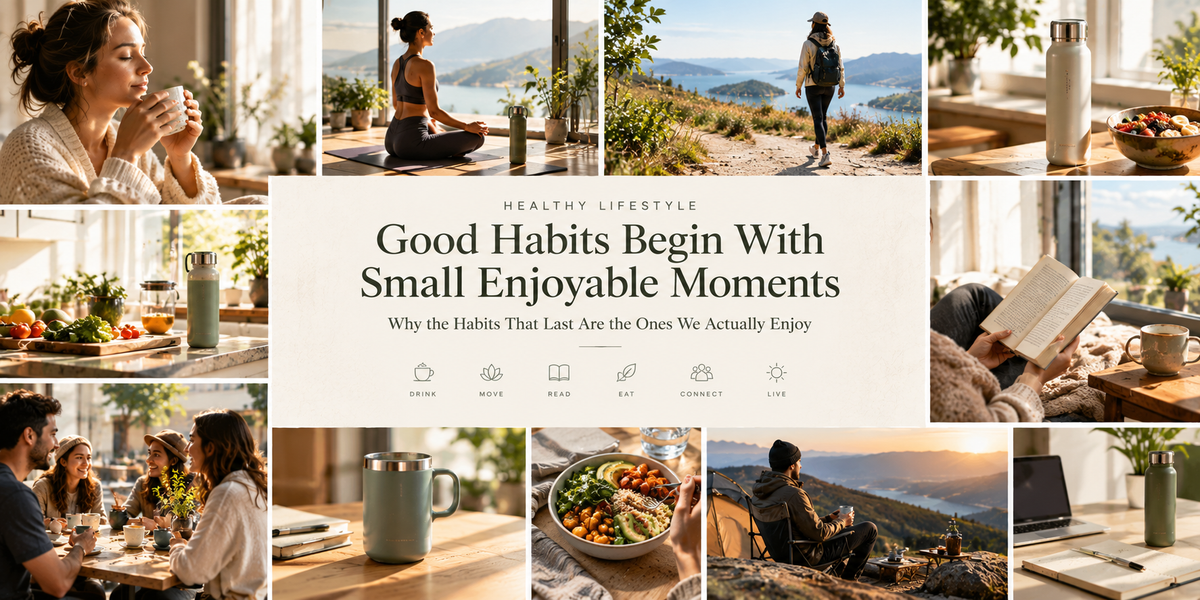
Why the Habits That Last Are the Ones We Actually Enjoy
Introduction: Lasting Habits Rarely Begin With Big Changes
Many people believe building better habits requires extraordinary discipline.
Wake up at 5 a.m.
Exercise every day.
Read fifty books a year.
Meditate for an hour.
Follow the perfect routine without missing a day.
While these goals sound inspiring, they often become difficult to maintain.
Not because people lack motivation.
But because the habits never become part of everyday life.
The routines that stay with us for years usually begin much more quietly.
Making coffee before work.
Taking a short walk after dinner.
Refilling a reusable water bottle before leaving home.
Reading a few pages before bed.
Stretching for five minutes in the morning.
These habits may seem ordinary, yet they often shape our lives more than dramatic changes ever do.
The secret is not that they are easier.
It is that they are enjoyable.
People rarely repeat habits simply because they know they are good for them.
They repeat habits because they enjoy the way those habits make everyday life feel.
Small Moments Are Easier to Repeat
Imagine two different goals.
The first is to exercise for two hours every day.
The second is to take a fifteen-minute walk after lunch.
One sounds impressive.
The other sounds realistic.
Over time, the smaller habit often becomes the one that lasts.
The same is true across many areas of life.
Drinking one extra glass of water.
Preparing a simple breakfast.
Opening the curtains each morning.
Taking a few deep breaths before beginning work.
Writing one sentence in a journal.
These actions require little effort, yet they create a sense of consistency.
Small habits remove the pressure to be perfect.
Instead of asking us to change our lives overnight, they simply ask us to show up again tomorrow.
Enjoyment Is More Powerful Than Willpower
Many habits fail because they feel like obligations.
They become another task on an already busy schedule.
But enjoyable habits create a different experience.
Morning coffee becomes a quiet moment before emails begin.
Yoga becomes an opportunity to reconnect with the body rather than simply burn calories.
Cooking dinner becomes time spent with family instead of another responsibility.
Reading before bed becomes a peaceful ending to the day instead of another goal to complete.
When habits feel rewarding, repeating them becomes natural.
We stop relying entirely on motivation.
We begin looking forward to the experience itself.
Perhaps consistency grows more easily from enjoyment than from discipline.
Healthy Living Is Becoming Part of Everyday Life
The idea of wellness has changed.
For many people, healthy living is no longer defined only by strict diets or demanding workout plans.
Instead, it is becoming a collection of everyday choices.
Walking instead of driving short distances.
Joining a weekend running club.
Practicing yoga a few times each week.
Preparing meals at home.
Drinking enough water throughout the day.
Taking breaks away from screens.
Visiting local farmers' markets.
Spending more time outdoors.
These habits are not simply about improving physical health.
They improve how everyday life feels.
People increasingly choose activities that combine movement, relaxation, community, and enjoyment.
Wellness is becoming less about chasing perfection and more about creating a lifestyle people genuinely want to maintain.
The Environment Helps Good Habits Grow
Our surroundings quietly influence what we do every day.
A water bottle waiting beside the front door reminds us to stay hydrated.
A yoga mat already unrolled makes stretching feel effortless.
Fresh fruit on the kitchen counter encourages healthier choices.
A comfortable reading chair invites us to open a book.
A sunny window naturally becomes the place for morning coffee.
Thoughtful environments reduce the number of decisions we need to make.
Instead of constantly relying on willpower, they gently guide us toward habits we already want to build.
Sometimes improving a routine begins with changing the space around it.
Good Habits Often Become Shared Habits
Many of today's most popular healthy habits are also social experiences.
Running clubs continue to grow in cities around the world.
Friends meet for morning coffee before work.
Families cook dinner together.
Book clubs encourage reading through conversation.
Weekend hiking groups explore nearby trails.
Yoga classes bring together people looking for both movement and community.
These activities succeed because they offer more than personal improvement.
They create connection.
Sharing a habit often makes it easier to continue.
People may begin attending because of exercise.
They often return because of the people.
The habits that stay with us are frequently the habits we experience together.
Everyday Rituals Matter More Than Perfect Routines
Life is rarely predictable.
Travel.
Busy workdays.
Family responsibilities.
Changing seasons.
Unexpected events.
Perfect routines are difficult to maintain.
Everyday rituals are much more flexible.
A cup of tea after dinner.
A short walk before sunset.
Reading for ten minutes.
Preparing coffee before opening a laptop.
Refilling a reusable bottle before leaving home.
These rituals can travel with us almost anywhere.
They adapt to different homes, different schedules, and different stages of life.
Their value comes not from perfection, but from consistency.
Small rituals quietly create stability even when life changes.
Thoughtful Products Quietly Support Better Habits
Good habits become easier when everyday objects naturally fit into our routines.
A reusable bottle encourages drinking water throughout the day.
An insulated tumbler keeps coffee or tea at the right temperature during commuting or remote work.
A favorite mug turns an ordinary morning into a familiar ritual.
A well-designed tea bottle makes it easier to enjoy loose-leaf tea at the office or while traveling.
These products do not create healthy habits on their own.
People do.
But thoughtful design removes small obstacles that might otherwise interrupt those routines.
The best everyday essentials quietly support the habits we already hope to keep.
The MODOFO GLOBAL Philosophy
At MODOFO GLOBAL, we believe better living is built through everyday moments rather than dramatic transformations.
A bottle carried on a morning walk.
Coffee enjoyed beside a sunny window.
Tea shared during family conversations.
Water that stays refreshingly cold throughout a busy day.
Simple products become meaningful because they support routines people genuinely enjoy repeating.
Our philosophy of Better Everyday Living is not about encouraging perfect lifestyles.
It is about making healthy, comfortable, and enjoyable habits feel natural wherever life happens.
Because when everyday routines become easier to enjoy, they also become easier to keep.
Conclusion: Better Days Begin With Better Moments
Most lifelong habits begin quietly.
Not with a grand decision.
But with one enjoyable moment repeated often enough to become familiar.
One morning coffee.
One refill of a water bottle.
One evening walk.
One yoga session.
One chapter before bed.
Over time, these moments become part of our identity.
They shape how we spend our mornings.
How we connect with others.
How we care for ourselves.
And how we experience everyday life.
Perhaps lasting habits are not the ones that require the greatest effort.
They are the ones we genuinely look forward to tomorrow.
Because the goal of healthy living is not simply to improve our future.
It is to make today a little more enjoyable than yesterday.
The habits that stay with us are rarely the biggest ones. They are the small moments that quietly make everyday life worth repeating.