
Building a Better Morning Routine with Coffee, Hydration, and South America's Slow Living Culture
Part 1 — Start Your Day with Balance, Not Rules
Introduction: A Question Many Coffee Lovers Ask
For millions of people around the world, the first cup of coffee marks the beginning of a new day.
Whether it's a rich Colombian pour-over, a Brazilian cafézinho, or a smooth espresso enjoyed in a neighborhood café, coffee is more than a drink—it is often a daily ritual.
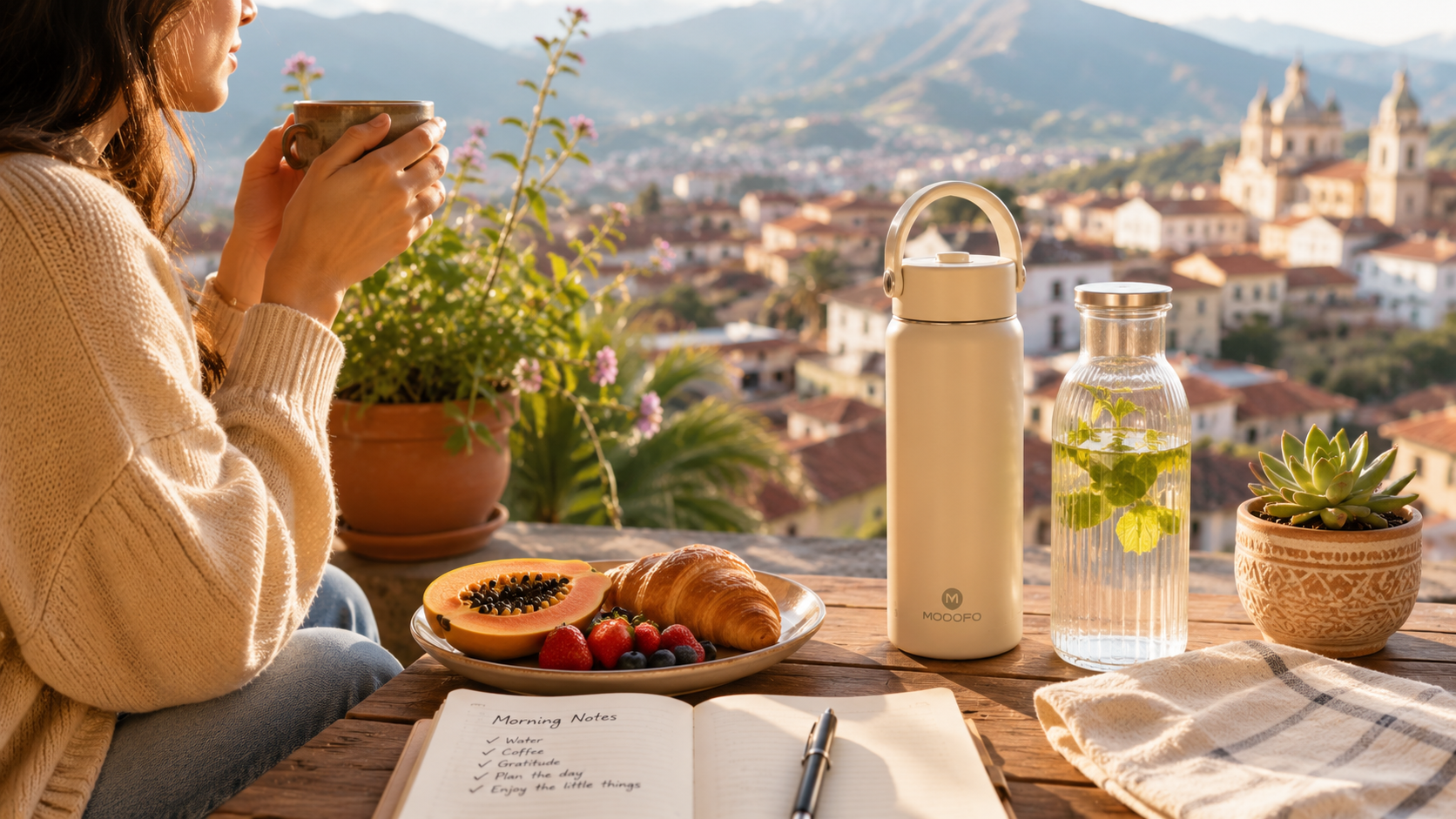
Across South America, mornings tend to unfold at a gentler pace than many people expect. Fresh bread from the local bakery, conversations on a sunny terrace, the aroma of freshly brewed coffee, and a few quiet moments before work all reflect a lifestyle that values presence over speed.
Yet as conversations around health and hydration become more common, one question appears again and again:
Should you drink water before your morning coffee, or is coffee the perfect way to start the day?
The answer is less about choosing one over the other and more about understanding how both can fit naturally into a balanced morning routine.
Coffee and Water Aren't Competitors
One common misconception is that coffee and water compete with each other.
In reality, they serve different purposes.
Coffee offers aroma, flavor, comfort, and for many people, a welcome sense of focus as the day begins.
Water supports hydration after several hours of sleep, when most people have gone without drinking anything overnight.
Rather than replacing one with the other, many nutrition experts suggest thinking of them as complementary parts of the same morning.
A glass of water refreshes the body.
A cup of coffee refreshes the mind.
Together, they create a routine that feels both enjoyable and practical.
Organizations such as the European Food Safety Authority (EFSA) and Harvard T.H. Chan School of Public Health emphasize that total daily fluid intake comes from a variety of beverages and foods, while plain water remains the simplest way to stay hydrated throughout the day.
Coffee can certainly contribute to overall fluid intake for most healthy adults, but water continues to play a unique role because it contains no added sugar, calories, or stimulants.
Why Morning Hydration Feels So Refreshing
After a full night's sleep, it's natural for many people to wake up feeling slightly thirsty.
Breathing throughout the night, warm indoor heating during winter, or dry spring air can all contribute to mild fluid loss.
This doesn't necessarily mean someone is dehydrated, but it does explain why the first glass of water often feels particularly satisfying.
Starting the morning with water offers several practical benefits:
-
It is easy to build into an everyday habit.
-
It encourages people to begin drinking fluids early in the day.
-
It pairs naturally with breakfast and morning coffee.
-
It requires no preparation and is always available.
Instead of viewing hydration as a strict health rule, many people simply find that drinking water before leaving home helps them feel more comfortable during busy mornings.
A South American Morning: Slowing Down Before the Day Begins
One of the most enjoyable aspects of traveling through South America is discovering how different cultures approach the start of the day.
In Argentina and Uruguay, people often begin with simple breakfasts accompanied by coffee or tea before the rhythm of work gradually takes over.
In Brazil, a small but flavorful cafézinho is more than a source of caffeine—it is a gesture of hospitality, frequently shared with family, friends, or colleagues.
Across Colombia's coffee-growing regions, mornings are closely connected to freshly roasted beans and local traditions that celebrate craftsmanship rather than convenience.
Despite these regional differences, one idea appears again and again:
Morning isn't meant to be rushed.
Instead of immediately checking emails or leaving the house in a hurry, many people create small rituals that help them transition into the day.
These rituals might include:
-
Opening the windows to let in fresh spring air.
-
Watering plants on the balcony.
-
Preparing breakfast slowly.
-
Reading a few pages of a book.
-
Enjoying coffee without distractions.
-
Filling a reusable bottle before heading outside.
None of these habits takes very long.
Yet together they create a calmer beginning that often influences the rest of the day.
Which Comes First?
The truth is that there isn't a universally "correct" answer.
Some people naturally reach for water first because they enjoy feeling refreshed after waking.
Others look forward to their morning coffee and prefer to enjoy it before anything else.
Both routines can work well.
For many people, however, a simple sequence feels particularly comfortable:
-
Drink a glass of water after waking.
-
Prepare breakfast.
-
Enjoy coffee slowly rather than rushing through it.
-
Fill a reusable bottle before leaving home.
This approach doesn't require strict rules or complicated planning.
Instead, it creates a gentle rhythm that combines hydration with one of life's simplest pleasures.
Ultimately, consistency matters far more than perfection.
A sustainable routine is always more valuable than one that feels difficult to maintain.
Bringing Better Habits Into Everyday Life
Morning routines don't have to be dramatic to make a difference.
Sometimes the smallest habits become the ones that last the longest.
Keeping a reusable insulated bottle beside your keys.
Preparing fresh water before making coffee.
Taking five quiet minutes before checking your phone.
Choosing a favorite mug or tumbler that makes the experience more enjoyable.
These details may seem ordinary, yet they reflect a broader idea that is becoming increasingly popular around the world:
Well-being often grows from simple, repeatable routines rather than complicated lifestyle changes.
In many ways, this philosophy mirrors the relaxed rhythm of South American spring itself—longer mornings, warmer sunlight, fresh seasonal produce, and more opportunities to enjoy everyday moments outdoors.
Rather than asking whether coffee or water should "win," perhaps the better question is:
How can both become part of a morning that helps you feel ready for the day ahead?
Part 2 — Finding the Morning Rhythm That Works for You
Different Morning Drinks for Different Lifestyles
Coffee may be the morning favorite for millions of people, but it isn't the only way to begin the day.
Across South America, morning beverages often reflect local traditions, climate, and personal routines. Rather than searching for a single "perfect" drink, many people naturally choose beverages that match the pace of their morning.
For example:
For Busy Professionals
A freshly brewed coffee followed by a bottle of water can create a practical balance between enjoyment and hydration before commuting.
For Outdoor Enthusiasts
People planning a morning hike, cycling trip, or weekend drive often begin with water before carrying coffee or herbal tea in an insulated tumbler for later.
For Slow Weekend Mornings
Many families enjoy fruit-infused water with breakfast before sharing coffee together on a balcony or in the garden.
For Cooler Spring Mornings
In southern regions of Argentina or Chile, warm herbal teas or yerba mate may accompany breakfast alongside plain water, offering both comfort and warmth without replacing daily hydration.
Morning routines don't need to look identical. The most enjoyable habits are often the ones that naturally fit everyday life.
Coffee, Mate, Tea, or Water?
South America offers one of the world's richest beverage cultures.
Coffee is only part of the story.
Each drink brings its own character and tradition.
| Beverage | Best Time | Lifestyle Experience |
|---|---|---|
| Plain Water | Immediately after waking | Refreshing, simple, supports daily hydration |
| Coffee | Breakfast or early work hours | Focus, aroma, and a familiar morning ritual |
| Yerba Mate | Shared mornings or outdoor gatherings | Social tradition, gentle energy, conversation |
| Herbal Tea | Relaxed mornings or cooler days | Comfort and calm |
| Fruit-Infused Water | Spring and summer mornings | Light flavor that encourages regular drinking |
Rather than asking which beverage is "better," consider what each contributes to your morning.
Water prepares you for the day.
Coffee awakens the senses.
Tea slows the pace.
Mate often brings people together.
The best routine is rarely about choosing one—it is about enjoying each beverage at the right moment.
Creating a Morning Hydration Habit That Lasts
Health experts often agree on one important point:
Healthy habits are easier to maintain when they become part of an existing routine.
Instead of setting reminders to drink water, many people simply connect hydration to activities they already perform every morning.
For example:
-
Drink a glass of water after opening the curtains.
-
Fill your reusable bottle while preparing breakfast.
-
Enjoy coffee after finishing your first glass of water.
-
Refill your bottle before leaving home.
-
Keep your bottle visible on your desk or in your car.
Behavioral research has consistently shown that "habit stacking"—linking a new habit to an existing one—can make healthy routines easier to maintain over time.
Hydration doesn't need to feel like another task.
It simply becomes part of the rhythm of the morning.
Preparing for the Day Beyond the Kitchen
Morning doesn't end when you leave the house.
Whether commuting to work, driving through the countryside, attending university, or exploring a new city, carrying water throughout the day makes staying hydrated much more convenient.
Many people discover that they drink significantly more water when it is already within reach.
A reusable insulated bottle also adapts naturally to different parts of the day.
The same bottle that holds coffee during the morning commute can later be refilled with cold water, sparkling water, or fruit-infused drinks during the afternoon.
Instead of carrying several disposable cups, one well-designed bottle often supports an entire day's routine.
Why Beautiful Everyday Objects Encourage Better Habits
An interesting trend has emerged in recent years.
People don't only choose drinkware based on insulation performance or capacity.
They increasingly choose bottles that they genuinely enjoy carrying.
A favorite bottle often becomes part of everyday life.
It travels to work.
It sits beside a laptop.
It accompanies weekend hikes.
It appears in family picnics and road trips.
While scientific research on aesthetics and hydration is still developing, studies in behavioral design suggest that people are more likely to continue using products that provide positive emotional experiences and integrate smoothly into daily routines.
In other words, a bottle that feels pleasant to use is often a bottle that gets used more frequently.
Sometimes improving a healthy habit isn't about adding more discipline.
It's simply about making the habit more enjoyable.
A South American Lesson in Slow Mornings
One of the most memorable aspects of visiting South America is not only the scenery but also the rhythm of everyday life.
In many neighborhoods, mornings unfold gradually.
Coffee is rarely consumed while rushing down the street.
Instead, people pause.
They greet neighbors.
They sit in cafés.
They enjoy breakfast with family.
They appreciate small moments before beginning a busy day.
This slower pace offers an important reminder.
Well-being doesn't always require dramatic lifestyle changes.
Sometimes it begins with five quiet minutes.
A glass of water.
Freshly brewed coffee.
Sunlight through the window.
A reusable bottle filled before leaving home.
These simple rituals create a sense of intention that often lasts long after breakfast has finished.
Small Morning Habits with a Lasting Impact
You don't need an elaborate wellness routine to start the day well.
Small, consistent habits are often enough.
Consider trying one or two of these ideas:
-
Drink water before checking your phone.
-
Open a window while preparing breakfast.
-
Pair your morning coffee with a glass of water.
-
Keep seasonal fruit on the breakfast table.
-
Prepare fruit-infused water for the afternoon.
-
Carry a reusable bottle whenever you leave home.
-
Spend a few quiet moments outdoors before starting work.
None of these habits is complicated.
Together, they can make mornings feel calmer, more comfortable, and more enjoyable.
Conclusion: It's Never Really Coffee or Water
The debate over whether coffee or water should come first often misses the bigger picture.
Both have a place in a balanced morning.
Water refreshes after a night's sleep.
Coffee offers warmth, flavor, and a familiar ritual.
Together, they support a morning that feels less rushed and more intentional.
Across South America, where coffee traditions, yerba mate culture, and relaxed breakfasts remain an important part of everyday life, mornings remind us that good habits are rarely built through strict rules.
They grow through consistency.
They grow through enjoyment.
And they grow through simple routines repeated day after day.
So tomorrow morning, instead of asking which drink should come first, ask a different question:
What kind of morning do I want to create?
A glass of water.
A favorite cup of coffee.
A reusable bottle ready for the day ahead.
Sometimes, that's all it takes to begin well.
References
This article is informed by publicly available guidance and research from reputable health and nutrition organizations, including:
-
World Health Organization (WHO). Guidelines for Drinking-water Quality.
-
European Food Safety Authority (EFSA). Dietary Reference Values for Water.
-
Harvard T.H. Chan School of Public Health. The Nutrition Source: Healthy Hydration.
-
U.S. Centers for Disease Control and Prevention (CDC). Healthy hydration recommendations.
-
Pan American Health Organization (PAHO). Resources on healthy lifestyles and nutrition in the Americas.
-
Wood, W., & Neal, D. T. Research on habit formation and everyday behavioral routines.
-
International Journal of Environmental Research and Public Health. Studies on hydration, dietary behaviors, and lifestyle habits.
Editor's Note: Individual hydration needs vary depending on age, climate, physical activity, health status, and dietary habits. The suggestions in this article are intended as general lifestyle guidance rather than medical advice. If you have a medical condition affecting fluid intake or caffeine consumption, consult a qualified healthcare professional.