
Understanding Flavor, Materials, and Everyday Drinkware Choices
Part 1 — The Science Behind Taste, Temperature, and Your Reusable Bottle
Introduction: Have You Ever Noticed the Difference?
Imagine preparing the same homemade lemon water twice.
One serving is poured into a clear glass.
The other goes into a stainless steel insulated bottle before you leave for work.
An hour later, you take a sip.
Both drinks were made from the same ingredients.
The same water.
The same lemon.
The same amount of ice.
Yet many people describe the flavor differently.
Some say the drink in the glass tastes brighter and fresher.
Others notice that the drink from the insulated bottle feels smoother but slightly less aromatic.
So what actually changed?
Did the stainless steel alter the flavor?
Or is something else happening?
The answer is more interesting—and more practical—than many people expect.
For modern food-grade stainless steel bottles, especially those made from 304 or 316 stainless steel, the metal itself is generally not responsible for changing the taste of citrus drinks. Instead, the drinking experience is influenced by several everyday factors working together, including temperature, aroma, bottle design, previous drink residues, and how long the beverage is stored.
Understanding these factors can help you enjoy citrus drinks while also taking better care of your reusable bottle.
The Myth: "Metal Makes Citrus Taste Strange"
One of the most common beliefs surrounding reusable bottles is that acidic drinks like lemon water or orange juice "react with metal" and therefore taste different.
While this idea has been repeated online for years, it often lacks important context.
High-quality stainless steel is specifically designed to resist corrosion and minimize interactions with foods and beverages under normal everyday use.
Food-grade stainless steel forms a thin protective chromium oxide layer on its surface. This invisible layer helps prevent direct contact between the beverage and the underlying metal, making stainless steel a common material for kitchen cookware, food preparation equipment, and reusable drinkware.
This doesn't mean every bottle performs identically.
Lower-quality materials, damaged interior coatings (if present), or poorly maintained bottles may influence the drinking experience over time.
However, for a well-made insulated bottle in good condition, the noticeable difference in flavor is usually explained by other factors rather than chemical reactions.
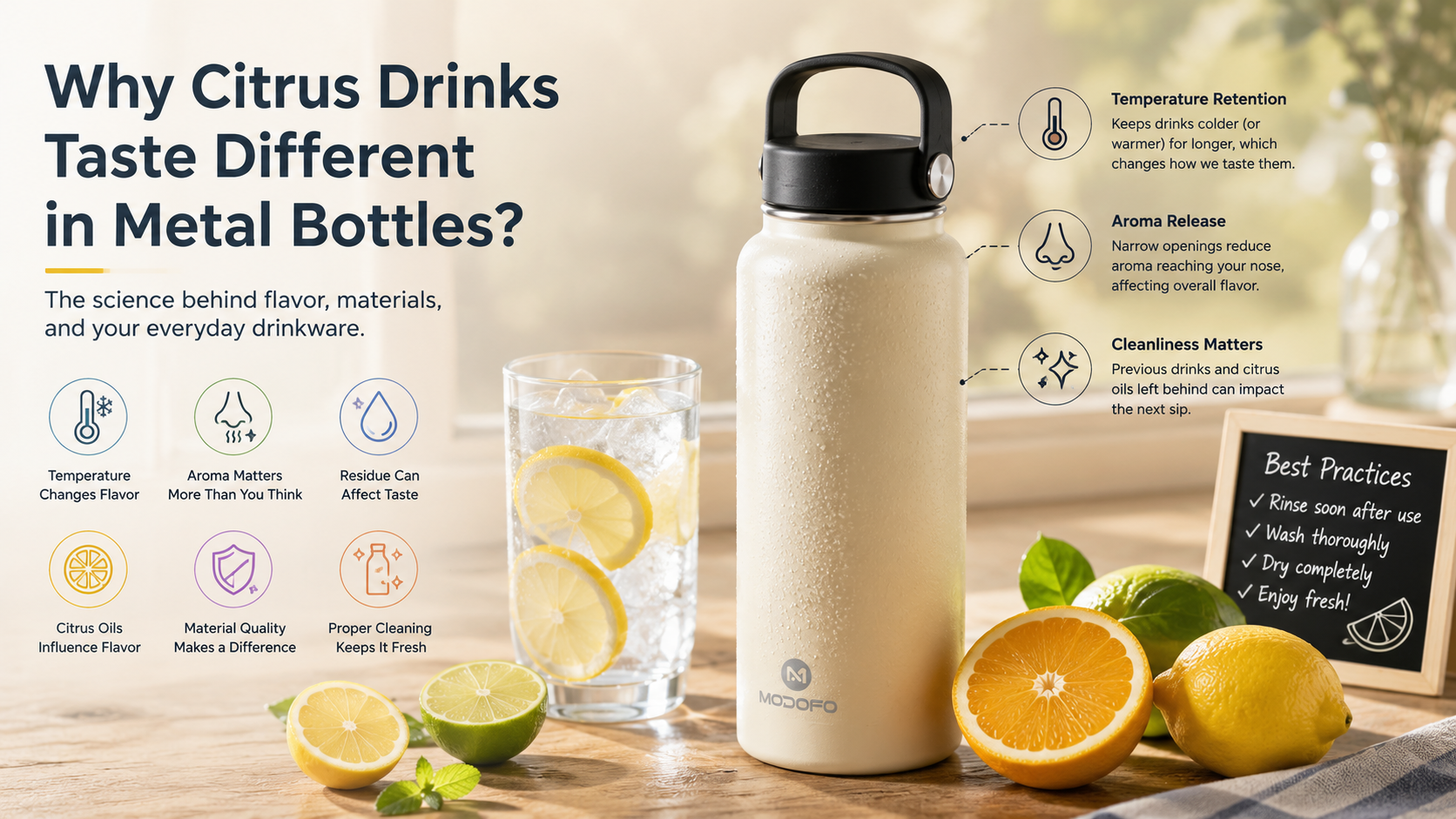
Temperature Changes How Citrus Flavors Are Perceived
One of the biggest reasons citrus drinks seem different in an insulated bottle is surprisingly simple:
Temperature changes the way we experience flavor.
Food scientists have long understood that temperature influences our perception of sweetness, acidity, bitterness, and aroma.
For example:
- Cold temperatures can reduce sweetness.
- Acidity often feels sharper in chilled drinks.
- Warm beverages release aromatic compounds more quickly.
- Ice-cold drinks may seem cleaner but less fragrant.
Because insulated bottles maintain temperature for many hours, your lemon water may stay much colder than the same drink served in an open glass.
The ingredients haven't changed.
Your taste perception has.
This explains why freshly squeezed orange juice may taste slightly sweeter at room temperature but feel brighter and more refreshing when served cold.
Neither version is objectively better—they simply emphasize different characteristics of the same drink.
Aroma Is Half the Flavor Experience
Many people think taste comes only from the tongue.
In reality, much of what we describe as "flavor" actually comes from smell.
When drinking from an open glass, aromatic compounds naturally rise toward your nose before each sip.
With insulated bottles, especially those featuring narrow openings, flip lids, or straw lids, fewer aromas reach your senses at the same time.
As a result, the drink may appear less vibrant even though its ingredients remain unchanged.
Consider drinking freshly cut oranges.
Before tasting them, you immediately notice the citrus fragrance.
That aroma prepares your brain for the flavor.
If less aroma reaches your nose, the same juice may feel milder.
Bottle design therefore plays a surprisingly important role in flavor perception.
This is one reason wine glasses, coffee cups, and tea bowls are carefully designed to enhance aroma.
Reusable bottles prioritize portability, insulation, and convenience rather than maximizing fragrance.
Citrus Essential Oils Add Another Layer
Lemons, oranges, grapefruits, and limes contain more than juice.
Their peels are rich in natural essential oils that contribute significantly to the familiar citrus aroma.
When preparing beverages, these oils may enter the drink through:
- Fresh lemon slices
- Orange peel
- Lime zest
- Citrus garnishes
These volatile aromatic compounds gradually evaporate over time.
An open glass allows aromas to disperse quickly.
A closed insulated bottle traps much of the fragrance inside until you open it.
Interestingly, this means the first sip after opening the bottle may release a concentrated burst of citrus aroma.
After several sips, however, the overall aromatic experience may become less noticeable compared with drinking continuously from an open glass.
Again, this is not because stainless steel changes the drink.
It is simply the result of how aroma moves through different drinking vessels.
Yesterday's Coffee May Affect Today's Lemon Water
One factor that is often overlooked has nothing to do with citrus at all.
It's yesterday's drink.
Coffee.
Milk tea.
Protein shakes.
Fruit smoothies.
Even if a bottle appears clean, tiny amounts of residue can remain inside lids, silicone seals, drinking straws, or threaded caps if cleaning is incomplete.
These residues may subtly influence the aroma of the next beverage.
Imagine adding fresh lemon slices to water in a bottle that still carries a faint coffee aroma.
The citrus itself hasn't changed.
But your senses interpret both smells together, creating a different flavor experience.
This is why regular cleaning is just as important for preserving taste as it is for maintaining hygiene.
Not All Citrus Drinks Behave the Same
Although we often group citrus beverages together, they vary considerably in composition.
For example:
| Beverage | Characteristics | Bottle Care |
|---|---|---|
| Lemon Water | Light acidity, low sugar | Rinse after use |
| Orange Juice | Higher natural sugars | Wash thoroughly the same day |
| Grapefruit Juice | Strong citrus oils | Clean lid and silicone seal carefully |
| Lime Water | Refreshing with aromatic peel oils | Rinse and air dry |
| Sparkling Citrus Water | Carbonation plus acidity | Avoid storing for extended periods after opening |
Natural sugars, fruit pulp, and essential oils influence cleaning needs more than acidity alone.
A bottle used only for plain lemon water is generally easier to maintain than one regularly filled with fresh orange juice or citrus smoothies.
Understanding these differences helps extend the freshness of both your beverages and your reusable bottle.
Looking Beyond the Material
When people notice that citrus drinks taste different in an insulated bottle, it's tempting to blame the material itself.
But as we've seen, the experience is shaped by many interconnected factors:
- Temperature retention
- Aroma release
- Bottle opening design
- Previous beverage residues
- Natural citrus oils
- Individual taste perception
In many cases, stainless steel isn't changing the drink.
Instead, it is changing the way you experience the drink.
And that distinction is important.
Because once you understand the science behind flavor perception, you can make better choices about both your beverages and your drinkware.
In Part 2, we'll compare stainless steel with glass, ceramic, and Tritan bottles, explore common myths about citrus drinks and reusable drinkware, discuss the best practices for enjoying citrus beverages on the go, and share practical cleaning tips to keep every sip tasting fresh.
Part 2 — Choosing the Right Bottle, Caring for Citrus Drinks, and Enjoying Better Flavor Every Day
Glass, Stainless Steel, Ceramic, or Tritan?
If stainless steel doesn't significantly change the chemistry of citrus drinks, why do different bottles still create different drinking experiences?
The answer lies in how each material supports different priorities.
Rather than asking "Which material is best?", it's often more useful to ask:
"Which material fits today's activity?"
| Material | Best For | Flavor Experience | Everyday Benefits |
|---|---|---|---|
| Glass | Home, office, dining | Pure, open aroma | Easy to clean and highly neutral |
| Stainless Steel | Commuting, travel, outdoor activities | Excellent temperature retention with slightly reduced aroma due to enclosed design | Durable and long-lasting |
| Ceramic-Lined Bottles | Tea, coffee, citrus beverages | Neutral taste with excellent heat retention | Comfortable for hot and cold drinks |
| Tritan Plastic | Sports, school, lightweight travel | Neutral flavor when properly maintained | Lightweight and impact resistant |
Each material offers a different balance between convenience, insulation, portability, and drinking experience.
For example:
- A glass may provide the richest citrus aroma while enjoying breakfast at home.
- An insulated stainless steel bottle keeps lemon water refreshingly cold throughout an afternoon hike.
- A ceramic-lined tumbler offers an excellent option for people who enjoy both tea and fruit-infused drinks.
- A Tritan bottle is practical for cycling, school, or everyday commuting where lightweight performance matters.
Rather than replacing one another, these materials complement different lifestyles.
Common Myths About Citrus Drinks and Stainless Steel
As reusable drinkware becomes more popular, misinformation spreads just as quickly.
Let's separate a few common myths from everyday reality.
Myth 1: Lemon Water Damages Every Stainless Steel Bottle
Reality:
Food-grade 304 and 316 stainless steel are designed for everyday food and beverage contact.
Drinking lemon water during the day is generally considered appropriate when using quality bottles that are properly maintained.
Problems are more likely to occur when beverages are left inside for extended periods without cleaning, regardless of whether they contain citrus.
Myth 2: Orange Juice Should Never Go Into an Insulated Bottle
Reality:
Fresh orange juice can certainly be carried in an insulated bottle for short outings.
However, because orange juice contains natural sugars and pulp, it should not remain inside the bottle for long periods, especially in warm conditions.
Cleaning the bottle soon after use helps preserve freshness and prevent lingering odors.
Myth 3: Citrus Always Leaves Permanent Odors
Reality:
Most citrus aromas disappear after normal washing.
Persistent odors usually result from residues trapped around silicone seals, drinking straws, threaded lids, or poorly dried components rather than the stainless steel itself.
Myth 4: Stainless Steel Changes the Chemistry of Every Drink
Reality:
Under normal everyday use, quality food-grade stainless steel is chemically stable.
The differences people notice are far more often related to temperature, aroma release, drinking design, and personal taste perception than to chemical reactions.
The Best Citrus Drinks for Everyday Reusable Bottles
Citrus beverages remain some of the healthiest and most refreshing options for daily hydration.
Here are a few that work particularly well in reusable drinkware.
Lemon Water
A timeless choice that is simple to prepare.
Fresh lemon slices provide a light citrus aroma while encouraging many people to drink more water throughout the day.
Orange-Infused Water
Instead of using juice, adding fresh orange slices creates subtle flavor with less sugar while keeping the bottle easier to clean.
Grapefruit and Mint Water
Popular during warmer seasons, this combination offers a refreshing balance of citrus and herbal notes.
Sparkling Citrus Water
Perfect for picnics or weekend lunches.
For the best experience, consume it within a few hours after opening to preserve carbonation.
Citrus Herbal Tea
Lemon, orange peel, chamomile, hibiscus, or ginger teas combine particularly well with insulated bottles, making them excellent choices for cooler mornings or evenings.
Bottle Care After Citrus Drinks
Keeping citrus beverages tasting fresh doesn't require complicated routines.
A few simple habits are usually enough.
Rinse Soon After Finishing
Even a quick rinse removes most fruit residue before sugars begin drying onto interior surfaces.
Wash With Mild Dish Soap
Warm water and a gentle dish soap remove natural fruit oils without damaging stainless steel.
Clean the Lid Carefully
Many lingering odors come from hidden areas inside lids rather than the bottle body.
Pay particular attention to:
- Silicone gaskets
- Straw openings
- Drinking spouts
- Threaded caps
Allow Everything to Dry Completely
Moisture trapped inside closed bottles can encourage unpleasant odors over time.
Whenever possible, allow all components to air dry before reassembling.
Avoid Storing Leftover Juice Overnight
Fresh fruit juices are best enjoyed soon after preparation.
Leaving juice inside any reusable bottle for extended periods may affect flavor, increase cleaning difficulty, and encourage residue buildup.
Flavor Is More Than Taste
Scientists increasingly recognize that eating and drinking involve multiple senses working together.
Flavor is influenced by:
- Taste
- Smell
- Temperature
- Texture
- Visual appearance
- Expectations
- Previous experiences
This explains why the same citrus drink may feel completely different depending on:
- The bottle you choose
- The surrounding temperature
- Whether you're relaxing at home or hiking outdoors
- The design of the drinking lid
- Even your mood that day
Reusable drinkware doesn't simply carry beverages.
It becomes part of the overall drinking experience.
Small Choices That Improve Everyday Hydration
Many people discover that they drink more water simply because they enjoy using their bottle.
Adding citrus slices, seasonal fruit, or fresh herbs can make plain water feel more interesting without relying on sugary beverages.
Simple combinations include:
- Lemon + Mint
- Orange + Rosemary
- Lime + Cucumber
- Grapefruit + Basil
- Lemon + Ginger
- Orange + Cinnamon (served warm)
These recipes not only create refreshing flavors but also encourage regular hydration throughout workdays, road trips, outdoor walks, and weekend adventures.
Sometimes improving hydration isn't about drinking more.
It's about making water more enjoyable.
Conclusion: The Bottle Doesn't Tell the Whole Story
So why do citrus drinks taste different in metal bottles?
The answer isn't simply "because of the metal."
Instead, the experience reflects a combination of:
- Temperature retention
- Aroma release
- Bottle design
- Beverage ingredients
- Cleaning habits
- Individual perception
Modern food-grade stainless steel bottles are designed to safely carry a wide variety of everyday beverages, including citrus drinks.
Understanding how flavor works allows us to appreciate that no single bottle is perfect for every occasion.
A glass may highlight aroma during breakfast.
An insulated bottle keeps lemon water cold during a long drive.
A ceramic-lined tumbler pairs beautifully with afternoon citrus tea.
Each offers a different experience—not because one is superior, but because each supports a different moment in daily life.
By choosing the right drinkware, cleaning it consistently, and matching beverages to your lifestyle, you can enjoy every sip just as it was intended.
References
This article is based on publicly available research and guidance from recognized scientific and food organizations, including:
- World Health Organization (WHO). Guidelines for Drinking-water Quality.
- European Food Safety Authority (EFSA). Dietary Reference Values for Water.
- Harvard T.H. Chan School of Public Health. The Nutrition Source: Healthy Hydration.
- International Stainless Steel Forum (ISSF). Information on food-grade stainless steel and corrosion resistance.
- ASM International. Properties and Applications of Stainless Steel in Food Contact Materials.
- International Journal of Gastronomy and Food Science. Research on aroma perception, flavor science, and multisensory eating.
- Food Quality and Preference. Studies examining how temperature and aroma influence taste perception.
- Specialty Coffee Association (SCA). Research on aroma, beverage temperature, and sensory evaluation.
Editor's Note: Flavor perception is highly individual. Factors such as temperature preference, beverage preparation, bottle cleanliness, and personal sensitivity to aroma all influence how a drink tastes. The recommendations in this article are intended to help readers better understand everyday drinkware use and maintain reusable bottles for the best possible drinking experience.