
Introduction: Why Most People Choose the Wrong Bottle
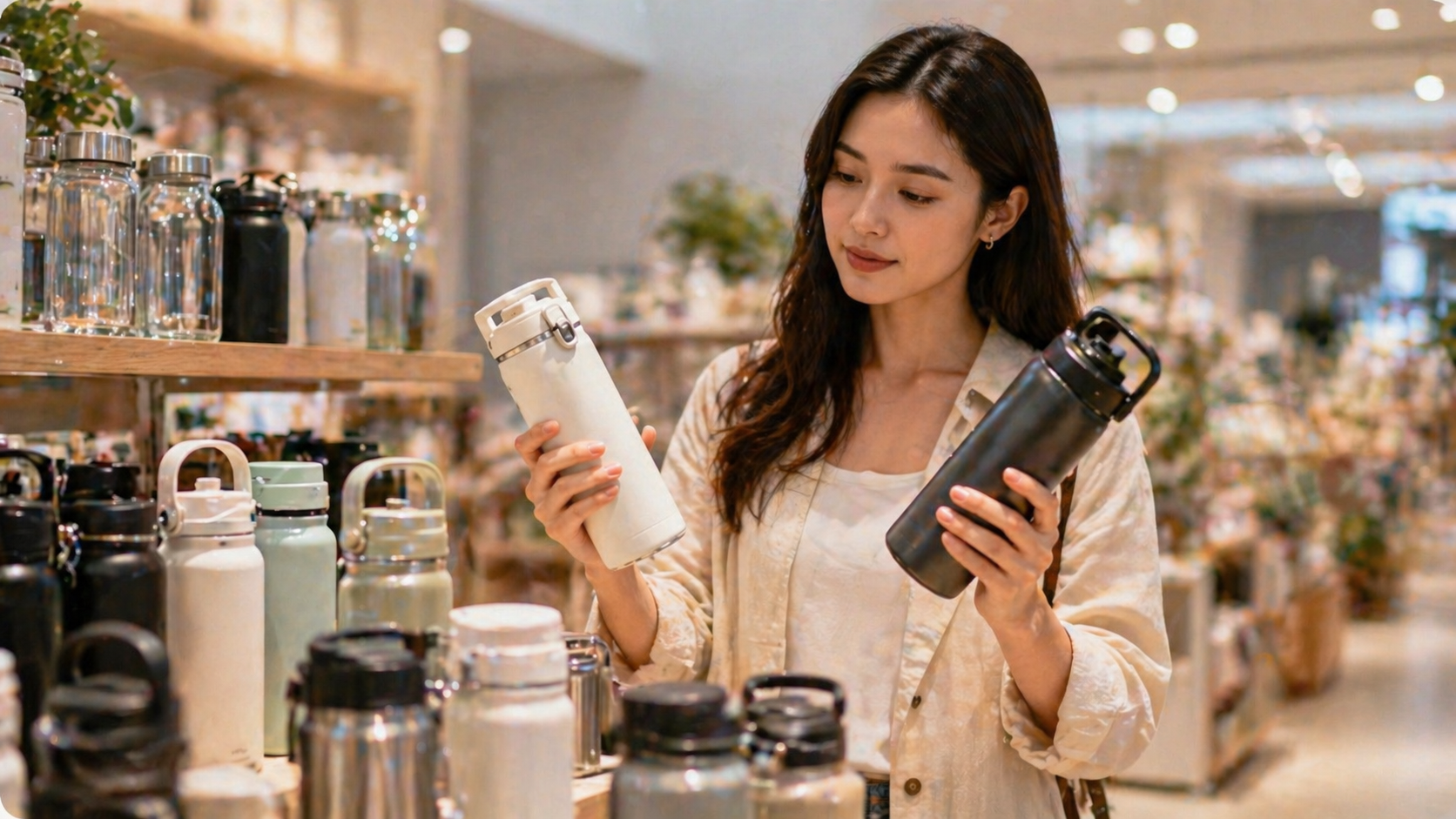
Walk into any shopping mall, and you will find an entire section dedicated to drinkware—rows of bottles, tumblers, flasks, and mugs in different shapes, sizes, and materials.
At first glance, the decision seems simple. You pick something that looks good, feels reasonable in price, and maybe fits your bag.
But a week later, many of those same bottles are no longer being used.
They sit on a shelf. Or stay at the bottom of a bag. Or get replaced by something else.
The problem is not the lack of options.
The problem is that most people choose drinkware based on how it looks in a store—not how it works in real life.
Because drinkware is not just a product. It is a daily-use tool.
And daily-use tools follow a different rule:
The best one is not the one you like the most in the store, but the one you use the most in your everyday life.
This guide will help you choose better drinkware—not by focusing on trends or brands, but by understanding how design, behavior, and real-world usage come together.
1. What Most People Look At (And Why It Often Fails)
1.1 Appearance: The First—and Weakest—Filter
The first thing people notice is appearance.
- Color
- Shape
- Finish
- Branding
A matte stainless steel bottle may feel premium. A pastel-colored tumbler may feel trendy. A minimal design may feel modern.
But appearance rarely determines long-term usage.
For example:
You might choose a beautifully designed bottle with a sleek, minimal look. But if the lid requires two hands to open, or if drinking from it feels awkward, you will gradually stop using it.
Aesthetic appeal may drive the purchase. But usability determines whether the product stays in your routine.
1.2 Capacity: Bigger Isn’t Always Better
Another common decision factor is size.
People often assume:
- Bigger bottle = better hydration
But this is not always true.
A large bottle can be:
- Heavy to carry
- Difficult to fit in a bag
- Inconvenient to use frequently
In many cases, a slightly smaller bottle that is easier to carry and use will result in more consistent hydration.
1.3 Price: A Misleading Indicator
Price is often used as a shortcut for quality.
But in drinkware, price alone does not determine performance.
You can find:
- Expensive bottles that are inconvenient to use
- Affordable bottles that fit your routine perfectly
The real question is not:
“How much does it cost?”
But:
“How well does it fit your daily behavior?”
2. The Real Purpose of Drinkware: Supporting Daily Hydration
Before choosing a bottle, it helps to understand what it is actually supposed to do.
At its core, drinkware exists to support hydration behavior.
Not just storing water—but making it easier to drink consistently throughout the day.
This introduces a key shift:
You are not choosing a container. You are choosing a system that influences how often you drink water.
A good bottle reduces friction.
A poor one adds friction.
And small amounts of friction—repeated daily—change behavior.
3. The Core Factors That Actually Matter
3.1 Ease of Drinking: The Most Important Factor
If drinking feels inconvenient, you will drink less.
This sounds obvious, but it is often overlooked.
Consider two designs:
- A screw-top bottle that requires multiple steps to open
- A one-click lid that opens instantly
Even if the difference seems small, over time it matters.
A bottle that is easy to drink from encourages frequent use.
A bottle that requires effort discourages it.
3.2 Accessibility: Can You Use It Without Thinking?
Accessibility goes beyond the act of drinking.
It includes:
- How quickly you can grab the bottle
- Whether you can open it with one hand
- How naturally it fits into your routine
For example:
- If you need to stop what you’re doing to open the bottle, you are less likely to drink
- If you can take a sip without interrupting your activity, hydration becomes effortless
3.3 Weight and Portability
A bottle that feels slightly too heavy can become a burden.
This is especially important for:
- Daily commuters
- Students
- People who carry bags for long periods
A heavy bottle often gets left behind—not because it is bad, but because it is inconvenient.
3.4 Cleaning and Maintenance
Many people ignore this factor at the point of purchase.
But over time, it becomes critical.
A bottle that is hard to clean will eventually be used less.
Examples:
- Narrow openings that are difficult to reach
- Complex lid structures with multiple parts
- Materials that retain odor
In contrast, a simple design that is easy to clean encourages long-term use.
3.5 Durability and Material Quality
Drinkware is used frequently and often transported.
Durability matters.
Common considerations include:
- Resistance to dents or scratches
- Leak-proof performance
- Material stability over time
A durable bottle reduces the need for replacement—and builds trust in daily use.
3.6 Behavioral Fit: The Most Overlooked Factor
Even a well-designed bottle can fail if it does not match your habits.
This is where many decisions go wrong.
You need to ask:
- How do I naturally drink water?
There are two common patterns:
- Frequent small sips throughout the day
- Occasional larger drinks when thirsty
Different designs support different behaviors.
If your bottle does not align with your natural pattern, you will not use it consistently.
4. Matching Drinkware to Your Daily Routine
4.1 Office and Desk Work
In office settings, people tend to:
- Sit for long periods
- Drink water intermittently
Best features:
- Easy access
- One-hand operation
- Encourages small, frequent sips
4.2 Commuting and Urban Mobility
For commuting:
- Portability becomes critical
- Space and weight matter
Best features:
- Compact size
- Leak-proof design
- Easy to carry or store
4.3 Fitness and Outdoor Activities
During physical activity:
- Hydration needs are more immediate
- Larger intake may be required
Best features:
- High flow rate
- Quick access
- Durable construction
4.4 At Home
At home, convenience is less about portability and more about comfort.
Best features:
- Larger capacity
- Comfortable grip
- Easy refilling
5. Real Mall Comparison: A Practical Example
Imagine you are choosing between three bottles in a store.
Bottle A
- Stylish design
- Narrow opening
- Requires twisting to open
Outcome:
Used occasionally, then gradually abandoned.
Bottle B
- Simple design
- Easy one-hand operation
- Comfortable to hold
Outcome:
Used daily, becomes part of routine.
Bottle C
- Low cost
- Basic material
- Limited durability
Outcome:
Used temporarily, then replaced.
Insight
The most successful product is not:
- The most attractive
- The cheapest
It is the one that fits seamlessly into daily behavior.
6. What You Should Actually Do in a Mall
6.1 Test the Product Physically
- Hold it
- Open it
- Simulate drinking
Do not rely on appearance alone.
6.2 Compare Multiple Options
Visit more than one store.
Small differences become clearer when you compare.
6.3 Think in Terms of Usage, Not Features
Instead of focusing on specifications, ask:
- Will this make drinking easier?
- Will I use this without thinking?
6.4 Use the “Carry Test”
Imagine carrying it for an entire day.
Would it feel like a burden?
7. Common Mistakes to Avoid
- Choosing based on appearance alone
- Buying oversized bottles without considering weight
- Ignoring cleaning difficulty
- Choosing designs that don’t match your habits
8. The Economics of Better Drinkware
8.1 Cost Per Use
A bottle used every day quickly justifies its cost.
8.2 Avoiding Replacement Cycles
Low-quality bottles often lead to repeated purchases.
8.3 Long-Term Value
Better design leads to:
- More consistent use
- Better hydration habits
- Fewer replacements
9. Building a Simple Decision Checklist
Before buying, ask:
- Is it easy to drink from?
- Can I use it with one hand?
- Is it comfortable to carry?
- Is it easy to clean?
- Does it match how I naturally drink?
If most answers are “yes,” it is likely a good choice.
10. The Bigger Insight: Drinkware Shapes Behavior
Drinkware is not passive.
It actively influences:
- How often you drink
- How comfortable it feels
- Whether hydration becomes a habit
Over time, these small interactions shape daily routines.
Conclusion: The Best Bottle Is the One You Use Without Thinking
Choosing drinkware is not about finding the most impressive option.
It is about finding the most usable one.
A good bottle disappears into your routine.
A bad one creates small points of resistance.
And those small differences—repeated every day—define the outcome.
The best drinkware is not the one you notice in a store, but the one you stop noticing because it fits perfectly into your life.