
Small Changes That Can Make Everyday Life Feel Better
Many people assume that living comfortably requires major investments.
A larger home, expensive furniture, luxury décor, or the latest technology are often seen as the keys to a better lifestyle.
Yet when people reflect on the moments that make their day feel pleasant, peaceful, or productive, they rarely mention those big purchases.
Instead, comfort often comes from much smaller things:
- A chair that supports your back properly
- A favorite mug or water bottle within reach
- A tidy desk that reduces distractions
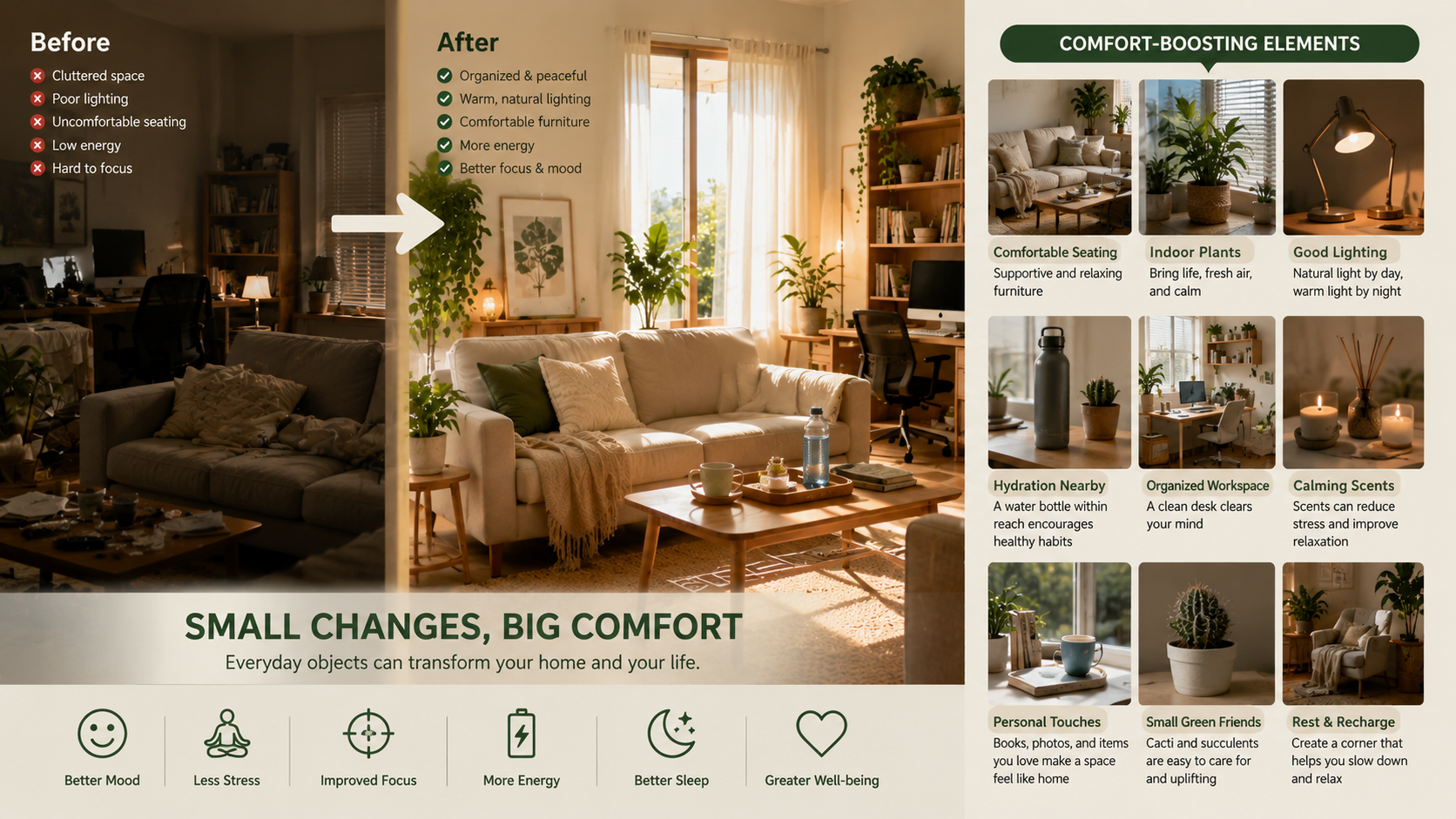
- Natural sunlight entering through a window
- A small plant that adds life to a room
- A comfortable reading corner after a long day
These daily objects may seem insignificant on their own, but together they shape our environment and influence how we feel, think, and interact with the world around us.
The truth is that comfort is rarely created overnight. It is often built through hundreds of small decisions that quietly improve everyday living.
This article explores how everyday objects influence comfort, why certain items make life feel easier, and how simple adjustments can create a more enjoyable home environment.
Why Small Objects Matter More Than We Think
When discussing quality of life, people often focus on major events and achievements.
However, much of our daily experience is shaped by repeated interactions with familiar objects.
Think about how many times you touch or use these items every day:
- Your chair
- Your desk
- Your water bottle
- Your phone
- Your keyboard
- Your sofa
- Your bed
- Your lighting
Each interaction may last only seconds.
But over weeks, months, and years, these experiences accumulate.
A chair that causes discomfort may only bother you slightly at first. After months of daily use, however, that discomfort becomes part of your routine.
Likewise, a pleasant object that supports your lifestyle can improve your day repeatedly without demanding attention.
Comfort often comes from reducing friction.
The easier it is to perform everyday tasks, the less mental energy we spend overcoming small frustrations.
The Hidden Cost of Everyday Friction
Most people notice major inconveniences.
Few notice small ones.
For example:
- A drawer that never closes properly
- A cluttered countertop
- A chair that's slightly too low
- A water bottle that constantly leaks
- A lamp that's too bright at night
Individually, these issues seem minor.
Collectively, they create a subtle sense of irritation that can affect mood, focus, and overall satisfaction.
Behavioral researchers often discuss the concept of "micro-stressors"—small recurring annoyances that accumulate over time.
Many of these stressors originate not from people but from our physical surroundings.
When our environment constantly creates tiny obstacles, daily life becomes more mentally exhausting.
Conversely, when objects work smoothly and support our routines, life feels easier.
Objects That Quietly Improve Everyday Comfort
Some items contribute to comfort far more than their cost or size might suggest.
A Comfortable Sofa Is More Than Furniture
The sofa is often the emotional center of a home.
It is where people:
- Relax after work
- Read books
- Watch movies
- Spend time with family
- Take short breaks
An uncomfortable sofa can make relaxation difficult.
A supportive sofa encourages recovery and rest.
When choosing a sofa, consider:
Seat Depth
Too deep and it may strain posture.
Too shallow and it may feel restrictive.
Cushion Firmness
Extremely soft cushions may feel pleasant initially but provide less support over time.
Balanced support is often more comfortable for long-term use.
Back Support
A well-designed backrest can improve relaxation significantly.
The Power of a Water Bottle Within Reach
Many people know they should drink more water.
The challenge is often not knowledge.
It is convenience.
When water is easily accessible, people are more likely to stay hydrated throughout the day.
A water bottle placed on:
- A work desk
- A bedside table
- A kitchen counter
serves as a visual reminder.
This simple habit can encourage more consistent hydration without requiring extra effort.
Many productivity communities and workplace discussions frequently mention that keeping water nearby reduces interruptions and helps maintain focus.
Sometimes the easiest way to improve a habit is simply to remove barriers.
Natural Light Changes Everything
Light affects how spaces feel.
A room filled with natural sunlight often feels:
- Larger
- Warmer
- More welcoming
Natural light can also make colors appear more vibrant and improve the overall atmosphere of a room.
Whenever possible:
- Open curtains during the day
- Position desks near windows
- Create seating areas that benefit from daylight
Small changes in lighting often produce noticeable improvements in comfort.
Indoor Plants Add More Than Decoration
Plants have become increasingly popular in modern homes.
Part of their appeal comes from introducing natural elements into indoor environments.
Popular beginner-friendly plants include:
- Snake Plant
- Pothos
- ZZ Plant
- Spider Plant
- Cactus
- Succulents
Beyond aesthetics, plants can create a visual break from screens, electronics, and hard surfaces.
Many people report that greenery helps rooms feel calmer and more inviting.
Caring for plants can also become a relaxing hobby that encourages mindfulness and routine.
The Home Office Comfort Factor
Modern work has changed dramatically.
Many people now spend long hours working from home or using computers.
As a result, workspace comfort has become increasingly important.
Monitor Placement
Monitor height affects posture.
A screen positioned too low often encourages neck strain.
A screen positioned correctly promotes a more natural viewing angle.
Even small adjustments can improve long-term comfort.
Chair Positioning
A quality chair is often one of the most valuable investments for a home office.
Features to consider include:
- Adjustable height
- Lumbar support
- Armrests
- Stable seating position
Comfortable seating supports focus and reduces unnecessary physical fatigue.
Organized Desks Feel Easier to Use
A cluttered workspace can create visual distractions.
This does not mean every desk must be perfectly minimalist.
However, keeping frequently used items organized can improve workflow.
Simple examples include:
- A dedicated notebook
- Cable management
- Organized storage trays
- A designated space for personal items
The goal is not perfection.
The goal is reducing friction.
Personal Comfort Items
Many productive workspaces contain small personal touches.
Examples include:
- A favorite water bottle
- Family photos
- Small plants
- Tea sets
- Books
- Desk lamps
These objects create familiarity and help transform a workspace into a more comfortable environment.
Objects That Quietly Reduce Comfort
Just as some items improve comfort, others gradually reduce it.
Excessive Clutter
Clutter is one of the most common sources of visual stress.
When surfaces become crowded, the brain processes more information.
Over time, this can contribute to feelings of overwhelm.
Regular decluttering sessions can help maintain a sense of order.
Poor Seating
Many people tolerate uncomfortable chairs for years.
Poor seating affects:
- Posture
- Energy levels
- Concentration
Sometimes replacing one frequently used chair can have a greater impact than purchasing multiple decorative items.
Harsh Lighting
Lighting that is too bright or overly cold can make spaces feel uncomfortable.
Many people prefer layered lighting that combines:
- Natural light
- Ambient lighting
- Task lighting
This creates a softer and more adaptable environment.
Unused Objects
Unused items occupy both physical and mental space.
Many people find that removing objects they no longer use creates a sense of relief.
A more intentional environment often feels calmer.
Creating Comfort Through Everyday Rituals
Comfort is not only about objects.
It is also about how we interact with them.
Small rituals help transform ordinary items into meaningful parts of daily life.
Creating a Reading Corner
A comfortable chair, soft lighting, and a nearby bookshelf can create a dedicated place for reading.
This encourages slower, more intentional moments during busy weeks.
Tea and Coffee Rituals
Preparing a warm drink can become a simple transition between activities.
Many people use tea breaks to:
- Reset mentally
- Step away from screens
- Slow down temporarily
The ritual itself often becomes as valuable as the drink.
Caring for Plants
Watering plants, trimming leaves, and observing growth can provide a sense of progress and connection to nature.
These small activities often feel surprisingly rewarding.
Weekly Reset Sessions
Some households schedule short weekly organization sessions.
Examples include:
- Folding clothes
- Organizing shelves
- Cleaning desks
- Rearranging storage
These activities help maintain a comfortable environment without becoming overwhelming.
Comfort Looks Different for Everyone
One important reality is that comfort is highly personal.
Some people prefer:
- Minimalist spaces
- Neutral colors
- Simple furniture
Others prefer:
- Bookshelves
- Collections
- Decorative objects
- Rich textures
Neither approach is inherently better.
The best environment is one that supports your lifestyle.
A comfortable home should reflect how you actually live rather than how someone else believes you should live.
Building a Home That Works for You
Many people assume that creating a comfortable home requires buying more things.
In reality, comfort often comes from choosing better rather than choosing more.
Ask yourself:
- Which objects do I use every day?
- Which items make life easier?
- Which objects create frustration?
- Which spaces feel most relaxing?
- What habits support my well-being?
The answers often reveal opportunities for meaningful improvement.
Comfort is rarely about perfection.
It is about creating an environment that supports your routines, values, and priorities.
Conclusion: The Best Comfort Upgrades Are Often the Smallest Ones
When people imagine improving their lives, they often focus on dramatic changes.
Yet some of the most meaningful improvements come from surprisingly simple sources.
A comfortable chair.
A well-organized desk.
A healthy plant.
A favorite mug.
A water bottle nearby.
A clean shelf.
A reading corner by a window.
These small details may seem ordinary, but they shape our experiences every day.
Over time, they influence how we work, relax, recharge, and enjoy our homes.
The most comfortable homes are rarely the most expensive.
They are often the ones thoughtfully designed around daily life.
Because in the end, comfort is not created by a single purchase.
It is created by hundreds of small choices that quietly make everyday living better.
References, Community Insights, and Further Reading
Disclaimer
This article is intended for informational and lifestyle purposes only. Experiences related to comfort, productivity, and home environments may vary between individuals. The suggestions presented here are based on commonly discussed lifestyle practices, environmental psychology concepts, and community experiences.
Environmental Psychology and Home Living Resources
- Environmental psychology research on physical environments and well-being
- American Psychological Association (APA) resources on stress and environment
- Harvard Health Publishing articles related to home environments and daily habits
- World Green Building Council research on indoor environments
Home Organization and Lifestyle Communities
Common themes referenced throughout this article frequently appear in:
- Reddit home organization communities
- Home office productivity forums
- Minimalist living communities
- Interior design discussion groups
- Houseplant hobbyist communities
- Lifestyle and slow living blogs
Frequently Shared Community Observations
Across thousands of community discussions, people commonly report improvements in comfort after:
- Reducing clutter
- Improving workspace ergonomics
- Increasing natural light exposure
- Adding indoor plants
- Creating dedicated relaxation spaces
- Establishing small daily rituals
While these experiences are anecdotal, the consistency of these observations across different communities suggests that small environmental changes can have meaningful effects on everyday quality of life.