
Introduction: In Malaysia, Cold Drinks Are More Than Just Refreshment
Spend a few days in Malaysia, and you'll quickly notice something that feels almost universal.
On the morning commute, office workers carry iced lattes instead of hot coffee.
At lunch, restaurants serve iced lemon tea before the food even arrives.
In the afternoon, students line up outside bubble tea shops while colleagues gather over iced kopi and iced milk tea.
After work, families cool down with fresh coconut water, sugarcane juice, or colorful local desserts served with shaved ice.
Even during rainy afternoons, it's common to see people ordering cold drinks.
For many visitors, this can be surprising.
In some countries, cold beverages are reserved for summer. Hot coffee dominates the morning, and tea is almost always served warm.
Malaysia is different.
Here, iced drinks are not simply a response to hot weather—they are deeply woven into everyday life.
From traditional kopitiams and roadside stalls to modern cafés and convenience stores, cold beverages accompany nearly every part of the day.
The country's love for iced drinks tells a much larger story about climate, multicultural traditions, urban lifestyles, and evolving consumer habits.
Understanding Malaysia's beverage culture isn't just about understanding what people drink.
It's about understanding how Malaysians live.
Living in a Tropical Climate Changes the Way People Drink
Malaysia sits close to the equator, giving it a tropical rainforest climate throughout the year.
Unlike countries with four distinct seasons, temperatures remain consistently warm, typically ranging between 24°C and 33°C (75°F–91°F), while humidity frequently exceeds 80%.
Combined with strong sunshine and frequent rainfall, these conditions influence daily routines in ways that visitors often underestimate.
The human body naturally loses more water through perspiration in hot and humid environments.
To stay comfortable, people tend to drink more frequently throughout the day.
Cold beverages provide an immediate sensation of refreshment, even though hydration itself depends primarily on fluid intake rather than temperature.
In Malaysia, staying hydrated isn't just a health recommendation.
It's a practical necessity.
This is one reason why drinks are available almost everywhere.
Convenience stores.
Night markets.
Petrol stations.
Street vendors.
Shopping malls.
Office buildings.
Local cafés.
Fresh juice stalls.
Hydration is seamlessly integrated into everyday life.
As temperatures rise throughout the afternoon, grabbing a cold drink becomes almost as routine as checking your phone or taking a lunch break.
A Multicultural Nation Created an Extraordinary Beverage Culture
Malaysia's beverage culture is unique because it reflects the country's remarkable cultural diversity.
Malay, Chinese, Indian, Peranakan, and indigenous traditions have all contributed to what Malaysians drink today.
Rather than replacing one another, these influences coexist, creating one of Southeast Asia's richest beverage cultures.
Traditional Malay drinks include refreshing favorites such as:
- Air Bandung
- Sirap Limau
- Barley Water
- Fresh Coconut Water
Chinese communities helped popularize various herbal teas, soy milk, chrysanthemum tea, and coffee traditions.
Indian influence introduced beverages such as Teh Tarik and Masala Tea, which remain everyday staples across the country.
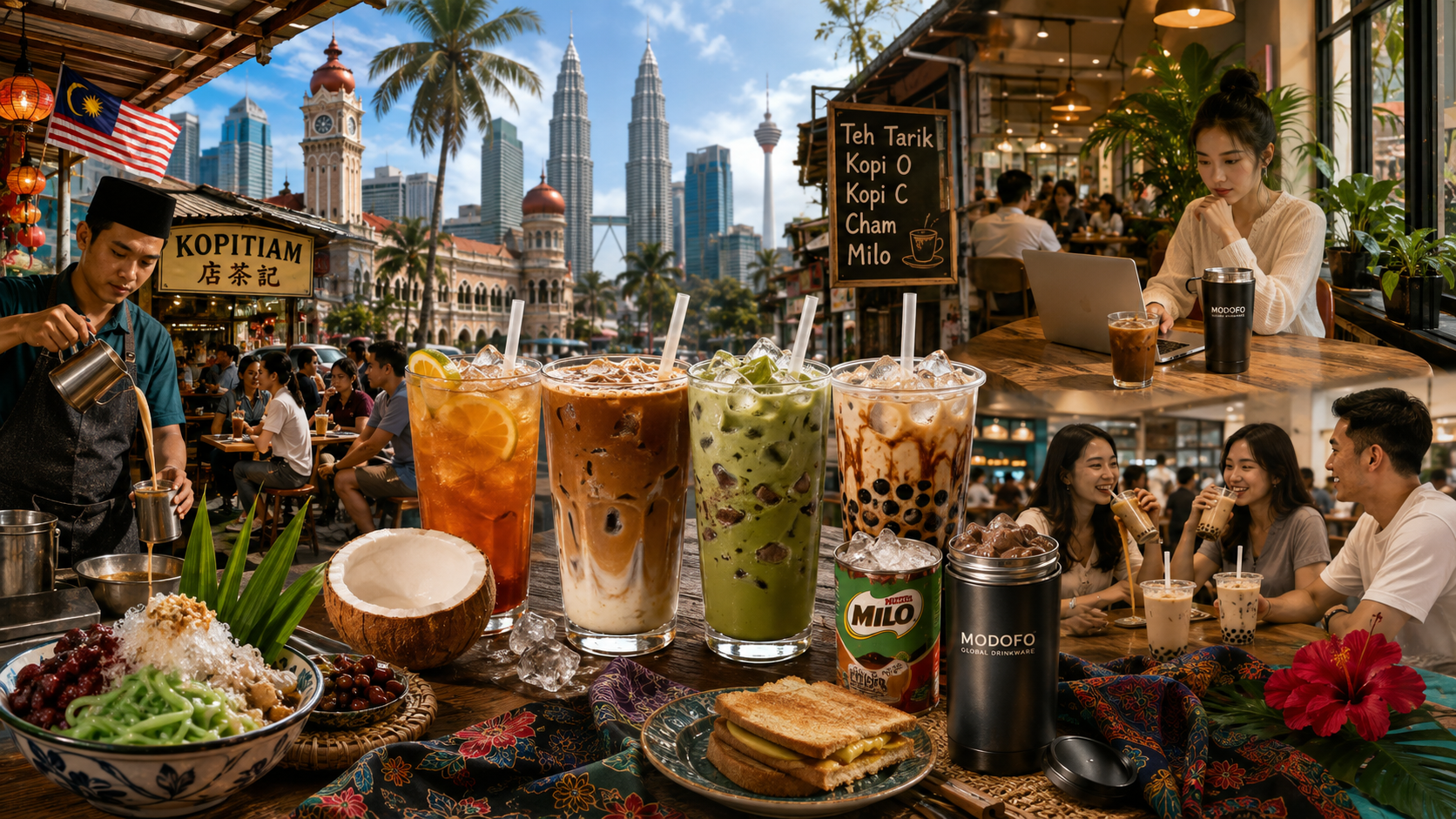
Meanwhile, local coffee culture evolved through kopitiams, where drinks such as Kopi O, Kopi C, and Cham became familiar parts of daily life.
Today, many of these traditional beverages are just as likely to be served over ice as they are hot.
This blend of cultures has given Malaysians an incredible variety of drink choices—many of which have naturally adapted to the country's tropical climate.
Cold Drinks Are Part of Every Daily Routine
One of the most fascinating aspects of Malaysian beverage culture is how cold drinks appear throughout the entire day.
Morning begins with iced coffee or iced Milo before work.
Breakfast often includes iced Teh Tarik or iced Kopi O alongside kaya toast or nasi lemak.
Lunch is accompanied by iced lemon tea, barley water, or lime juice.
Afternoon breaks almost always involve another drink—perhaps bubble tea, cold brew coffee, or fresh fruit juice.
Evening meals often feature herbal drinks or coconut water.
Weekend gatherings frequently revolve around cafés, dessert shops, or hawker centers serving refreshing beverages.
Unlike some cultures where coffee is primarily consumed in the morning, Malaysians enjoy cold drinks across multiple occasions.
The beverage changes.
The habit remains.
This constant presence makes cold drinks more than simple refreshments.
They become part of the rhythm of everyday life.
Coffee Culture Has Found Its Tropical Identity
Malaysia has always had a strong coffee tradition.
Traditional kopitiams have served local coffee for generations, creating spaces where communities gather for breakfast, conversations, and business meetings.
Over the past decade, however, the country's coffee scene has expanded dramatically.
Specialty cafés have opened in nearly every major city.
Independent coffee roasters have introduced single-origin beans from around the world.
International chains compete alongside fast-growing local brands.
But one interesting characteristic distinguishes Malaysia's coffee culture from many Western markets.
Cold coffee is exceptionally popular.
Walk into almost any café in Kuala Lumpur, Penang, Johor Bahru, or Kota Kinabalu, and you'll find extensive menus featuring:
- Iced Latte
- Iced Americano
- Cold Brew
- Iced Mocha
- Nitro Coffee
- Espresso Tonic
- Specialty seasonal iced drinks
Climate certainly influences these choices.
Yet lifestyle plays an equally important role.
Many people carry coffee while commuting.
Others bring iced coffee to co-working spaces.
Students study with iced drinks beside their laptops.
Weekend café visits have become social activities rather than simply opportunities to drink coffee.
Coffee has evolved from an energy source into an everyday experience.
The Rise of Bubble Tea and Modern Beverage Trends
No discussion about Malaysian drink culture would be complete without mentioning bubble tea.
Although bubble tea originated in Taiwan, it has become deeply integrated into Malaysian urban life.
Today, shopping malls often feature multiple bubble tea brands competing side by side.
Seasonal flavors.
Limited editions.
Fruit teas.
Cheese foam.
Brown sugar pearls.
Creative toppings.
For many younger consumers, bubble tea is about much more than taste.
It represents celebration.
Friendship.
Rewards after exams.
Weekend outings.
Social media moments.
Lifestyle.
Ordering a favorite drink has become part of personal identity.
People discuss favorite brands just as enthusiastically as they discuss restaurants or fashion.
This illustrates a broader consumer trend.
Modern beverages are increasingly associated with experiences rather than simple thirst.
People aren't just buying drinks.
They're buying moments.
Malaysia's Outdoor Lifestyle Naturally Encourages Cold Beverages
Malaysia's warm climate also encourages people to spend significant time outdoors.
Weekend markets.
Night markets.
Public parks.
Beaches.
Food festivals.
Cycling routes.
Camping trips.
Island holidays.
Road trips.
These activities naturally increase the demand for refreshing beverages.
Whether walking through George Town's heritage streets, exploring Langkawi's beaches, hiking in Cameron Highlands, or browsing Kuala Lumpur's weekend markets, carrying a cold drink feels almost second nature.
As outdoor lifestyles continue growing—especially among younger generations—cold beverages have become reliable companions for travel, recreation, and family activities.
They aren't occasional treats.
They are everyday essentials.
More Than Cooling Down
Looking at Malaysia's beverage habits from the outside, it would be easy to assume that people simply drink iced beverages because the weather is hot.
The reality is far more interesting.
Climate created the need.
Culture shaped the traditions.
Cities encouraged new lifestyles.
Consumers embraced new experiences.
Cold drinks gradually became part of how Malaysians socialize, work, travel, and relax.
Today, an iced drink is rarely just a drink.
It often represents a pause between meetings.
A conversation with friends.
A family meal.
A morning routine.
Or a quiet moment during a busy afternoon.
It has become one of the simplest expressions of modern Malaysian life.
As Malaysia continues to grow into one of Southeast Asia's most dynamic economies, its drinking habits are evolving alongside changes in work, travel, technology, and consumer values.
Today's beverage culture is no longer defined solely by what people drink.
It is increasingly shaped by how, where, and why they drink it.
From reusable tumblers to specialty coffee, from healthier beverage choices to social café culture, the simple act of enjoying a cold drink has become part of a much larger lifestyle movement.
Hydration Is Becoming a Daily Lifestyle
In recent years, Malaysians have become more conscious of hydration than ever before.
This shift is influenced by several factors:
- Growing awareness of personal wellness
- Active lifestyles and fitness culture
- Longer commuting hours
- Outdoor recreation
- Workplace wellness initiatives
- Social media discussions about healthy habits
Instead of drinking water only when they feel thirsty, many people now make hydration part of their daily routine.
A reusable water bottle on an office desk.
An insulated tumbler during the morning commute.
Cold water after a gym session.
Fruit-infused water throughout the afternoon.
These small habits reflect a larger lifestyle change.
Hydration is no longer viewed simply as a health necessity.
It has become part of personal wellbeing and everyday productivity.
In a country where warm weather is present all year, staying hydrated naturally becomes one of the easiest ways to stay comfortable and energized.
The Rise of Reusable Drinkware
As beverage consumption grows, so does awareness of environmental responsibility.
Single-use plastic cups and bottles remain common, but consumer behavior is gradually changing.
Many coffee chains now encourage customers to bring reusable cups by offering small discounts or loyalty rewards.
Office workers increasingly carry insulated tumblers throughout the day.
Students bring reusable bottles to university.
Families pack cold drinks for weekend road trips and outdoor activities.
Reusable drinkware has become practical for several reasons.
It helps maintain drink temperature for hours.
It reduces the need to buy bottled water repeatedly.
It supports more sustainable daily habits.
And perhaps most importantly, it fits naturally into modern lifestyles where people are constantly moving between home, work, cafés, gyms, and social activities.
For many Malaysians, carrying a reusable bottle is no longer unusual.
It has become part of everyday carry.
Cold Coffee Is Redefining Morning Routines
Malaysia's coffee culture continues to evolve rapidly.
While traditional hot kopi remains deeply loved, younger generations increasingly embrace cold coffee as part of their morning routine.
An iced latte picked up before work.
A cold brew enjoyed during the commute.
An iced Americano while answering emails.
Coffee is no longer limited to breakfast tables.
It accompanies people throughout the day.
The popularity of specialty cafés has also introduced greater curiosity about coffee itself.
Consumers are learning about:
- Coffee origins
- Brewing methods
- Seasonal beans
- Local roasters
- Sustainable sourcing
- Flavor profiles
Coffee appreciation has expanded beyond caffeine.
It has become a hobby, a social activity, and for many, a small daily ritual.
In Malaysia's tropical climate, cold coffee simply feels like a natural extension of that experience.
Beverage Choices Reflect Personal Identity
Walk into almost any shopping mall in Kuala Lumpur or Penang, and you'll notice something interesting.
People carry different drinks that often reflect different lifestyles.
A young professional holding an iced Americano.
A university student with bubble tea.
A fitness enthusiast carrying a large insulated bottle filled with water.
Parents sharing fresh coconut water during a family outing.
Cyclists stopping for iced sports drinks after a long ride.
These choices often communicate more than personal taste.
They reflect routines.
Preferences.
Values.
Daily habits.
In many ways, beverages have become lifestyle accessories.
Not because they are fashionable, but because they accompany people throughout their day.
The cup in someone's hand often tells a small story about where they are going, how they spend their time, and what matters to them.
Cafés Continue to Shape Urban Communities
Coffee shops have become far more than places to buy beverages.
Across Malaysia, cafés now serve multiple roles.
They are meeting spaces.
Remote offices.
Creative studios.
Weekend destinations.
Places for first dates.
Places for family gatherings.
Places where students prepare for exams.
Places where entrepreneurs discuss new ideas.
This concept is often described as the "third place"—a comfortable environment between home and work where people voluntarily spend time.
As Malaysian cities become more urbanized and apartment living becomes increasingly common, these welcoming public spaces grow even more valuable.
People don't only visit cafés for coffee.
They visit for atmosphere.
For conversations.
For inspiration.
For a brief escape from busy schedules.
This explains why cafés continue opening across cities large and small.
They satisfy emotional as well as practical needs.
Travelers Are Discovering Malaysia Through Its Drinks
Malaysia's beverage culture has also become an important part of the travel experience.
Visitors no longer search only for famous landmarks.
Many now actively seek local cafés, traditional kopitiams, dessert shops, and neighborhood drink stalls.
Sampling local beverages often becomes one of the easiest ways to understand Malaysian culture.
Ordering an iced Kopi O at a historic kopitiam.
Trying Teh Tarik made by an experienced tea puller.
Enjoying freshly cut coconut water on a tropical island.
Sharing cendol on a warm afternoon.
Stopping for sugarcane juice after walking through a local market.
These experiences create lasting travel memories because they combine taste with place.
They connect travelers to local communities in ways that guidebooks often cannot.
For many visitors, Malaysia is remembered not only for its food, but also for the refreshing drinks enjoyed along the journey.
Sustainability Is Influencing Consumer Choices
Environmental awareness is gradually becoming another important part of Malaysia's beverage culture.
Consumers are asking more questions about where products come from and how everyday habits affect the planet.
Coffee shops increasingly offer reusable cup incentives.
Many local brands explore recyclable packaging.
Consumers pay greater attention to product durability instead of disposable convenience.
These changes may seem small individually.
Together, however, they represent a meaningful cultural shift.
People increasingly recognize that everyday choices—such as carrying a reusable tumbler or bottle—can reduce waste over time without sacrificing convenience.
Sustainability becomes less about dramatic lifestyle changes and more about improving daily habits.
Everyday Luxury Can Be as Simple as a Cold Drink
Luxury no longer means the same thing it did twenty years ago.
For many people today, luxury isn't about expensive possessions.
It's about creating small moments of comfort within ordinary days.
A quiet coffee before work.
An afternoon iced tea while reading a book.
Cold water that stays refreshing during a long journey.
Sharing drinks with friends after sunset.
Watching rain fall outside a café while enjoying a favorite beverage.
These experiences cost very little.
Yet they often become some of the most enjoyable parts of everyday life.
This idea is sometimes called everyday luxury—finding happiness through simple routines rather than rare occasions.
Malaysia's beverage culture reflects this philosophy beautifully.
The drink itself may be simple.
The moment surrounding it is what makes it meaningful.
The MODOFO GLOBAL Philosophy: Designed for Everyday Moments
At MODOFO GLOBAL, we believe the products people use every day should quietly improve the experiences they enjoy most.
Whether it's staying hydrated during a morning commute, keeping coffee cold throughout the workday, carrying tea on a weekend road trip, or enjoying fresh water during outdoor adventures, everyday drinkware becomes part of countless meaningful moments.
Great design doesn't need to demand attention.
It simply needs to perform reliably whenever it's needed.
The same philosophy applies to everyday life.
Small improvements, repeated consistently, often have the greatest impact.
A well-designed bottle.
A favorite café.
A daily hydration habit.
A peaceful morning routine.
These are the experiences that shape quality of life over time.
Conclusion: More Than a Beverage, It's a Way of Life
Malaysia's love for iced drinks cannot be explained by tropical weather alone.
Climate may have created the need for refreshing beverages.
But culture transformed them into traditions.
Urban lifestyles turned them into routines.
Modern consumers elevated them into experiences.
Today, cold drinks accompany nearly every aspect of Malaysian life.
They appear in busy offices and quiet cafés.
On road trips and university campuses.
At family gatherings and weekend markets.
They connect people across generations, cultures, and communities.
Perhaps this is why Malaysia's beverage culture feels so distinctive.
It isn't simply about drinking something cold.
It's about embracing a lifestyle built around comfort, connection, hospitality, and everyday enjoyment.
In the end, the most memorable drink is rarely the most expensive one.
It's the one shared during meaningful conversations, long journeys, and ordinary moments that quietly become unforgettable.
In Malaysia, a cold drink isn't just about cooling down. It's about celebrating everyday life—one refreshing moment at a time.