
The Shift Toward Simplicity, Comfort, and Intentional Living
Modern homes are changing.
Over the past decade, more people have started moving away from overly decorated interiors, crowded rooms, and heavily styled living spaces. Instead, modern homes are becoming softer, calmer, and more minimal.
Furniture lines are cleaner.
Colors are more neutral.
Spaces feel more open.
People are buying fewer things, but choosing them more carefully.
This shift can be seen everywhere — from apartments in large cities to quiet suburban homes, from Scandinavian-inspired interiors to modern Asian living spaces.
But this trend is not only about aesthetics.
Minimal living is becoming popular because modern life itself has become overwhelming.
As the outside world grows louder, faster, and more digitally demanding, people are beginning to crave homes that feel quieter, lighter, and emotionally easier to live in.
Today, the modern home is no longer just a place to stay.
It is becoming a place to recover.
The Modern World Is Constantly Overstimulating
One of the biggest reasons people are drawn toward minimal homes is simple:
Daily life has become mentally exhausting.
Modern people are surrounded by nonstop stimulation:
- notifications
- emails
- advertisements
- social media
- streaming content
- work messages
- digital noise
- crowded schedules
Even moments that once felt quiet are now filled with scrolling, multitasking, or background media.
As a result, many people feel mentally overloaded long before they feel physically tired.
This changes how people think about home.
Instead of wanting homes that impress others, many people now want homes that help them breathe.
The Role of Home Has Changed
In the past, homes were often designed mainly around functionality and social presentation.
A home showed status, decoration style, or lifestyle aspiration.
Today, people increasingly see home differently.
For many modern adults, home has become:
- a mental recovery space
- a comfort zone
- a place to slow down
- a space for emotional rest
This is why modern interiors are becoming calmer and less visually aggressive.
People are beginning to realize that environments influence emotional state more than they once thought.
A noisy space creates tension.
A cluttered room creates mental fatigue.
An overcrowded environment constantly competes for attention.
Meanwhile, open and simplified spaces often create a sense of relief.
Why Minimal Spaces Feel So Calming
Minimal spaces are not relaxing simply because they look “modern.”
They feel calming because they reduce visual pressure.
The brain is constantly processing information from the environment.
Every object, color, texture, and visual detail competes for attention, even subconsciously.
When a room contains too much visual noise, the brain works harder to process it.
This is one reason cluttered environments can feel mentally exhausting over time.
Minimal spaces reduce unnecessary stimulation.
They often include:
- softer colors
- natural lighting
- cleaner layouts
- open surfaces
- fewer distractions
These design choices create psychological breathing room.
The result is not emptiness.
It is clarity.
Minimalism Today Is More About Comfort Than Perfection
Many people misunderstand modern minimalism.
They imagine empty white rooms with almost no personality.
But the most comfortable modern minimal homes are not cold or lifeless.
In fact, the newer version of minimal living is often warm, soft, and deeply human.
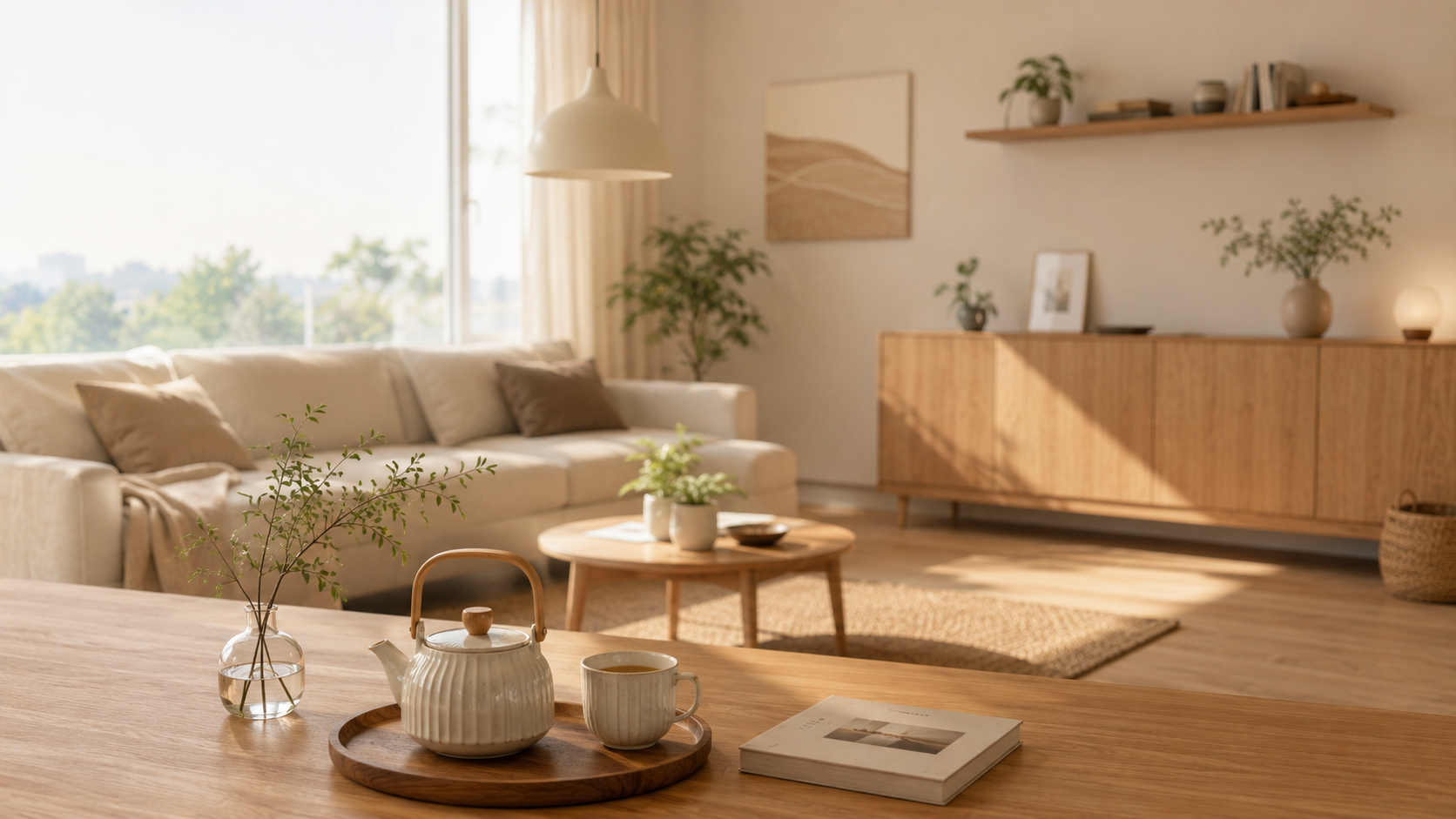
Modern minimal spaces frequently include:
- textured fabrics
- warm wood tones
- plants
- books
- ceramics
- tea setups
- cozy lighting
- meaningful everyday objects
The goal is not to remove all emotion from the home.
The goal is to remove unnecessary stress from the environment.
Good minimalism creates comfort, not emptiness.
Why People Are Buying Fewer but Better Things
Another major shift in modern living is intentional consumption.
People are becoming more selective about what enters their homes.
This is partly practical.
Too many possessions create:
- storage problems
- cleaning pressure
- visual clutter
- decision fatigue
But it is also emotional.
People are increasingly aware that constant accumulation does not always improve happiness.
Owning more things does not necessarily create a better life.
Instead, many people now prefer:
- durable products
- meaningful objects
- versatile items
- timeless design
- daily comfort
The focus is shifting from quantity toward experience.
Everyday Objects Now Matter More Than Ever
As people spend more time at home, everyday objects become more important emotionally.
A comfortable chair.
A favorite mug.
A tea pot used every evening.
A soft blanket near the window.
These are small things, but they quietly shape daily experience.
This is why lifestyle design has become increasingly influential.
People no longer choose products only based on function.
They also choose based on:
- emotional comfort
- atmosphere
- usability
- visual calmness
- tactile experience
A well-designed object can make ordinary routines feel more enjoyable.
And over time, these small experiences affect overall quality of life.
Why Slow Living Is Connected to Minimal Homes
The rise of minimal homes is closely connected to another growing movement:
Slow living.
Slow living does not mean doing everything slowly.
It means becoming more intentional about how time and attention are used.
Modern people are beginning to realize that constant speed is unsustainable.
As a result, many are rediscovering slower activities such as:
- reading
- cooking
- gardening
- tea rituals
- journaling
- evening walks
- quiet mornings
Minimal spaces support these behaviors naturally.
A calmer environment encourages calmer routines.
Why Tea and Coffee Rituals Fit Naturally Into Minimal Living
One interesting part of modern home culture is the growing popularity of tea and coffee rituals.
This trend is not only about beverages.
It is about rhythm.
Preparing tea or coffee creates a pause in the day.
The process itself becomes calming:
- boiling water
- choosing leaves or beans
- pouring slowly
- sitting quietly for a few minutes
These moments interrupt mental overstimulation.
In many minimal homes, drinkware and tea setups are not hidden away.
They become part of the living atmosphere because they represent comfort and intentional living.
A warm drink becomes more than consumption.
It becomes a daily reset.
Natural Materials Are Becoming More Popular
Modern minimal homes increasingly use natural materials because they feel softer and more grounding.
Popular elements include:
- wood
- linen
- cotton
- ceramic
- glass
- stone
- woven textures
These materials create warmth and balance.
People are naturally drawn toward environments that feel organic and less artificial.
This may explain why many modern interiors now avoid excessive gloss, harsh lighting, or overly synthetic textures.
Natural environments help reduce sensory fatigue.
Why Lighting Has Become So Important
Lighting strongly affects emotional comfort.
Bright white lighting often feels clinical or overstimulating after long workdays.
Warm lighting, by contrast, creates softness and relaxation.
This is why modern homes increasingly use:
- warm lamps
- indirect lighting
- natural sunlight
- softer evening illumination
Lighting is no longer treated as purely functional.
It shapes emotional atmosphere.
Minimal Homes Are Also Easier to Maintain
There is also a practical reason minimal homes continue growing in popularity.
Simpler spaces are easier to live with.
They require:
- less cleaning
- less organizing
- less maintenance
- fewer decisions
For busy people, this matters significantly.
Modern life already consumes enormous mental energy.
Many people no longer want homes that create additional work.
Instead, they want environments that support ease and comfort.
The New Meaning of Luxury
Interestingly, modern minimalism is also changing how people think about luxury.
In the past, luxury often meant:
- excess
- decoration
- expensive display
- visual complexity
Today, many people define luxury differently.
Modern luxury increasingly means:
- peace and quiet
- natural light
- emotional comfort
- time to relax
- uncluttered environments
- thoughtful design
In other words, comfort itself has become aspirational.
Why This Trend Will Continue Growing
Minimal living is not simply a temporary design trend.
It reflects larger cultural changes.
Modern society is becoming increasingly:
- digital
- fast-paced
- information-heavy
- mentally demanding
As this continues, people will likely keep searching for environments that feel calmer and more manageable.
Homes will increasingly prioritize:
- emotional wellness
- mental comfort
- functional simplicity
- softer experiences
- intentional living
The future of home design is not about owning less for the sake of minimalism alone.
It is about creating spaces that support healthier ways of living.
A Comfortable Home Is Not About Perfection
One important truth is often overlooked:
A peaceful home does not need to look like a magazine.
Minimal living is not about perfection.
It is about removing friction.
A comfortable home simply needs to feel supportive, calming, and emotionally sustainable for the people living inside it.
That might mean:
- a quiet reading corner
- a clean wooden table
- fresh morning light
- a warm cup of tea
- fewer distractions
- more breathing space
The goal is not visual perfection.
The goal is daily comfort.