
How Intentional Living Creates More Space, Better Experiences, and Everyday Happiness
Introduction: Modern Life Isn't Short of Things—It's Short of Space
Modern life has never offered us more choices.
With just a few taps on a screen, we can buy almost anything and have it delivered within days—or even hours. New products launch every week, trends change constantly, and advertisements encourage us to upgrade almost everything we own.
For many years, success was often measured by accumulation.
A larger home.
A fuller wardrobe.
More gadgets.
More decorations.
More possessions.
Yet despite having access to more than any previous generation, many people feel something is missing.
Homes become crowded.
Schedules become busier.
Attention becomes fragmented.
Free time feels increasingly rare.
The challenge today is no longer finding more things.
It's finding more room—for peace, creativity, relationships, and experiences.
This shift has inspired a growing movement toward intentional living.
People are beginning to realize that luxury isn't always found in buying more.
Sometimes, the greatest luxury is having less to manage and more time to enjoy what truly matters.
Owning less doesn't mean sacrificing comfort.
Instead, it often creates the freedom to appreciate life more deeply.
Why More Doesn't Always Mean Better
For decades, consumer culture encouraged one simple idea:
More is better.
More clothes provide more options.
More technology offers more convenience.
More furniture fills empty rooms.
More accessories express personality.
While these ideas are not entirely wrong, they often come with hidden costs.
The more we own, the more we need to organize, maintain, clean, repair, replace, and think about.
Psychologists even describe a phenomenon known as decision fatigue.
The greater the number of choices we face every day, the more mental energy we spend making decisions.
Choosing what to wear.
Which mug to use.
Which bag to carry.
Which device to charge.
Individually, these decisions seem insignificant.
Together, they quietly consume our attention.
Visual clutter also affects how we feel.
A crowded environment often creates a sense of mental busyness, while clean, organized spaces can promote calmness and focus.
This is why simplicity feels refreshing.
It removes unnecessary distractions and allows us to focus on the experiences that matter most.
Luxury, in this sense, becomes less about abundance and more about clarity.
Simplicity Is About Choosing Better, Not Choosing Nothing
One of the biggest misconceptions about simple living is that it requires giving everything away.
Many people imagine empty apartments with white walls, one chair, and almost no personal belongings.
But intentional simplicity isn't about living with nothing.
It's about living with purpose.
The goal isn't to reduce your life.
It's to remove what doesn't truly add value.
A favorite coffee mug used every morning.
A comfortable backpack that travels everywhere with you.
A notebook filled with ideas.
A reusable bottle that keeps you hydrated throughout the day.
These objects aren't simply possessions.
They become trusted companions in everyday life.
Instead of constantly replacing items with cheaper alternatives, many people now prefer investing in products that are durable, functional, and enjoyable to use for years.
Quality gradually replaces quantity.
The result isn't emptiness.
It's satisfaction.
Everyday Luxury Lives in Small Rituals
When people imagine luxury, they often picture luxury hotels, designer fashion, or expensive vacations.
Yet some of life's most meaningful moments are surprisingly ordinary.
The quiet enjoyment of morning coffee before emails begin.
An afternoon tea break while sunlight fills the room.
Reading a book without checking notifications.
Preparing dinner with family.
Taking an evening walk through the neighborhood.
These rituals rarely appear extraordinary.
Yet repeated day after day, they create a remarkable quality of life.
Researchers studying happiness consistently find that wellbeing is influenced more by repeated positive experiences than by occasional moments of excitement.
One unforgettable vacation creates wonderful memories.
A peaceful morning routine creates hundreds of enjoyable moments every year.
Small rituals quietly shape the rhythm of our lives.
This is where everyday luxury truly exists.
Not in rare indulgences.
But in ordinary moments experienced with intention.
Why We Remember Experiences More Than Possessions
Think back to some of your happiest memories.
Perhaps they involve watching a sunrise during a trip.
Sharing coffee with an old friend.
Camping beneath a sky full of stars.
Walking through unfamiliar streets while traveling.
Laughing around a dinner table.
Very few people remember the exact products they bought five years ago.
But they remember the experiences connected to those years.
Psychologists often refer to this as the value of experiential happiness.
Experiences become stories.
Stories become memories.
Memories become part of our identity.
Objects certainly have value.
But their greatest value often comes from supporting meaningful experiences rather than existing for their own sake.
A travel mug isn't memorable because it's made of stainless steel.
It's memorable because it accompanied countless road trips, early flights, mountain hikes, and quiet mornings.
The object becomes meaningful because of the life lived around it.
A Lighter Lifestyle Creates More Freedom
Owning fewer unnecessary possessions often creates unexpected freedom.
Moving to a new home becomes simpler.
Packing for travel becomes less stressful.
Cleaning requires less time.
Organizing becomes easier.
Daily decisions become faster.
Freedom isn't always about having unlimited choices.
Sometimes it's about reducing unnecessary complexity.
This philosophy has become increasingly popular among younger generations who prioritize flexibility over accumulation.
Many people now value experiences that allow them to work remotely, travel frequently, or spend more time outdoors.
A lighter lifestyle supports these goals.
Rather than managing endless possessions, they can focus on exploring new places, learning new skills, and spending more time with people they care about.
Less becomes a way to create more.
More freedom.
More flexibility.
More possibilities.
The Rise of Everyday Essentials
As people simplify their lives, they often become more thoughtful about the items they use every day.
Instead of filling homes with products used only occasionally, they invest in essentials that quietly improve daily routines.
A reusable water bottle.
A well-designed travel mug.
Comfortable walking shoes.
A durable backpack.
Reliable wireless headphones.
A notebook that travels everywhere.
These aren't luxury goods in the traditional sense.
They simply make everyday experiences smoother.
Because they are used so frequently, their value extends far beyond their price.
The best everyday essentials aren't the ones that attract attention.
They're the ones people reach for automatically every morning because they simply work.
Thoughtful design becomes a form of everyday comfort.
Travel Light, Live More
The same philosophy increasingly influences how people travel.
Years ago, travelers often packed for every possible situation.
Large suitcases.
Extra shoes.
Numerous outfits.
Multiple accessories.
Today, many experienced travelers are moving in the opposite direction.
They pack lighter.
They choose versatile clothing.
They carry fewer but higher-quality essentials.
Travel becomes less about managing luggage and more about enjoying destinations.
A lighter backpack means easier walks through old cities.
A reusable bottle reduces unnecessary purchases during long journeys.
A compact travel mug fits naturally into airport mornings and scenic train rides.
Owning less makes movement easier.
And travel, at its best, is about movement.
Not baggage.
Sustainability Begins with Keeping Things Longer
Simple living naturally connects with sustainability.
Buying fewer products doesn't necessarily mean spending less.
It often means buying better.
Instead of replacing low-quality items every year, people increasingly choose products designed to last.
This approach benefits both consumers and the environment.
Less waste.
Fewer replacements.
More thoughtful consumption.
Sustainability doesn't always require dramatic lifestyle changes.
Sometimes it begins with keeping everyday items for many years instead of constantly replacing them.
A durable reusable bottle.
A dependable coffee tumbler.
A favorite travel bag.
These choices may seem small individually.
Together, they contribute to a more sustainable future.
Why Simplicity Feels More Luxurious
Luxury has changed.
In the past, luxury often meant exclusivity.
Today, it increasingly means wellbeing.
Having enough time for breakfast.
A peaceful home.
A meaningful conversation.
A quiet weekend walk.
Coffee enjoyed without rushing.
Space to breathe.
Freedom from unnecessary distractions.
These experiences cannot always be purchased.
They are created through intentional choices.
Modern luxury has become deeply personal.
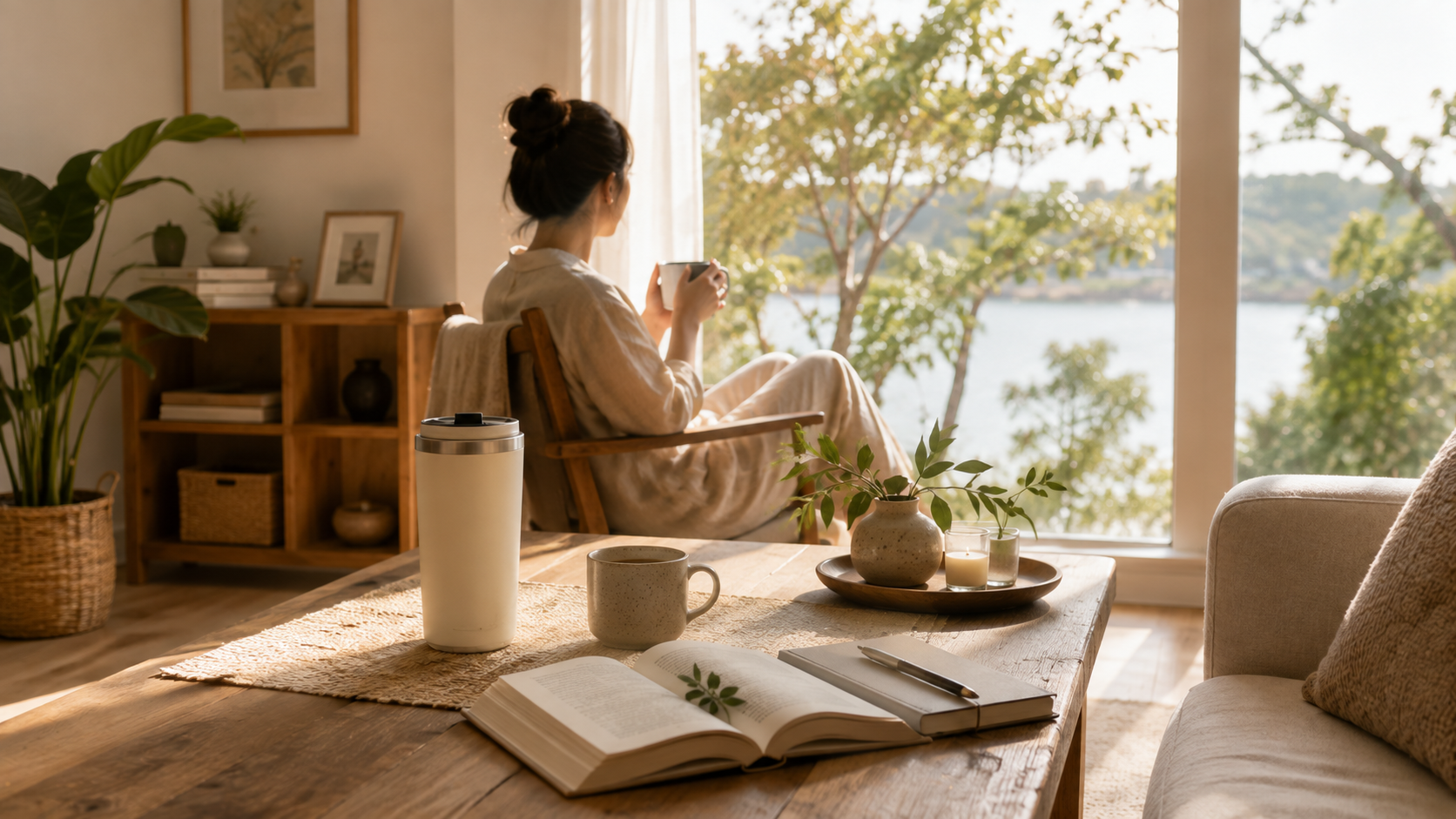
For one person, it's reading beside a window on a rainy afternoon.
For another, it's hiking through a national park.
For someone else, it's enjoying tea from a favorite mug every morning.
Luxury is no longer defined by other people's expectations.
It is defined by what genuinely improves your own everyday life.
The MODOFO GLOBAL Philosophy
At MODOFO GLOBAL, we believe great design should make everyday life feel lighter—not more complicated.
The products we use every day should quietly support the moments that matter most.
Morning coffee before work.
Fresh water during a long commute.
Tea shared with family.
A reusable bottle carried on weekend adventures.
A travel tumbler accompanying new journeys.
These aren't extraordinary occasions.
They are everyday experiences that shape how we live.
That's why we believe everyday essentials deserve thoughtful design, lasting quality, and timeless functionality.
Not because they are luxury products.
But because they contribute to a more comfortable, intentional way of living.
Everyday life deserves everyday excellence.
Conclusion: Own Less. Enjoy More.
Owning less isn't about giving something up.
It's about creating space for something better.
More time.
More freedom.
More experiences.
More meaningful relationships.
More appreciation for the things that truly matter.
In a world that constantly encourages us to buy more, choosing simplicity can feel surprisingly refreshing.
It reminds us that happiness rarely comes from accumulation alone.
It grows from the routines we enjoy, the people we spend time with, and the experiences we create every day.
Perhaps that's why simplicity feels luxurious.
Not because it is expensive.
But because it allows us to focus on what is genuinely valuable.
After all, the richest life isn't always the one with the most possessions.
It's often the one with the most meaningful moments.
Owning less doesn't mean living with less. It means making more room for the people, places, and experiences that truly enrich your life.