
How Walkable Neighborhoods, Everyday Movement, and Local Adventures Are Redefining Modern Living
Introduction: The Best Journey Might Begin Right Outside Your Front Door
For years, convenience was measured by how quickly we could drive somewhere.
A larger car.
A shorter commute.
More parking.
More highways.
But a different idea has quietly gained momentum.
Instead of asking, "How fast can I get there?" more people are asking:
"Can I simply walk?"
Across the United States and many European cities, walkability has become one of the most desirable qualities when choosing where to live. Young professionals, students, remote workers, and families are increasingly seeking neighborhoods where cafés, parks, grocery stores, bookstores, and local markets are only a short walk away.
This isn't just about transportation.
It's about creating a lifestyle where movement becomes a natural part of everyday life.
Walking turns ordinary routines into meaningful experiences, making each day feel a little healthier, calmer, and more connected.
Walking Is Becoming a Lifestyle, Not Just Exercise
For many years, walking was treated mainly as exercise.
Something to track.
Something to complete.
Something squeezed between work and dinner.
Today, that perspective is changing.
People are walking to buy fresh bread.
Walking to their favorite coffee shop.
Walking to local bookstores.
Walking to farmers' markets.
Walking with friends after dinner.
Walking to clear their minds between meetings.
Instead of becoming another task on a checklist, walking has become woven into everyday routines.
Movement no longer feels like something extra.
It simply becomes part of living.
The Rise of Walkable Neighborhoods
One of the biggest lifestyle trends in recent years is the growing preference for walkable communities.
People are increasingly choosing neighborhoods where everyday destinations are close enough to reach on foot.
A morning coffee.
A local bakery.
A neighborhood park.
A small grocery store.
A flower shop.
A public library.
These places become part of daily life rather than occasional destinations.
Walking through familiar streets also creates a stronger sense of belonging.
Neighbors become recognizable.
Local businesses become part of personal routines.
The community gradually feels more connected.
Quality of life isn't always determined by how large a city is.
Sometimes it's determined by how enjoyable it is to walk through it.
Coffee Walks Are Replacing Coffee Runs
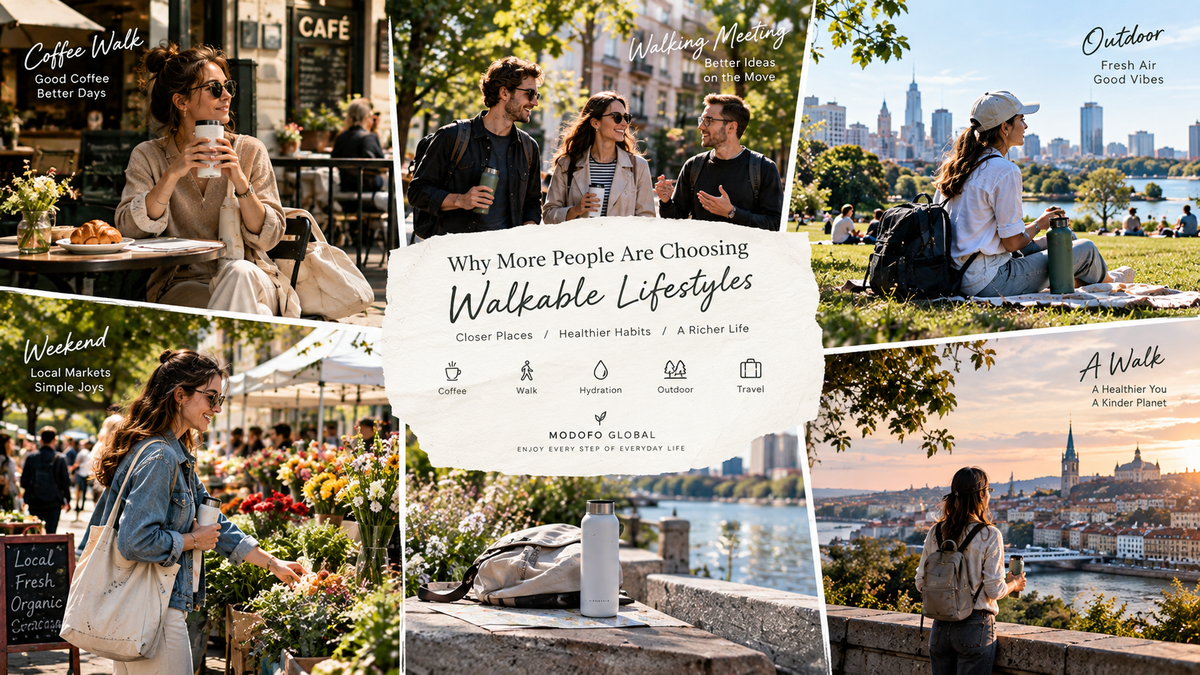
One of the simplest examples of this shift is the rise of the coffee walk.
Rather than grabbing coffee through a drive-through, many people choose to walk to a nearby café.
The coffee itself becomes only part of the experience.
Fresh morning air.
Quiet residential streets.
Conversations with friends.
Watching the neighborhood wake up.
A reusable tumbler in hand.
The journey becomes just as enjoyable as the destination.
Many people even describe these walks as the most peaceful part of their day.
A short walk and a warm drink create a daily ritual that feels restorative rather than rushed.
Walking Meetings Encourage Better Thinking
As remote work and flexible schedules become more common, many professionals are rethinking how meetings happen.
Not every conversation needs a conference room.
Walking meetings are becoming increasingly popular among entrepreneurs, freelancers, creative professionals, and remote teams.
Instead of sitting across a table, people walk together through nearby parks or quiet streets.
The change in environment often encourages more open discussion.
Ideas flow more naturally.
Stress levels decrease.
Creativity increases.
Even difficult conversations sometimes feel easier when people are walking side by side instead of facing one another.
Movement changes more than our bodies.
It often changes the way we think.
Small Adventures Start Within Walking Distance
Adventure doesn't always require a passport or a long weekend.
Sometimes it begins with choosing a different street.
Exploring a neighborhood you've never visited.
Stopping at an independent bookstore.
Finding a hidden café.
Watching the sunset from a nearby hill.
Visiting a weekend market.
Trying a new walking trail.
These small explorations add variety to everyday life without requiring detailed planning.
They remind us that curiosity doesn't depend on distance.
Sometimes the most rewarding discoveries are only a few blocks away.
Walking Helps Us Notice What We Usually Miss
Life moves differently on foot.
You notice seasonal flowers blooming along the sidewalk.
The smell of fresh bread from the neighborhood bakery.
Children playing in the park.
Street musicians performing.
Dogs greeting familiar faces.
The changing colors of trees throughout the year.
When we drive, destinations become the focus.
When we walk, the journey itself becomes meaningful.
Walking teaches us to pay attention again.
And paying attention often makes everyday life feel richer.
Hydration Naturally Becomes Part of Everyday Movement
As walking becomes part of daily routines, staying hydrated becomes equally important.
Whether it's a short coffee walk before work, an afternoon stroll through the park, or a weekend hike with friends, carrying water naturally becomes part of the experience.
A thoughtfully designed reusable bottle or insulated tumbler fits seamlessly into these moments.
Not because it attracts attention.
But because it supports a healthier lifestyle without interrupting it.
The best everyday essentials are the ones we hardly notice—until we realize they've accompanied countless walks, conversations, and adventures.
Walkability Strengthens Communities
Walking changes more than individual habits.
It changes neighborhoods.
People who walk regularly are more likely to support local cafés, bookstores, bakeries, and family-owned businesses.
They greet neighbors.
Recognize familiar faces.
Spend more time in public spaces.
Communities become more vibrant because people are present rather than simply passing through.
The strongest neighborhoods are rarely defined only by their buildings.
They're defined by the everyday interactions that happen between them.
Choosing Presence Over Speed
Modern life often celebrates efficiency.
The fastest route.
The quickest purchase.
The shortest wait.
Walkable living offers a different perspective.
Perhaps not everything needs to happen as quickly as possible.
Perhaps walking to the café is better than driving there.
Perhaps browsing a bookstore is more rewarding than clicking "Buy Now."
Perhaps the scenic route offers more than the shortest one.
Choosing to walk isn't about rejecting convenience.
It's about making room for presence.
Because some of life's best moments happen while we're on our way somewhere.
The MODOFO GLOBAL Philosophy
At MODOFO GLOBAL, we believe everyday essentials should encourage people to experience the world around them—not simply move through it.
A reusable bottle carried on a morning walk.
A favorite tumbler accompanying a visit to the local café.
Fresh water waiting after an afternoon in the park.
Coffee enjoyed while exploring a new neighborhood.
Thoughtfully designed products become quiet companions to everyday adventures, supporting healthier habits and more intentional living.
Because life isn't measured only by the places we travel to.
It's also shaped by the streets we walk every day.
Conclusion: The Best Way to Experience a Place Is Often on Foot
Walking doesn't simply take us from one destination to another.
It changes the way we experience the world.
We notice more.
Rush less.
Meet people.
Support local communities.
Discover hidden places.
Create healthier habits.
And find moments of calm in the middle of busy lives.
Perhaps that is why walkable lifestyles continue to grow in popularity.
Not because walking is new.
But because it reminds us of something we've always known.
Life feels richer when we slow down enough to experience it.
Sometimes the most meaningful journey doesn't begin with a plane ticket or a full tank of gas.
Sometimes it begins with comfortable shoes, a favorite reusable tumbler, and the decision to step outside.
A walk may seem like a small part of the day, but over time, those everyday steps can lead to a healthier body, a stronger community, and a life filled with more meaningful moments.